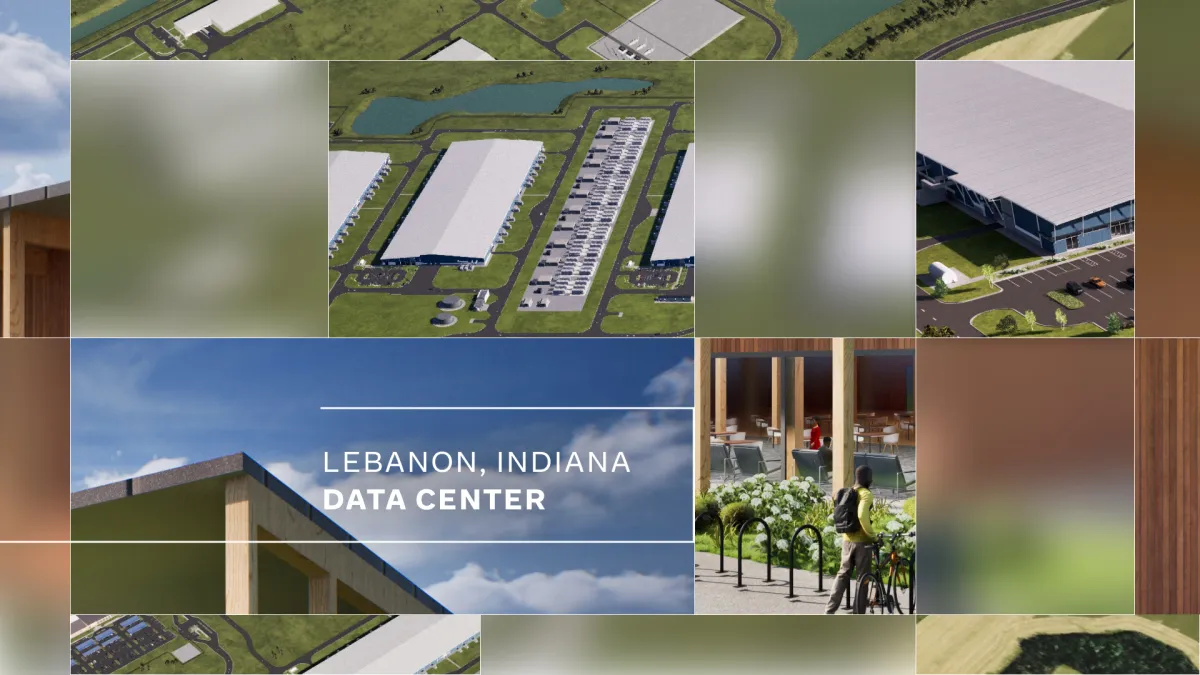
Meta is breaking ground on a massive data center campus in Lebanon, Indiana—a $10 billion investment that signals where the company believes AI infrastructure needs to go next.
The facility will deliver 1 gigawatt of computing power once it opens, making it Meta's second major data center site in the state. To put that in perspective: one gigawatt is roughly the amount of electricity a city of 750,000 people uses. All that processing power will run the algorithms behind Facebook, Instagram, and the AI models Meta is racing to build.
Why this matters now
Data centers are the unglamorous backbone of the AI boom. Every chatbot response, every video recommendation, every AI image generated somewhere needs physical servers humming in climate-controlled buildings. As AI models get more sophisticated, they demand more electricity and cooling capacity. Companies like Meta, Google, and Microsoft are in a quiet infrastructure arms race, betting that whoever builds the most efficient, largest-scale facilities first will have a competitive edge.
We're a new kind of news feed.
Regular news is designed to drain you. We're a non-profit built to restore you. Every story we publish is scored for impact, progress, and hope.
Start Your News DetoxMeta's gigawatt-scale approach is deliberate. Bigger facilities mean lower latency (faster responses), higher reliability, and the flexibility to handle unpredictable spikes in demand. It's the difference between a highway built for today's traffic versus one designed for what's coming.
The Lebanon project will create over 4,000 jobs during construction and permanent positions once operational. Meta is also launching a workforce development program through the Boone County Career Collaborative to connect local students with tech training and work opportunities—addressing the practical reality that data center jobs require skills many rural communities haven't traditionally developed.
The community side
Meta is committing $1 million per year for 20 years to help residents with energy bills through the Boone REMC Community Fund, and investing over $120 million in water infrastructure improvements for Lebanon itself. The company is also funding emergency water assistance and bringing its Community Action Grants program to the county, directing money to schools and nonprofits.
There's also an environmental angle worth noting. Meta designed the data center to match 100% of its energy use with clean power and achieve LEED Gold certification. The cooling system recirculates water rather than drawing from local supplies—critical in a region where water scarcity is becoming a real concern. As a bonus, Meta partnered with Arable to provide irrigation technology to local farmers, which should restore 200 million gallons of water annually for the next decade while cutting their costs.
The company is also revitalizing a section of Deer Creek to improve the local wetland ecosystem, turning what could have been a purely extractive industrial project into something with measurable environmental restoration.
This is how large infrastructure gets built now: not just with capital and engineering, but with deliberate community investment and environmental commitments. Whether Meta executes on all of it is another question—but the framework signals where corporate responsibility expectations have shifted.