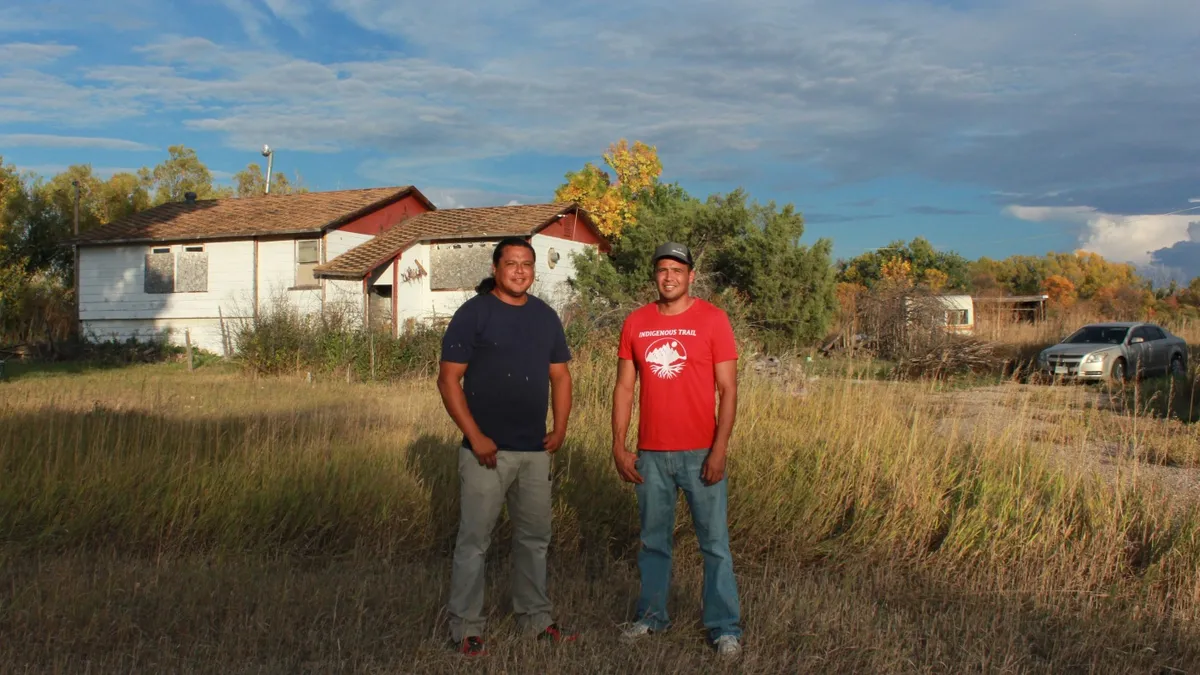
Lonny and Teyon Fritzler stand in the tall grass near their childhood home on the Crow Indian Reservation, watching cottonwood trees sway over land their grandparents taught them to read. Both brothers got lost in methamphetamine — Teyon at 15, Lonny after college when caring for their grandfather with dementia became unbearable. Their father died addicted. Their grandfather too. For years, the drug seemed to own not just them, but the whole town.
Lodge Grass, a town of about 500 in Montana, has been hollowed out by meth use. An estimated 60% of residents aged 14 and older struggle with drug or alcohol addiction — a rate that reflects a broader crisis. Native Americans face the highest addiction rates of any demographic group in the U.S., and rural reservations like this one have been hit especially hard. Systemic underfunding of the Indian Health Service, chronic poverty, and generational trauma created conditions where the drug took root and spread.
But something is shifting in Lodge Grass. It didn't happen through a single intervention or outside rescue. It came from people like the Fritzlers deciding to stay, to rebuild, to show the next generation that the story doesn't have to end in addiction.
We're a new kind of news feed.
Regular news is designed to drain you. We're a non-profit built to restore you. Every story we publish is scored for impact, progress, and hope.
Start Your News DetoxThe work of rebuilding
Mayor Quincy Dabney organized community cleanup days. The town tore down more than two dozen abandoned, meth-contaminated buildings. Where those structures stood, new ones are rising. A day care center now occupies a home that was poisoned by the drug. The nonprofit Mountain Shadow Association is building Kaala's Village, an entire campus designed to hold mental health services, housing for families in recovery, and therapeutic foster homes.
Lonny and Teyon Fritzler are among the builders. For Lonny, the work transformed something inside him. "When I got into construction work, I actually thought God was punishing me," he said. "But now, coming back, building these walls, I'm like, 'Wow. This is ours now.'" They're not just constructing buildings. They're showing their community — and the children watching — that recovery is possible, that you can come back.
The Crow people have always known how to survive impossible conditions. Their traditions emphasize language, family, and mentorship — the very things that addiction tears apart. Now those traditions are being woven back into the recovery work itself. Kaala's Village isn't an outside program imposed on the community. It's built by people who know what was lost, and what needs to come back.
Meth hasn't left Lodge Grass. A multi-state trafficking ring was busted recently. The epidemic persists across Indian Country, compounded by the same systemic failures that created it. But in this town, piece by piece, something else is growing. It's not the kind of recovery that makes headlines for being sudden or complete. It's slower, harder, rooted in the specific knowledge of people who've lived through the worst and decided their community was worth saving.