

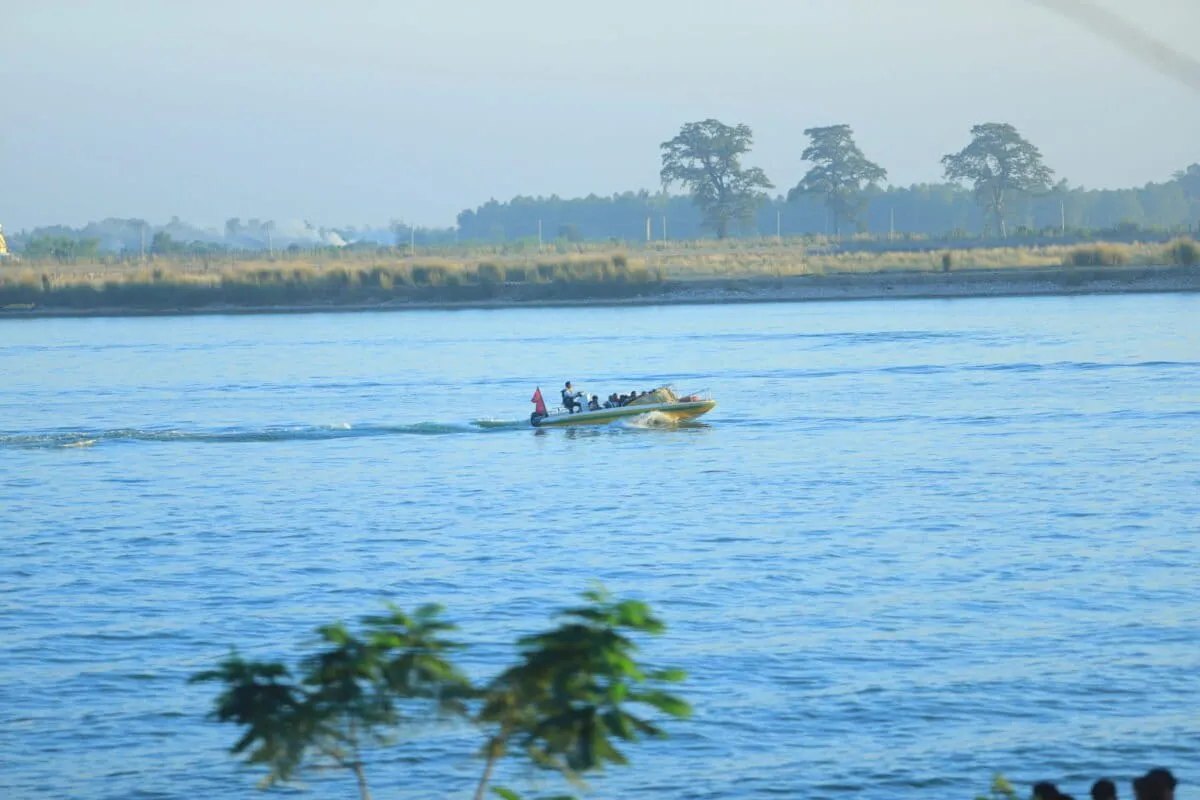
A 33.8-hectare lake that didn't exist three years ago has become one of southern Nepal's most unexpected tourist draws — attracting visitors from across the Indian border, boosting local income, and recharging groundwater in a water-stressed region. But legal challenges and environmental concerns now threaten to drain it away.
Bharat Taal, as locals call it, sits alongside the Bagmati River in Sarlahi district. When Bagmati municipality mayor Bharat Bahadur Thapa commissioned it in 2021, few predicted what would follow. Social media influencers began posting motorboat rides. Families from neighboring Bihar state in India started making the crossing. On a recent November afternoon, Mongabay observed seven Nepali tourists paying 300 rupees ($2.10) each for a boat ride, while an Indian couple paid 50 rupees (35 cents) for a video clip of their horse ride along the bank.
For a region where drinking water is scarce, the lake has become a strange kind of oasis — not just for recreation, but for practical benefit. The water table has improved since its construction, a significant gain in an area where groundwater depletion is a chronic problem. Local businesses have sprouted around it. The lake has also created habitat for birds and aquatic life, drawing biodiversity interest from researchers.
We're a new kind of news feed.
Regular news is designed to drain you. We're a non-profit built to restore you. Every story we publish is scored for impact, progress, and hope.
Start Your News DetoxThe cracks begin to show
Yet the momentum is fragile. Ongoing legal cases now shadow the lake's operation, with unclear jurisdiction between local and regional authorities creating a bureaucratic limbo. Environmental safeguards remain vague. Waste management systems are inadequate for the volume of visitors. No long-term biodiversity protection plan exists.
Satendra Kumar, who occasionally visits from his home in Bihar, put it plainly: "We have limited drinking water supplies here, but I like to come here to see the lake." That tension — between a resource that brings joy and income, and one that consumes water in a water-scarce place — sits at the heart of the challenge.
The lake represents something real: a small community finding an unexpected way forward. But without clearer environmental planning, proper waste infrastructure, and resolved legal standing, what draws people today could become what destroys it tomorrow. The next few months will likely determine whether Bharat Taal becomes a model for sustainable local development or a cautionary tale about good intentions without institutional backing.



