
Three log boats, hollowed from single oak and maple trees between 3,500 and 2,500 years ago, have emerged from the mud near Whittlesey with a story about adaptation. They're part of nine prehistoric vessels found in a quarry over a decade ago—the largest collection of Bronze Age boats ever discovered at one UK site. Now, after years of careful conservation, three of them are going on public display for the first time, offering a rare glimpse into how people actually moved through their world in prehistory.
These weren't sleek vessels. They were practical. A 6.3-meter oak boat shows charring inside, suggesting it had been used hard. A smaller 2.2-meter fragment bears the marks of repair—someone had patched the hull with careful carpentry, meaning this boat was worth fixing. The smallest piece, less than a meter long, was made from field maple, showing that builders worked with whatever trees they had.
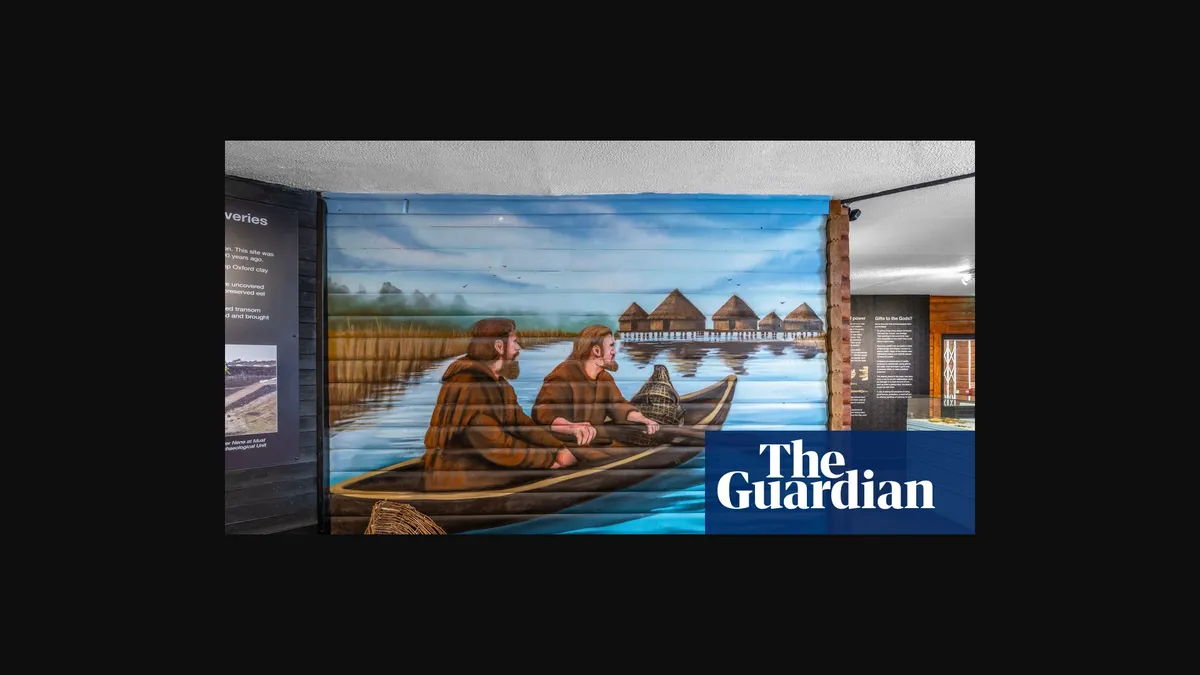
What makes these boats remarkable isn't just their age. It's what they tell us about a landscape in transformation. The Must Farm site sits on what was once a creek, now silted and dry. But 3,000 years ago, the area was becoming increasingly waterlogged. Groundwater rose steadily. Seasonal wetness became year-round dampness became swamp. In that shifting world, boats stopped being luxury goods and became necessity—the only reliable way to move people, fish, and cargo.
We're a new kind of news feed.
Regular news is designed to drain you. We're a non-profit built to restore you. Every story we publish is scored for impact, progress, and hope.
Start Your News DetoxArchaeologists analyzing the vessels found evidence of intentional storage. Some boats appeared to have been deliberately kept in water, a practice that prevented the wood from cracking or warping over time. It suggests people planned ahead, maintaining their vessels for future journeys. Others had simply worn out, abandoned when they could no longer hold together.
The conservation work itself was painstaking. Each boat was treated with a specialized wax and water solution in climate-controlled conditions, a process that took years. Researchers identified the exact tree species used, the tools employed, even the felling methods—details that only emerge when wood this old is handled with this much care.
Iona Robinson Zeki, a researcher at the Cambridge Archaeological Unit, notes how the varied construction reveals different boat types for different purposes. Some were small and maneuverable canoes. Others were longer, stable punt-like craft. Builders adapted their designs to the trees available and the work they needed done.
The exhibition opens at Flag Fen archaeology park on November 14th. It's a chance to stand in front of objects that were shaped by human hands when Britain's climate was shifting, when communities were learning to live with water rather than against it. The boats themselves are silent, but what they carried—people, goods, knowledge of how to survive in a changing landscape—still echoes across millennia.