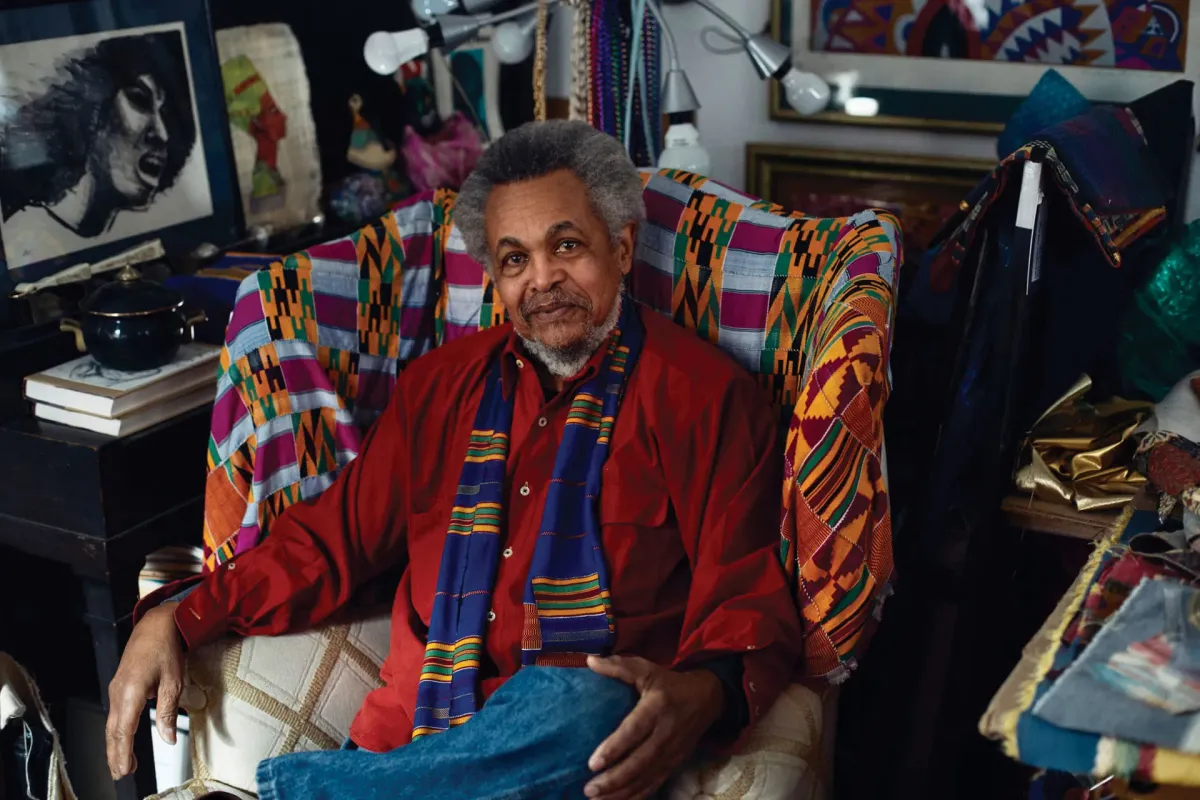
Napoleon Jones-Henderson, a founding member of the legendary AfriCOBRA art collective, had a favorite saying: "Do the work." And boy, did he. He believed that the most beautiful things emerged when people worked together, empowering each other through art and life.
Born in Chicago's Bronzeville neighborhood in 1943, Jones-Henderson’s artistic journey began with a high school art teacher who, as he put it, "threw the doors open." This teacher connected him to the rich tradition of quilt making and mending that the women in his family practiced at home. It was an early lesson in the power of textiles and community.
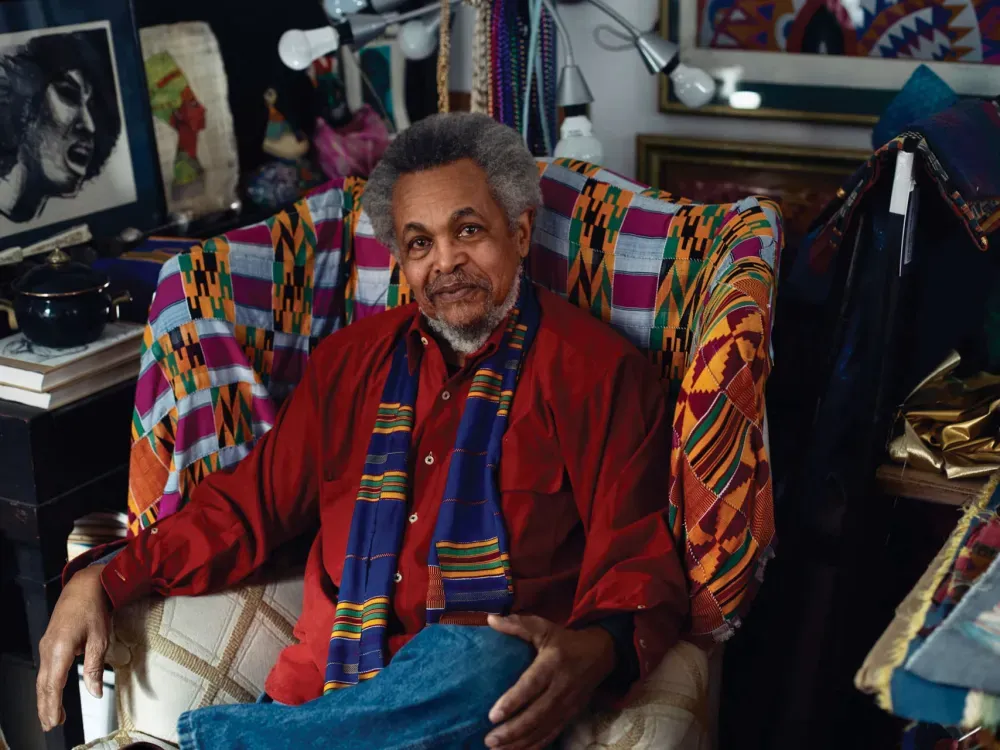
His path took him to the Sorbonne in Paris, where he quickly realized the European-centric curriculum wasn't quite his speed. He returned to the School of the Art Institute of Chicago, earning his BFA and studying under Else Regensteiner. She was a powerhouse who advanced the Bauhaus movement in textile arts in America, and she linked Jones-Henderson to this vibrant artistic tradition. Good connections, as they say, are everything.
We're a new kind of news feed.
Regular news is designed to drain you. We're a non-profit built to restore you. Every story we publish is scored for impact, progress, and hope.
Start Your News DetoxThe Birth of AfriCOBRA and a Move to Boston
While still a student in 1969, Jones-Henderson helped establish the African Commune of Bad Relevant Artists (AfriCOBRA). He quickly became known as "the weaver" of the group. He fused Regensteiner's color theories and her knack for using materials like metallic thread and found objects to create his own unique, expressive textiles. These weren't just pretty pieces; they were visual manifestos, aiming to capture the "expressive awesomeness" of Black life and culture using a graphic, accessible style and what they called "Kool-Aid colors." Because art, like a good drink, should be vibrant and refreshing.
In 1974, a chance meeting in Chicago led him to Boston. Inspired by the area's textile history and the availability of shiny metallic yarns (perfect for those AfriCOBRA aesthetics), he moved into the former home of abolitionist Edward Everett Hale in Roxbury. For over 50 years, this house became his nexus, where life and art were so intertwined you couldn't tell where one began and the other ended.
His work — a stunning array of fiber art, mosaics, prints, mixed media, and shrine-like sculptures — explored themes of empowerment, Pan-Africanism, and racial justice. His colorful creations were both self-affirming and deeply thoughtful, reflecting on a challenging past while pointing towards a hopeful future. He often quoted James Baldwin, reminding us that "The artistic image is not intended to represent the thing itself, but rather, the reality of the force the thing contains." Which, if you think about it, is both profound and a masterclass in understatement.
Jones-Henderson wasn't just an artist; he was a force of nature in his community. An active educator and mentor, his home was a key meeting spot for the Boston Collective. He dedicated decades to the National Conference of Artists, even organizing their 24th annual exhibition in Boston in 1982. His commitment to collective empowerment was legendary. His life's work is a powerful reminder: invest in each other, keep the looms humming, and always, always do the work.