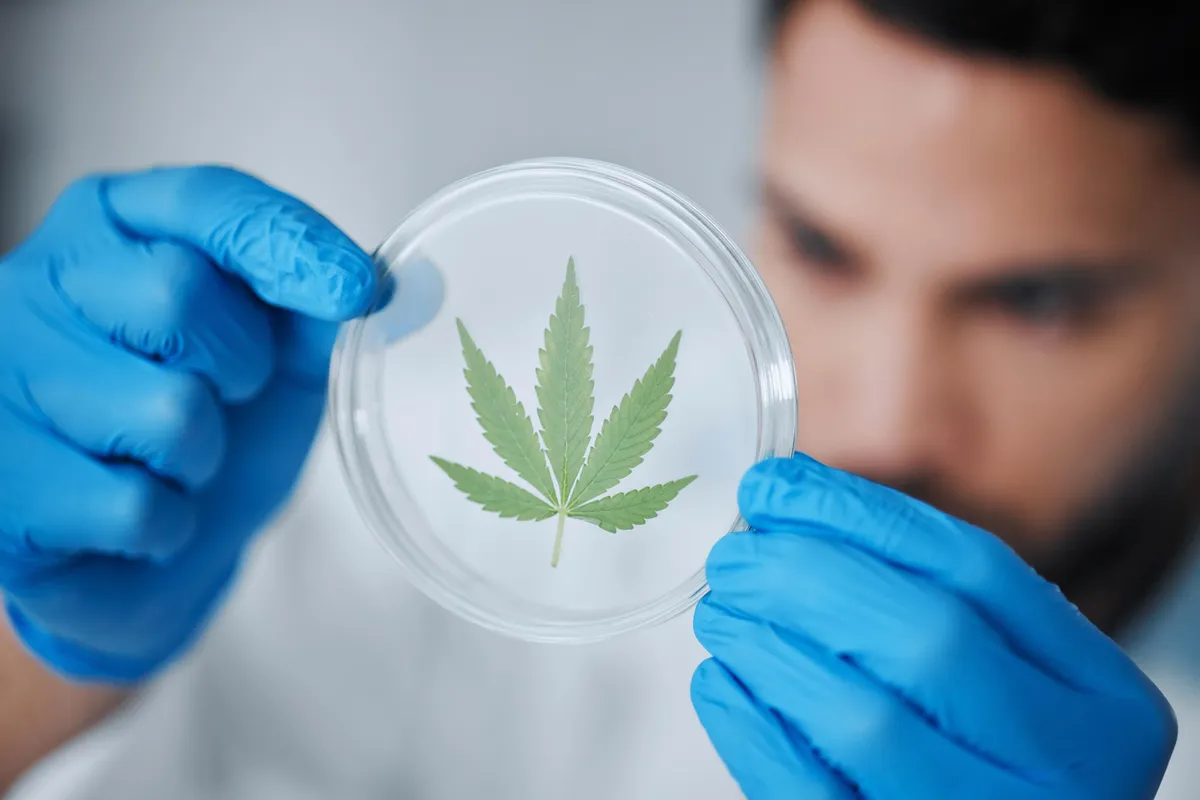
Overlooked compounds in the Cannabis sativa plant may hold new clues for treating challenging forms of pain. Researchers at the University of Arizona Health Sciences found that these compounds could help ease fibromyalgia and pain after surgery.
Their findings, published in Pharmacological Reports, suggest that terpenes can offer pain relief without the "high" linked to THC. This is important because current pain treatments often involve trade-offs between limited relief and unwanted side effects.
Terpenes Offer New Hope for Pain Relief
This research builds on earlier studies by John Streicher, PhD, and his team. They previously showed that terpenes can reduce pain from inflammation and nerve damage caused by chemotherapy. The new study tested if these effects also apply to fibromyalgia and post-operative pain. These conditions are hard to treat and share some features with chronic pain.
We're a new kind of news feed.
Regular news is designed to drain you. We're a non-profit built to restore you. Every story we publish is scored for impact, progress, and hope.
Start Your News DetoxStreicher, a professor at the U of A College of Medicine – Tucson, explained that terpenes are not good for sudden, sharp pain like stubbing a toe. However, they show significant pain reduction for chronic or long-lasting pain. This study was the first to look at terpenes for fibromyalgia and post-operative pain, opening new possibilities for treatment.
Terpenes are natural compounds that give plants their unique scents and flavors. They are found in many plants, creating aromas from citrus to woody smells. In cannabis, scientists are increasingly interested in terpenes because they may have their own medical benefits.
Testing Cannabis-Derived Compounds
For this study, researchers focused on four terpenes common in Cannabis sativa: geraniol, linalool, beta-caryophyllene, and alpha-humulene. All four reduced pain in mouse models of fibromyalgia and post-operative pain. Geraniol had the strongest effect, followed by linalool, beta-caryophyllene, and alpha-humulene.
This finding is especially important for fibromyalgia, a chronic disorder that is not well understood and is difficult to treat. It affects up to 5% of people worldwide. In the United States, about 4 million adults have fibromyalgia, with women more often affected than men.

Streicher noted that there are not many good options for treating fibromyalgia pain. He believes these findings show that terpenes could be a useful treatment, potentially making a big difference for many people.
Rethinking Post-Surgical Pain
The study also highlights the complexity of post-surgical pain. While often temporary, it is not just ordinary short-term pain. Surgery can cause inflammation and make the body's pain pathways more sensitive, leading to a more complex pain state.
Streicher explained that opioids are good for post-surgical pain but can cause constipation, which increases the risk of complications. He said researchers are always looking for better options, and this study suggests terpenes could be a new treatment for post-operative pain.
About 310 million major surgeries are performed globally each year. Even a small improvement in post-operative pain care could help millions of patients.
The Importance of Natural Product Research
Todd Vanderah, PhD, director of the Comprehensive Center for Pain & Addiction at the U of A Health Sciences, emphasized the importance of basic science. He noted that plants, including cannabis, create hundreds of unique chemicals that are still undiscovered.
Vanderah pointed out that nature is excellent at making unique chemical structures. Many of these chemicals have unknown abilities to help with human health and diseases. He gave the example of semaglutide (Ozempic), which came from a chemical structure isolated from the Gila monster. Discoveries from natural products, like Streicher's research, can lead to very useful medications.
The study found that terpenes reduce pain after surgery and in fibromyalgia by acting on the adenosine A2a receptor. This is the same receptor that caffeine targets and blocks. This interaction suggests a possible sedative effect, which could be explored in future studies.
A follow-up study in Neuroscience Letters in 2025 found that terpene blends from cannabis, similar to what people actually consume, can also relieve nerve pain in mice. These blends reduced pain and produced cannabinoid-like effects, confirming that the adenosine A2a receptor plays a key role in terpene-based pain relief.
Deep Dive & References
Select terpenes from Cannabis sativa are antinociceptive in mouse models of post-operative pain and fibromyalgia via adenosine A2a receptors - Pharmacological Reports, 2024
Terpene blends from Cannabis sativa are cannabimimetic and antinociceptive in a mouse chronic neuropathic pain model via activation of adenosine A2a receptors - Neuroscience Letters, 2025