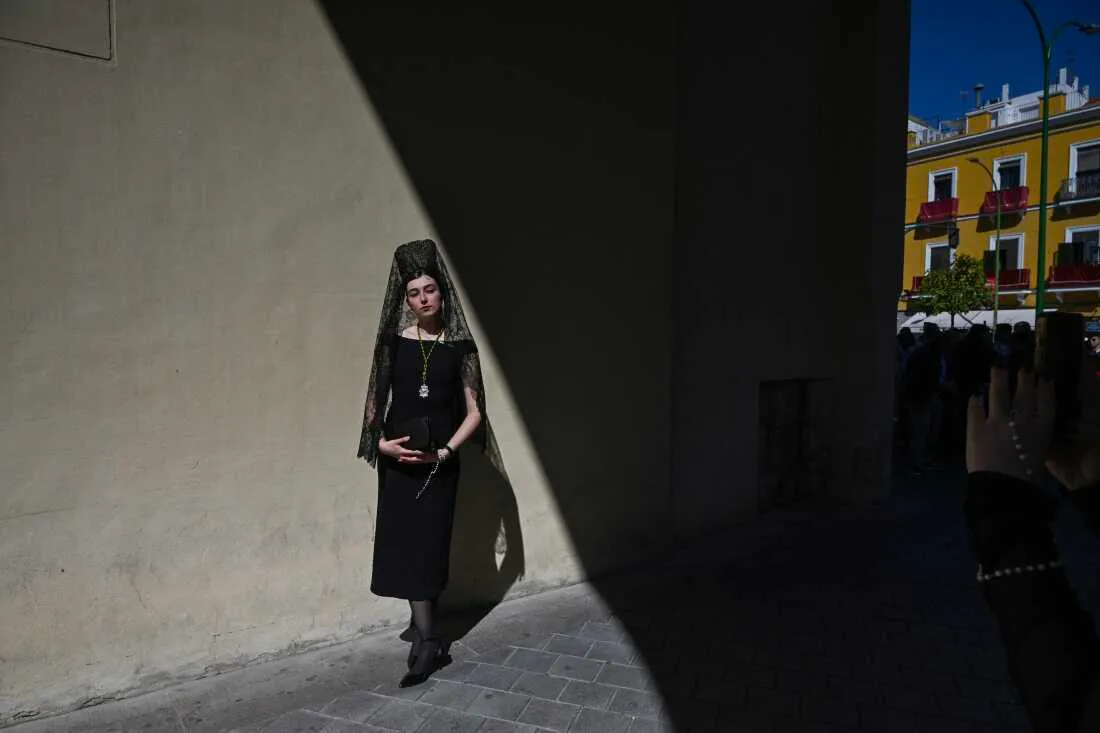
Each spring, Seville, Spain, transforms for one week. The air fills with the scent of orange blossoms and incense. Drums and brass bands play loudly through the narrow streets. Ornate floats, decorated with lifelike statues and flowers, are carried over cobblestones in grand processions.
These parades blend pageantry, penance, and tradition. They are so beautiful they move even those who don't share their religious meaning. This is Seville's Holy Week, or Semana Santa.
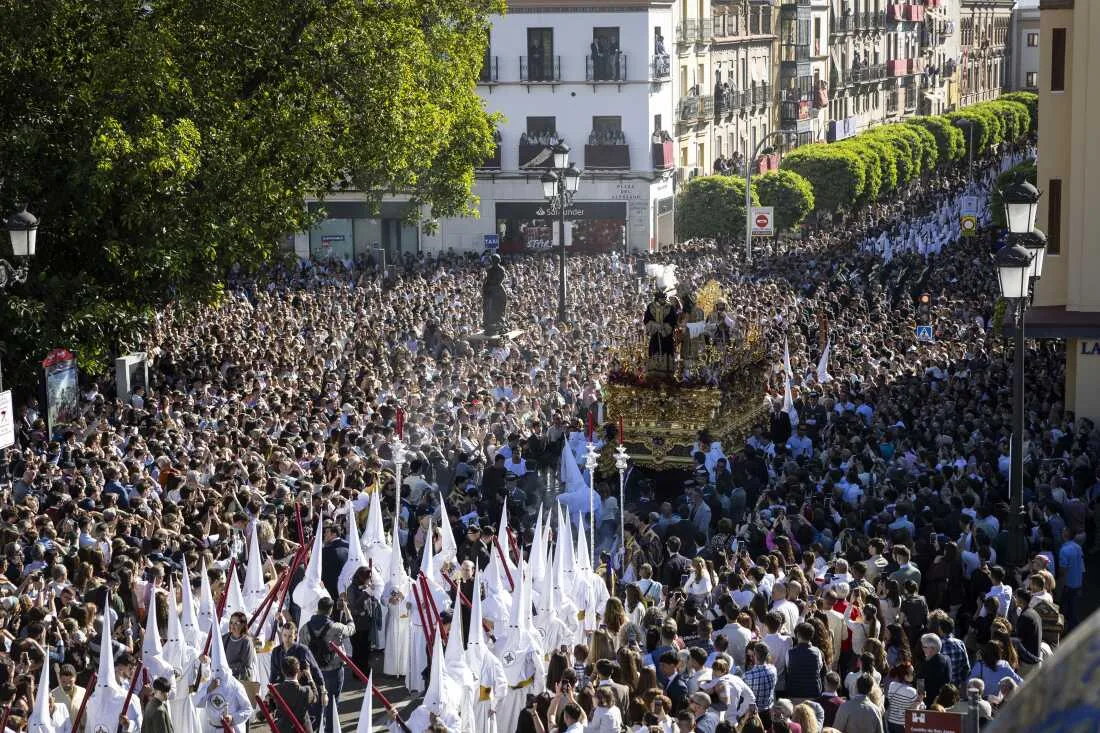
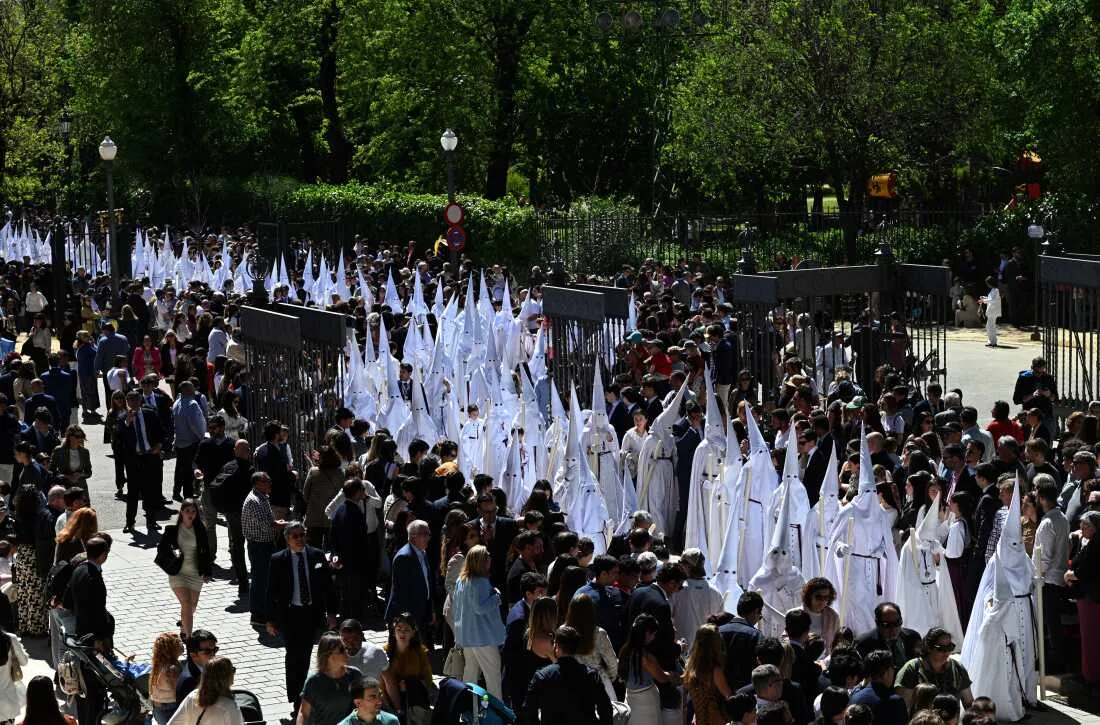
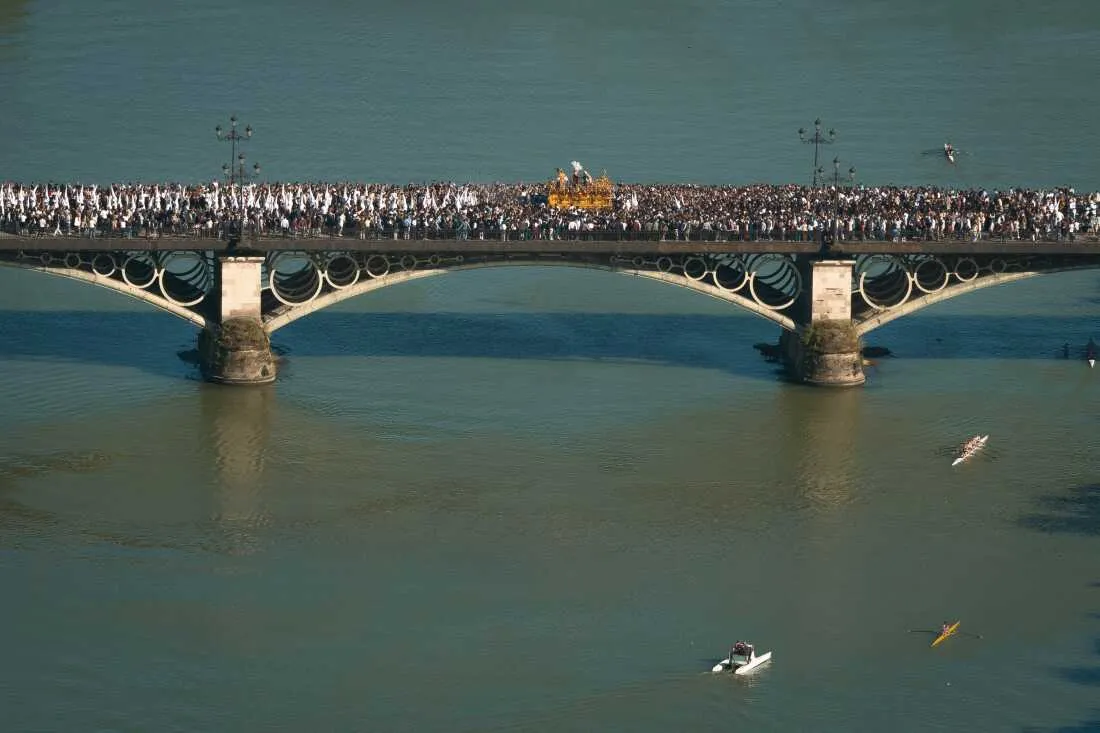
From Palm Sunday to Easter Sunday, Seville's historic center is packed. People come from nearby towns and neighborhoods. Tourists also visit from other parts of Spain and abroad. During this week, 61 Catholic brotherhoods parade through the city. They follow an official route to Seville's Gothic cathedral and then return to their home churches.
We're a new kind of news feed.
Regular news is designed to drain you. We're a non-profit built to restore you. Every story we publish is scored for impact, progress, and hope.
Start Your News DetoxFor many residents, these processions are deeply sacred. Maite Olivares said Holy Week is an expression of faith. She shows her faith through the saeta, a passionate flamenco song. It is sung without music, often made up on the spot, and dedicated to Jesus and the Virgin Mary.
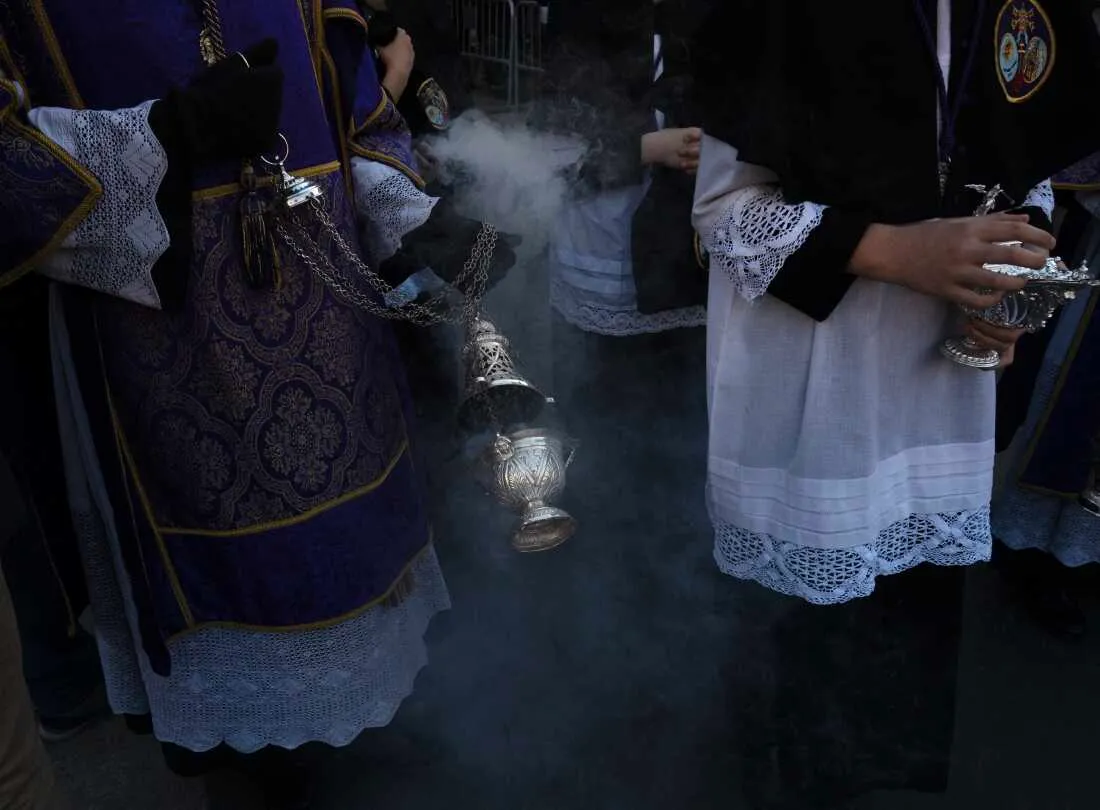
Olivares described the saeta as "something so intimate and so explosive." She feels a wild mix of emotions while singing it. "It's an implosion of everything in a single expression," she said.
Fewer Spaniards identify as Catholic now. Fifty years ago, about 90% were Catholic. Today, that number is 46%, according to a government survey.
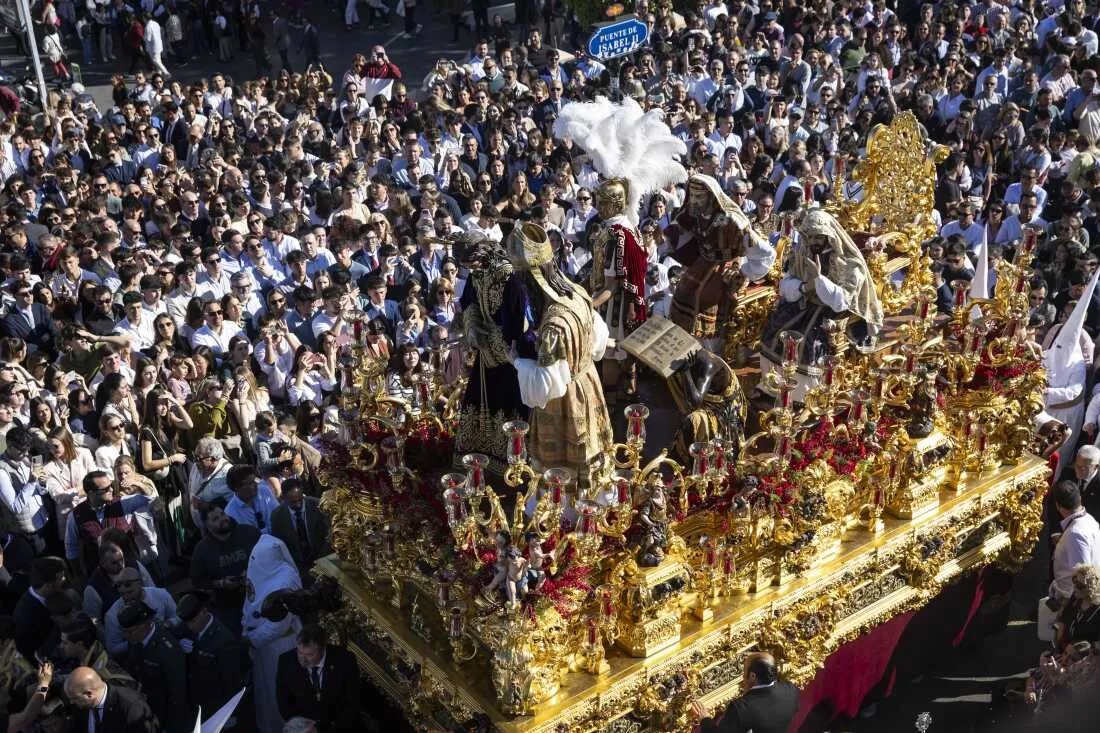
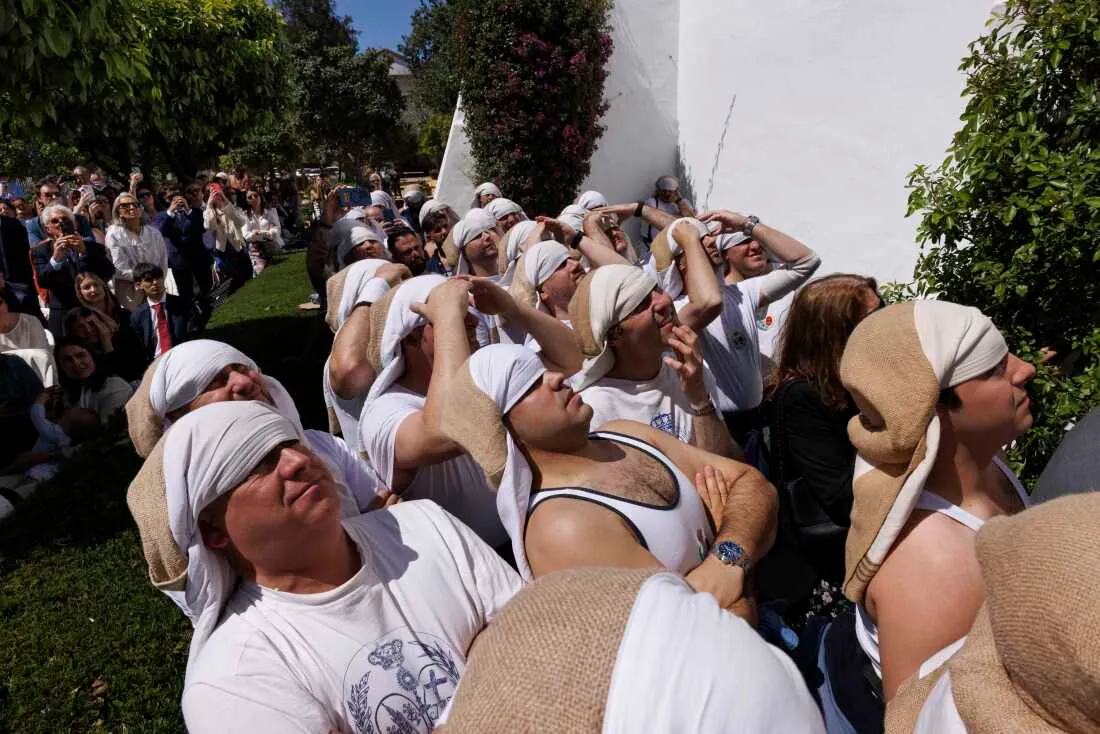 Caption: Costaleros carry the heavy religious floats that are paraded around during Holy Week in Seville. Image: Marcelo del Pozo/Getty Images
Even non-religious Spaniards find meaning in these cultural displays. María Ángeles Bermudo is one of them. She doesn't identify as religious, but Semana Santa processions still move her.
"I get emotional as if it were something religious," she said. "Because I've been watching it since I was a little girl. It's something very familiar to me." These processions are a family tradition for Bermudo. Her father and husband both marched in them. This year, she waited along the parade route for her daughter to pass by.
The Brotherhoods of Semana Santa
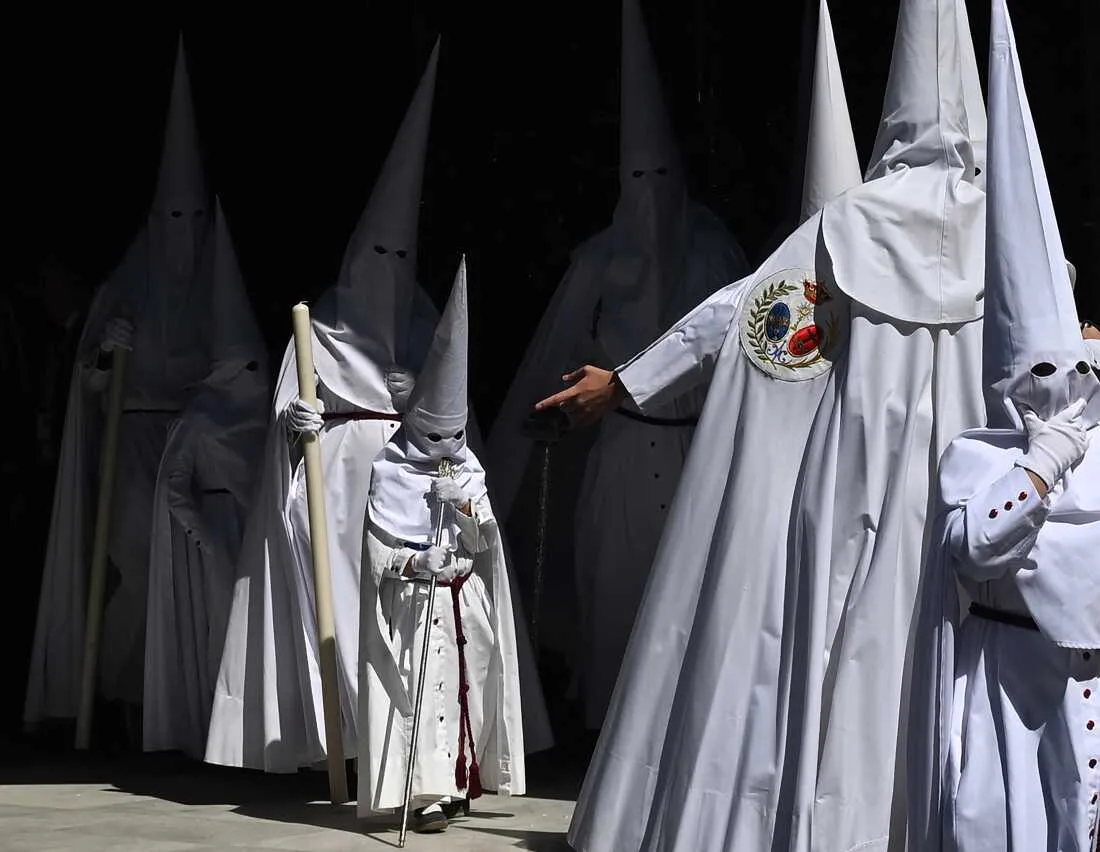
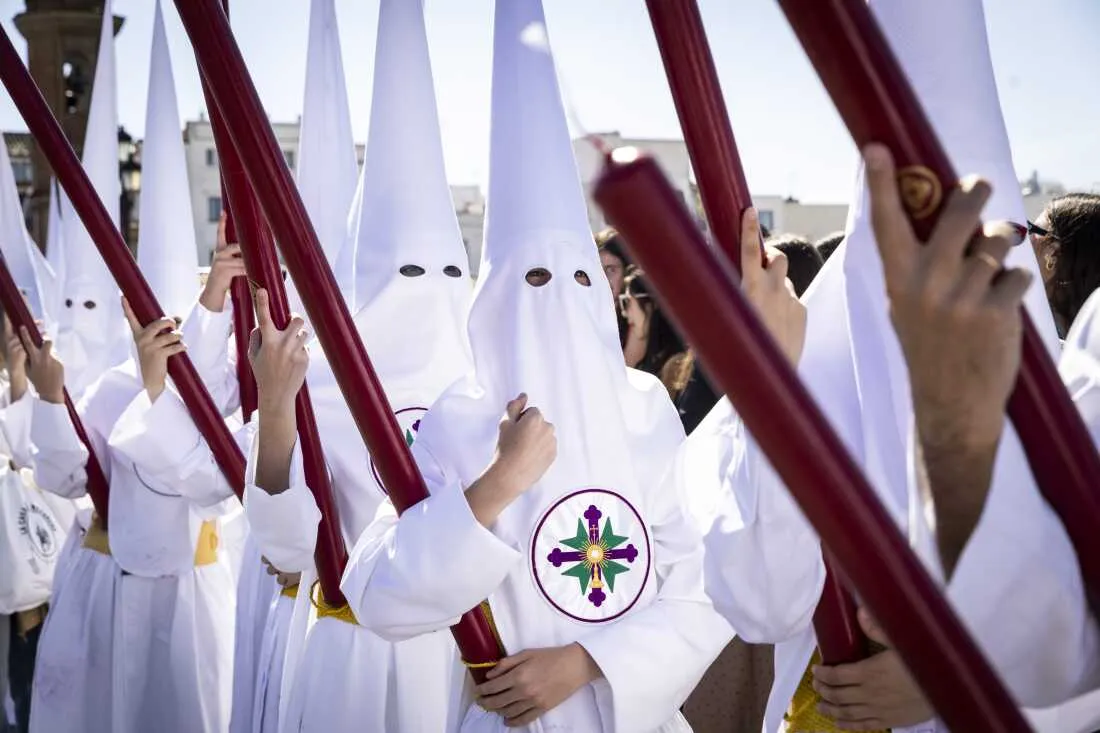
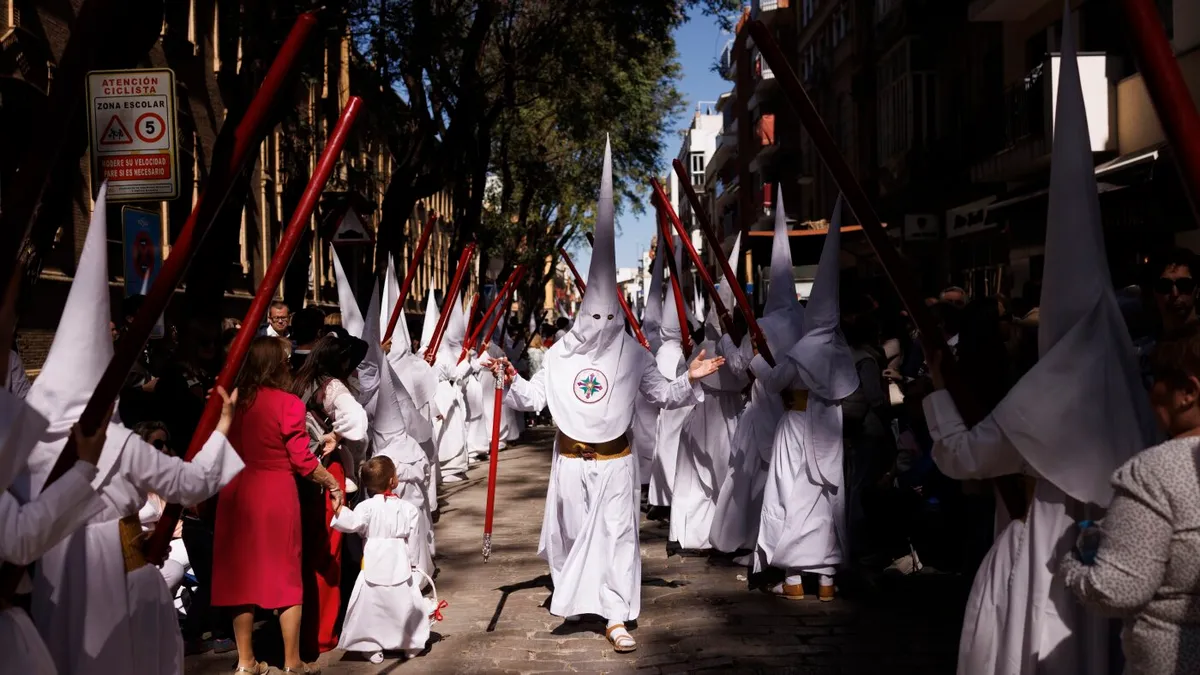
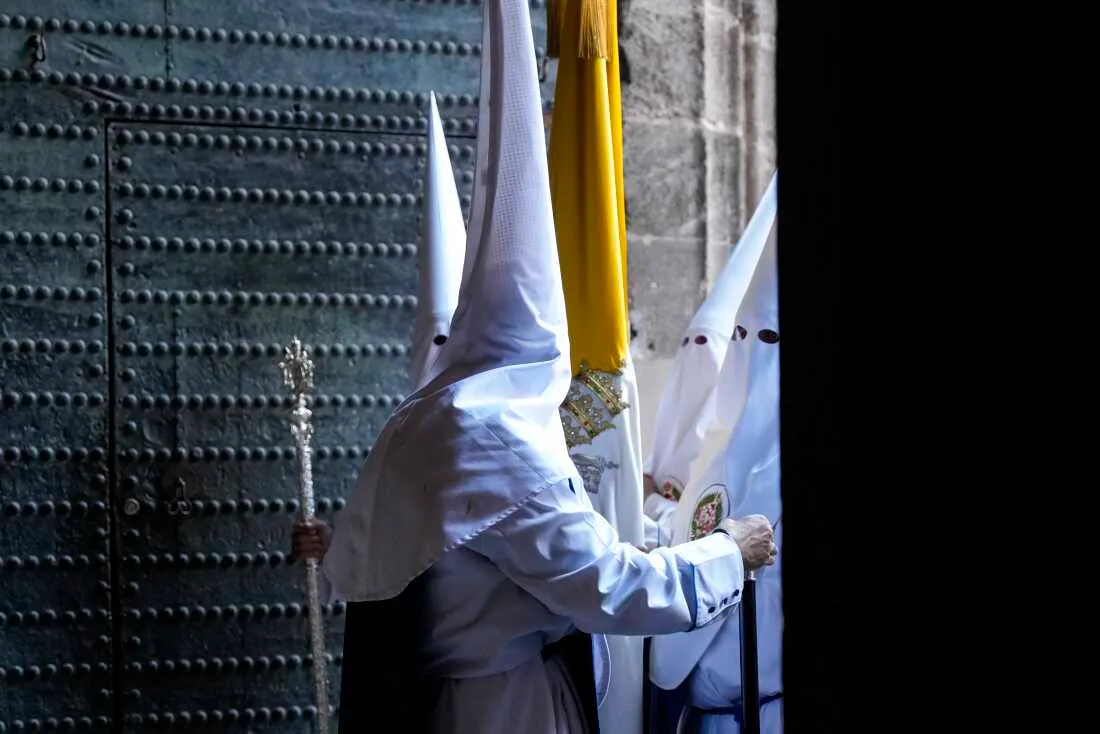
Thousands of Catholic men and women of all ages join these brotherhoods. Many dress as nazarenos, wearing tunics, capes, or robes with a pointed hood. While these hoods might remind Americans of the Ku Klux Klan, this traditional Catholic clothing is much older than the hate group.
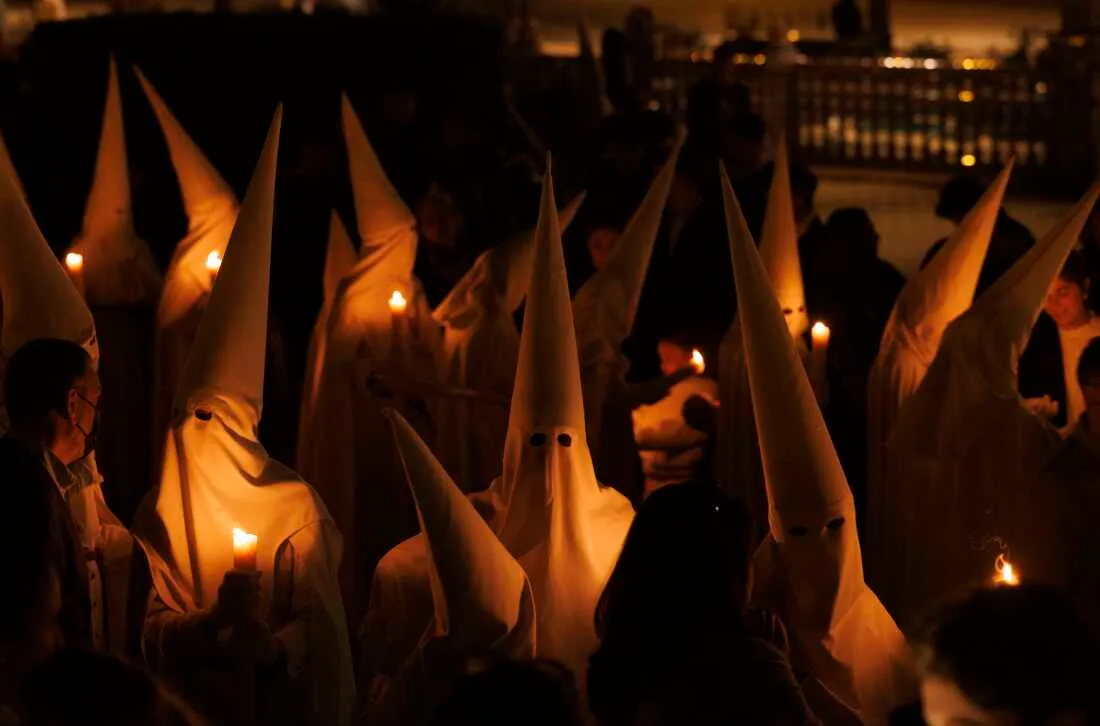
The pointed hoods of nazarenos were inspired by clothes used to shame sinners during the Spanish Inquisition. Today, they symbolize penitence and a desire to be closer to God. For many in the procession, this is a serious act of penance. Some nazarenos walk barefoot, and others carry a wooden cross.
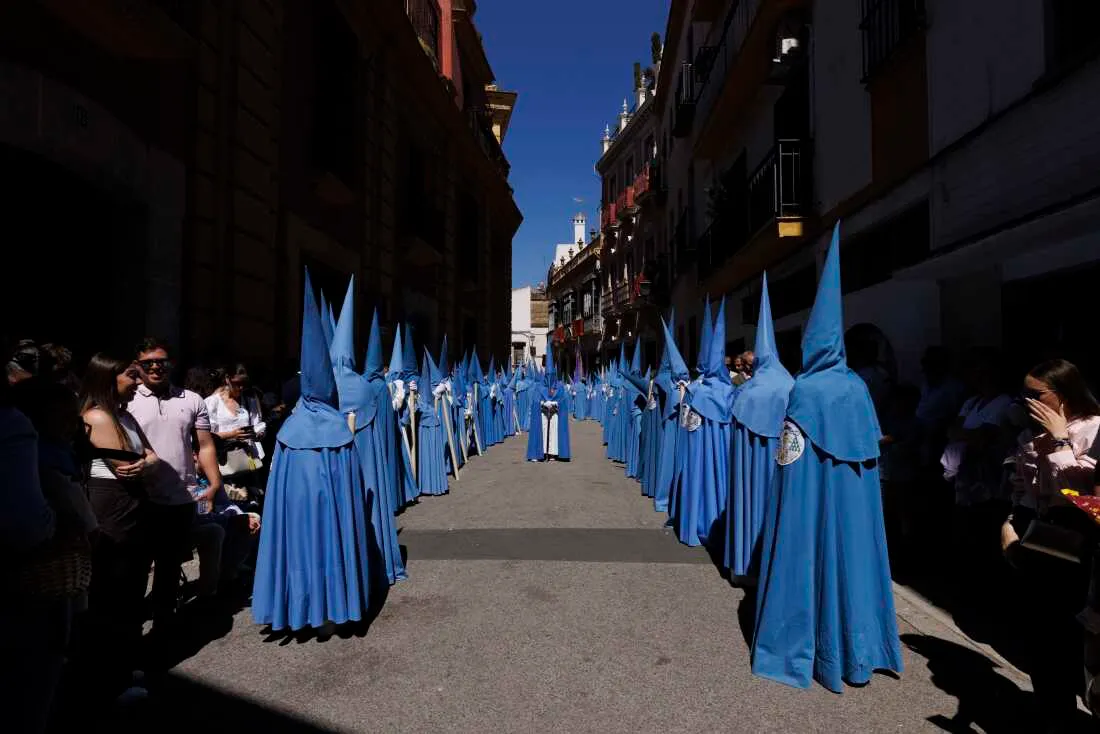
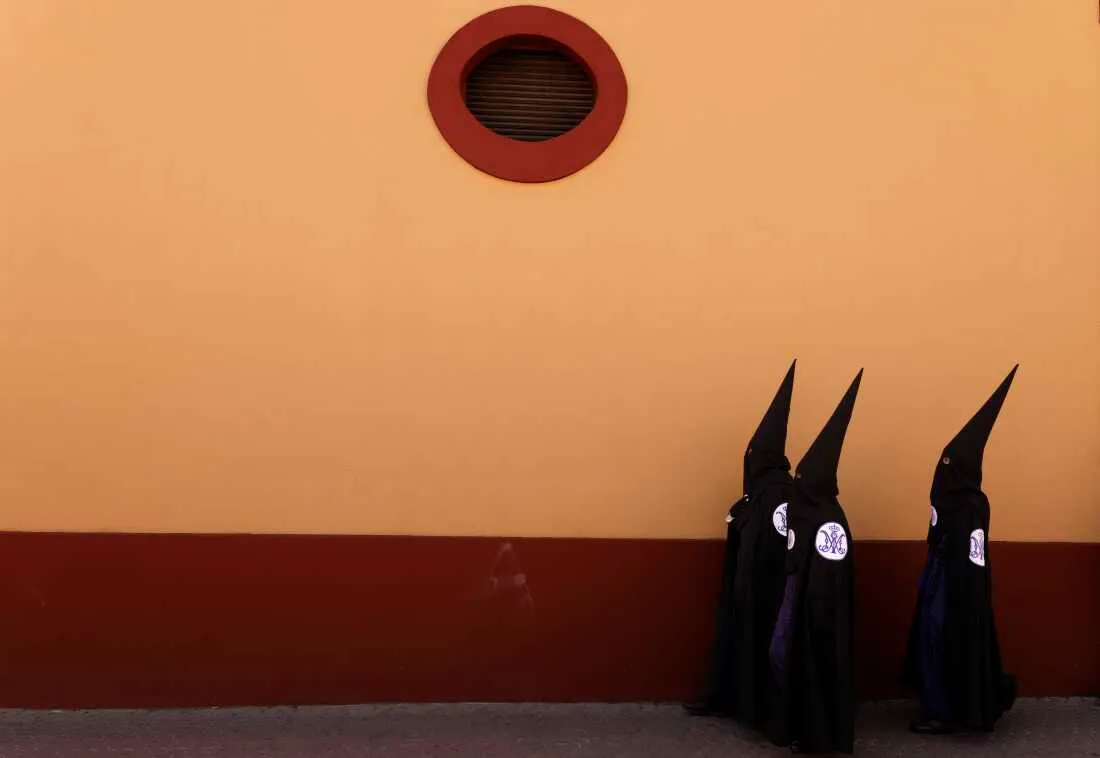
Each brotherhood has its own symbols, colors, and mood. Those wearing white or bright colors usually have more lively processions. Brotherhoods in black are more somber, walking in silence or with minimal music.
Each brotherhood carries different statues to the cathedral. The statues of Christ show various scenes from his Passion. Large statues of the Virgin Mary depict her in different states of mourning, from anguish to hope. These statues are often over a hundred years old and are a source of great pride for their local churches.
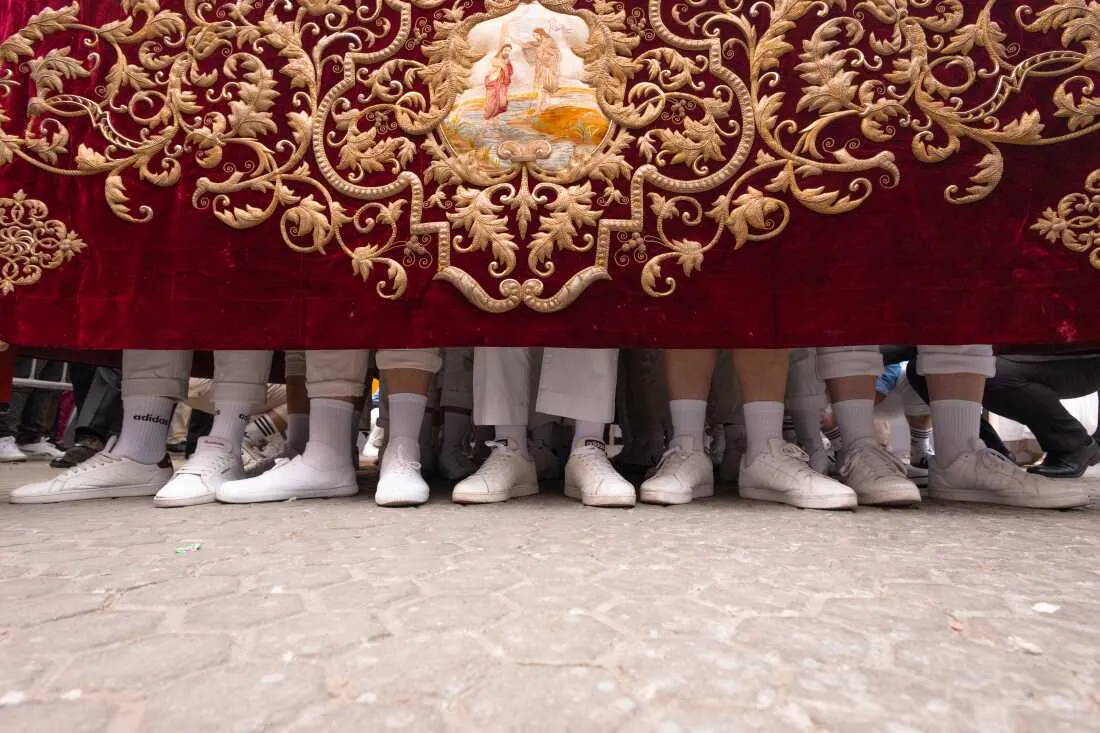 Caption: Costaleros (men who carry floats bearing the statue of Christ or the Virgin Mary) from brotherhood of la Amargura participate in a procession on March 29 in Seville, Spain. Image: Fran Santiago/Getty Images
Moving these statues to the cathedral is a huge physical and logistical task. Before Holy Week, the statues are placed on large platforms with wooden beams underneath. Teams of strong men then work in shifts to lift and carry the floats. These floats weigh thousands of pounds, and the men carrying them can barely see where they are going.
Traditions Carry Forward
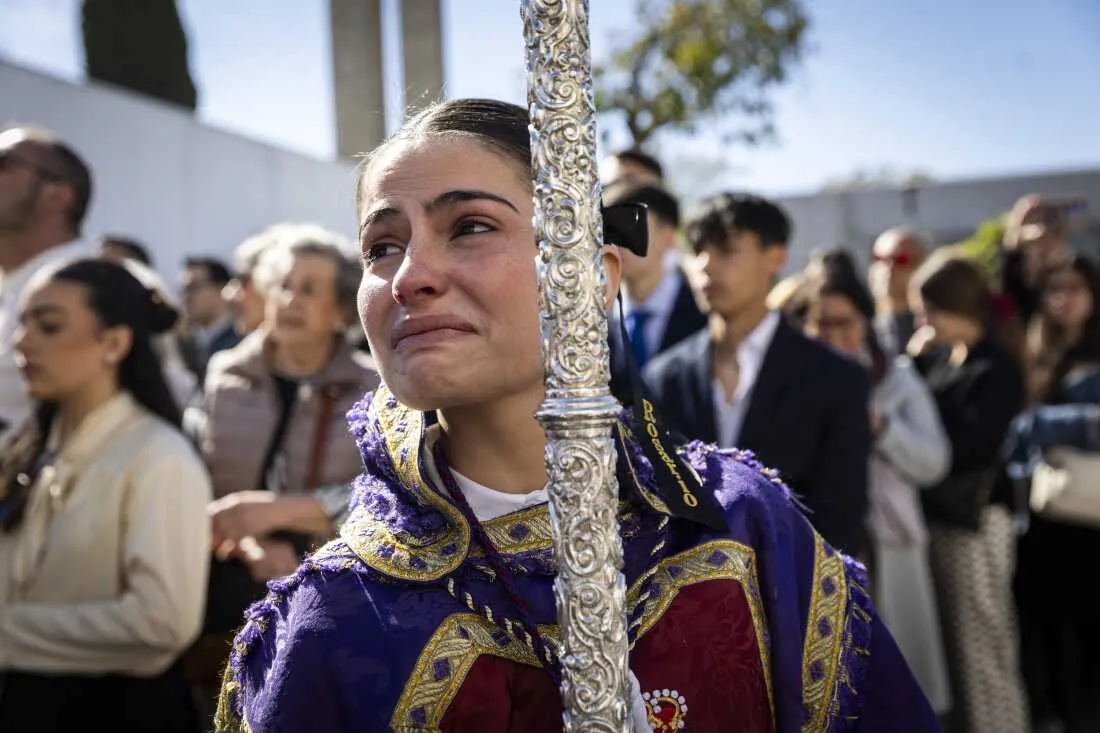
Many traditions have grown around Holy Week in Seville, especially for children. Kids line the parade routes, holding out their hands for candies and devotional cards from the nazarenos. These cards often show images of the brotherhood's statues.
Children also bring balls of aluminum foil to nighttime processions. They ask the hooded nazarenos to pour melted candle wax onto the foil. After years of collecting wax, these balls can grow to the size of a cantaloupe.