Every carrot you pick up at the grocery store represents a handshake with someone you'll never meet. For most of us, that connection stays invisible — we eat the food and move on. But right now, the people harvesting America's vegetables and fruit are facing a crisis, and what happens to them ripples through all our tables.
More than two-thirds of farmworkers in the United States are immigrants, most of whom have lived here over a decade. They're not temporary workers passing through — they're neighbors, parents, community members with roots. And they're watching their futures become uncertain under mass deportation policies.
This summer, the National Immigration Law Center and United Farm Workers brought farmworkers together in Bakersfield, California, for legal clinics where they could speak openly about their lives. Three of them — Alejandra, Ana, and Olivia — shared what it actually means to feed a nation.
We're a new kind of news feed.
Regular news is designed to drain you. We're a non-profit built to restore you. Every story we publish is scored for impact, progress, and hope.
Start Your News Detox
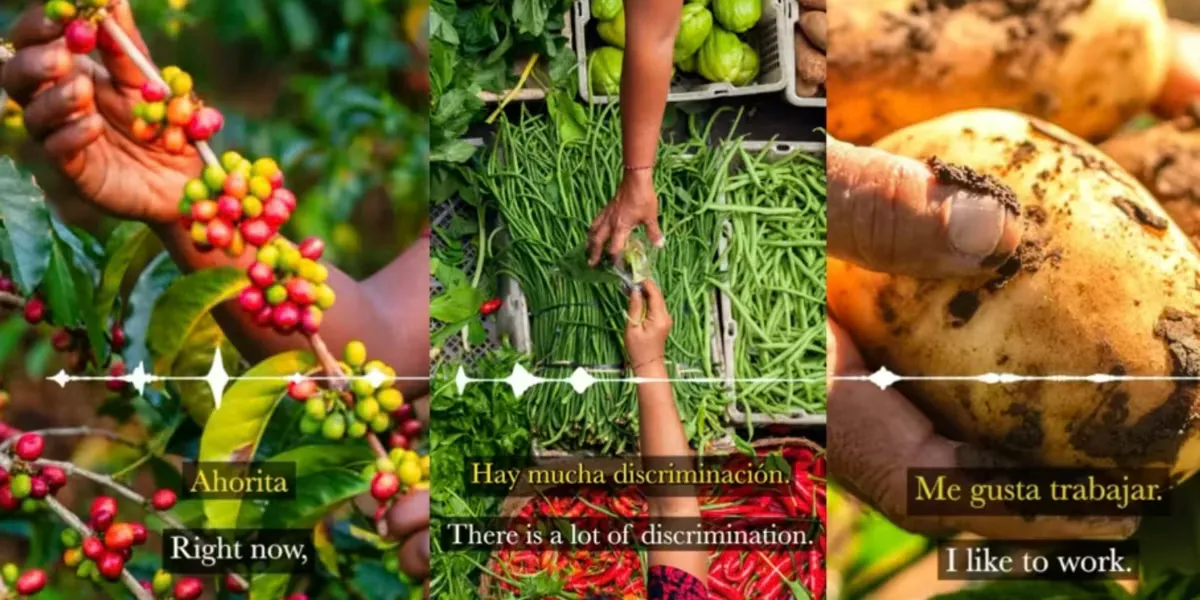
Alejandra has spent five years harvesting carrots, cherries, and everything in between. Some days stretch to 10 hours under the Central Valley sun, which swings between brutal cold and extreme heat. "If you know the Central Valley, you know it has very extreme weather," she said. "Both when it gets very cold and when it gets extremely hot."
Ana supports her 12-year-old son on farmwork wages. The physical labor is grinding, but what weighs on her most is the injustice — the discrimination women face, the expectation to work as hard as men while being treated as less than. She's found purpose in helping other farmworkers push back. "To help farmworkers is to help our community. So that people find out that when we raise our voices, anything is possible."

Olivia speaks with quiet pride about her work. "I like to support my family by helping them get ahead," she said. But that support comes at a cost — the same harsh conditions, the same discrimination, the same danger her coworkers face daily. "We are fighting under the blazing sun, in the rain, in the muddy puddles. But we are still here, and we don't give up."
Then she said something that cuts to the heart of why this matters: "Everything that's in the supermarket is there because of us, because of all the farmworkers. We want to be valued and respected, and we don't want any more deaths or discrimination."
Why this matters beyond the farm
When we don't see the people behind our food, it's easy to ignore what's happening to them. Roman Pinal, National Vice President and Organizer for United Farm Workers, puts it plainly: "Most farmworkers are here with undocumented status, and oftentimes their poverty wages don't allow them to feed their own families. Many workers experience abuses, violations of their rights, and that's not right in this country."
This isn't just a farmworker problem. When labor goes unnoticed, human rights abuses follow. Companies cut corners. Consumers stay comfortable in their ignorance. The system perpetuates itself.
But it doesn't have to. The moment we recognize Alejandra, Ana, and Olivia — the moment we understand that our food has a face — the equation changes. We stop being passive consumers and start being witnesses. We ask harder questions. We demand better. We build a food system that doesn't exploit the people who make it possible.
That's what recognition actually does: it makes the invisible visible, and the visible is much harder to ignore.