Terry McCarty was six when fire took most of his childhood. Seventy percent of his body burned in an accident that left him in a coma for two months, then a hospital bed for a year. Fifty-eight surgeries followed. So did the stares, the rejections, the adults who saw him as a liability instead of a person.
"After the accident I lived in a constant state of fear and uncertainty," he said later. "I struggled to find work as an adult as people always told me I was a liability, and I had started to believe it."
But somewhere in those years of recovery, McCarty made a choice that most people wouldn't: he decided to walk back into the thing that had broken him. He joined the Bellingham, Washington fire department. Twelve weeks of training meant facing fire again for the first time since the accident that nearly killed him.
We're a new kind of news feed.
Regular news is designed to drain you. We're a non-profit built to restore you. Every story we publish is scored for impact, progress, and hope.
Start Your News Detox"In the end, I started to realize the fire didn't control me," he said. "Why should I let fear take over my life?"
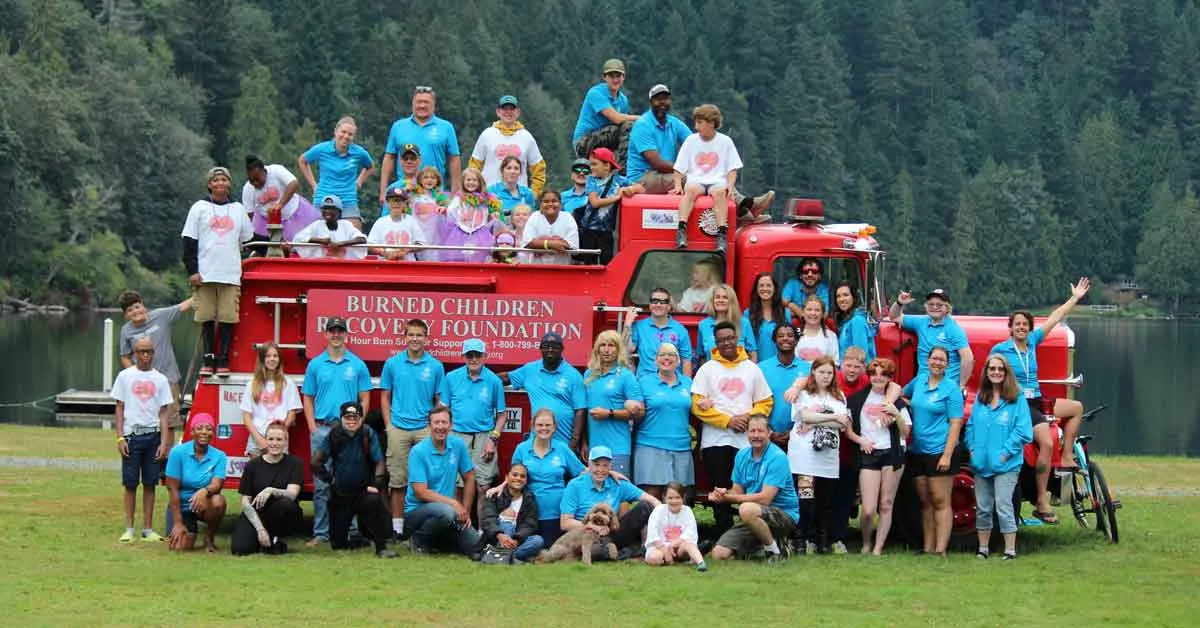
Two years into firefighting, McCarty shifted direction. He'd learned something valuable on the job—that the work itself was healing, but also that he could offer something no textbook training could. He joined Camp Phoenix, run by the Burned Children Recovery Foundation, as a counselor and organizer. The camp brings together young burn survivors for a summer of peer support, therapy, and something simpler but rarer: the chance to just be kids again.
"Fire robbed me of my childhood," McCarty said. "I wanted to give these children a chance to experience being a kid."
Today, he's moved beyond the firehouse into a different kind of rescue work. He runs motivational speaking programs for firefighting groups and builds bridges between firefighters and burn survivors, helping each side understand the other's experience. It's quieter work than running into burning buildings, but it reaches further.
"As a firefighter, you see the worst of your community, and that could really do a lot of damage to your emotional and mental health," he told People Magazine. "I found a little bit of a niche on the outside of them to where I can still be kind of a part of that circle."
McCarty's path wasn't inevitable. At any point—in the hospital, during the bullying years, facing the flames in training—he could have stopped. Instead, he took the worst thing that happened to him and built something that reaches the kids walking the same painful road he did.