On an October morning in 2005, an earthquake flattened Uri, a border town in North Kashmir. Homes collapsed. Roads fractured. And a young dental surgeon named Dr. Itinderpal Singh Bali watched neighbors stand frozen beside the injured, wanting to help but afraid of making things worse.
That helplessness stuck with him. Not as trauma, but as a question: what if they'd known what to do in those first critical minutes?
Now 51, Dr. Bali is known across Jammu and Kashmir as the 'Aid Man of Kashmir'—and over the past two decades, he's answered that question by training more than 30,000 people in first aid and emergency response. Nearly 20,000 of them are from Kashmir itself, a region where ambulances can take hours to reach remote villages, where earthquakes and floods arrive without warning, and where the gap between injury and professional help can mean the difference between life and death.
We're a new kind of news feed.
Regular news is designed to drain you. We're a non-profit built to restore you. Every story we publish is scored for impact, progress, and hope.
Start Your News DetoxFrom One Moment to Organized Action
After the 2005 earthquake, Dr. Bali didn't just return to his dental practice. He worked with earthquake survivors and social activist Nirmala Deshpande, absorbing what he'd witnessed. In 2007, he underwent professional disaster response training with RedR India, a UK-based humanitarian organization. That structure—turning instinct into method—became his blueprint.
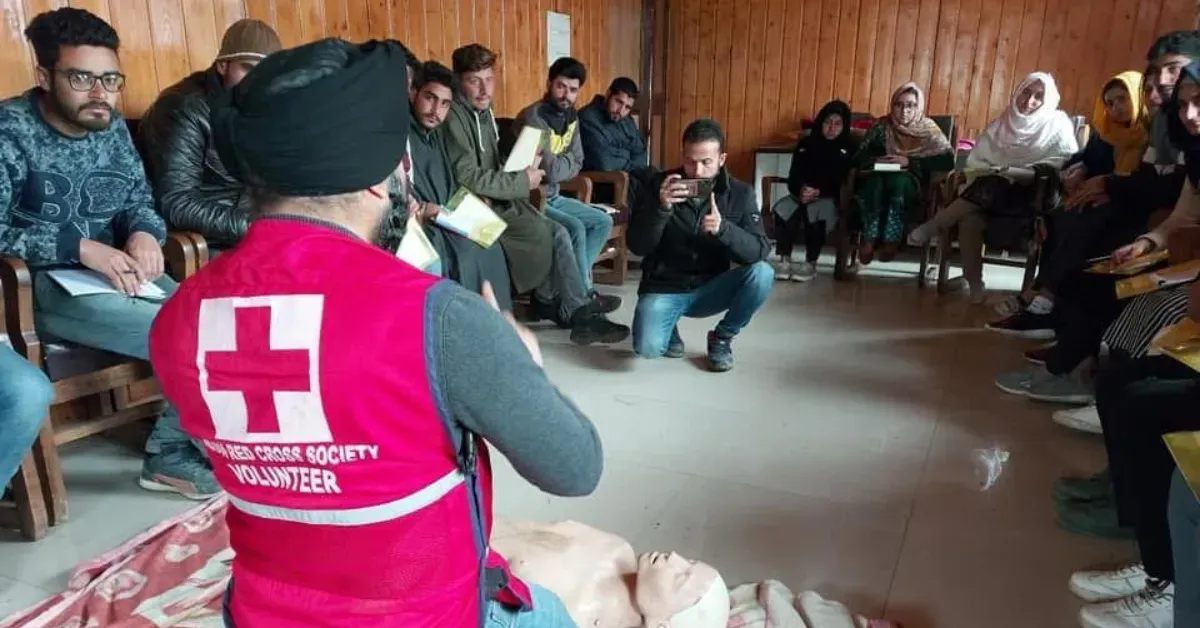
Since then, he's trained students, teachers, police, health workers, army units, drivers, and villagers. One day every week, he conducts free training sessions in Kashmir. His curriculum covers the essentials: how to stop severe bleeding, manage cardiac arrest, handle choking, treat burns and fractures, recognize shock. CPR training sits at the center of his work. He knows the math: every minute of delay in CPR reduces survival chances. Every minute matters.
The Indian Red Cross Society recognized his commitment in 2017 by naming him a National Master Trainer.
Beyond Kashmir's Borders
His work has stretched far. During the 2015 Nepal earthquake, Dr. Bali headed the United Sikhs medical team from India for 15 days, running medical camps in Kathmandu and surrounding villages. He's trained mine workers in Jodhpur, tribal communities in Rajasthan, disaster response teams across Uttarakhand. But Kashmir—vulnerable to earthquakes, floods, avalanches, landslides—remains his anchor. In many remote areas, it's not hospitals that save lives first. It's neighbors who know what to do.
"When I give first aid to someone in pain, it soothes my heart," Dr. Bali says. "And when someone trained by me tells me they saved a life, that gives me real satisfaction."
He still practices dentistry at his clinic in Baramulla, balancing patient appointments with training sessions and disaster drills. Mock exercises with schools and civil administration have become routine—testing readiness, measuring response time, closing gaps.
His vision is simple: trained emergency task forces at district and panchayat levels. First aid education in every classroom and household. "Accidents can happen anytime, anywhere, to anyone," he says. "First aid is something everyone should know."
Nearly twenty years after the earthquake that redirected his life, Dr. Bali continues to train, respond, and prepare. He may be a dental surgeon by profession, but he's a first-aid responder by calling—and that calling has already reached 30,000 people who now know what to do when seconds count.