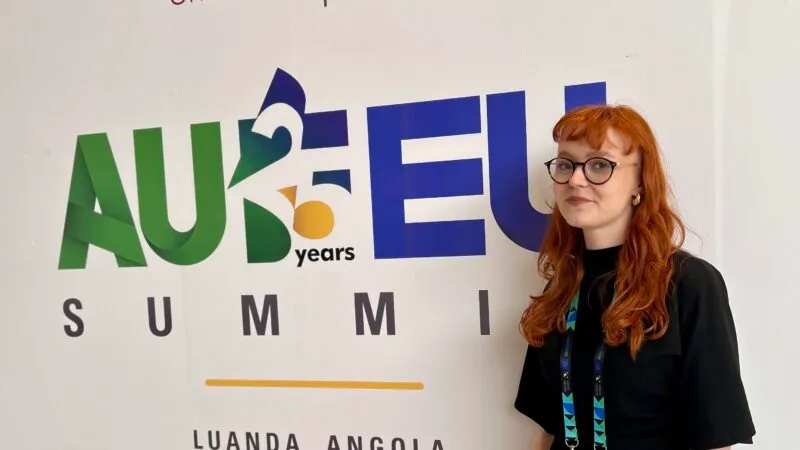
When African and European leaders gathered in Luanda last November, the room was full of talk about partnership. The 7th African Union-European Union Summit brought together officials to discuss a relationship strained by shifting power and global competition. But walk through the corridors, and you'd notice something missing: the people whose futures were being decided weren't there to decide it.
Africa has become the most contested space on the global map. Since the early 2010s, the continent has attracted competing interest from China, India, the United States, Russia, the Gulf states, and Europe itself — each pitching their version of partnership. France has lost ground across much of the Sahel. China's presence, once dominant, now shares space with others. India has become one of Africa's largest trading partners. The U.S. focuses narrowly on critical minerals. Everyone wants something.
The numbers explain why. Africa holds 60% of the world's solar potential and roughly 30% of global mineral reserves. It's also the world's youngest continent — 70% of its population is under 30. By 2050, Africa's population will nearly double. By 2100, it could reach 3.9 billion people. That's not just resources or markets. That's demographic weight that will reshape global politics.
We're a new kind of news feed.
Regular news is designed to drain you. We're a non-profit built to restore you. Every story we publish is scored for impact, progress, and hope.
Start Your News DetoxBut there's a gap between what leaders say and what they do. The African Union declared 2025 the Year of Reparations — a direct conversation about historical wrongs and their ongoing cost. European engagement, though, mostly stayed at the level of acknowledgement. Words without commitments.
That gap widened when you looked at who actually sat at the table. Alma Jokinen, Finland's Youth Envoy to the EU, was the only official youth representative present at the summit. One person. In a room full of discussions about shared futures and intergenerational partnership, the generation that will live with these decisions the longest had a single voice.
It's a telling detail. Partnerships aren't just about trade flows or mineral extraction or geopolitical positioning. They're about whether the people being partnered with actually have a say in the arrangement. Right now, Africa's young people — the continent's defining demographic and its economic future — are watching adults negotiate their futures without them. That's not partnership. That's something else entirely.