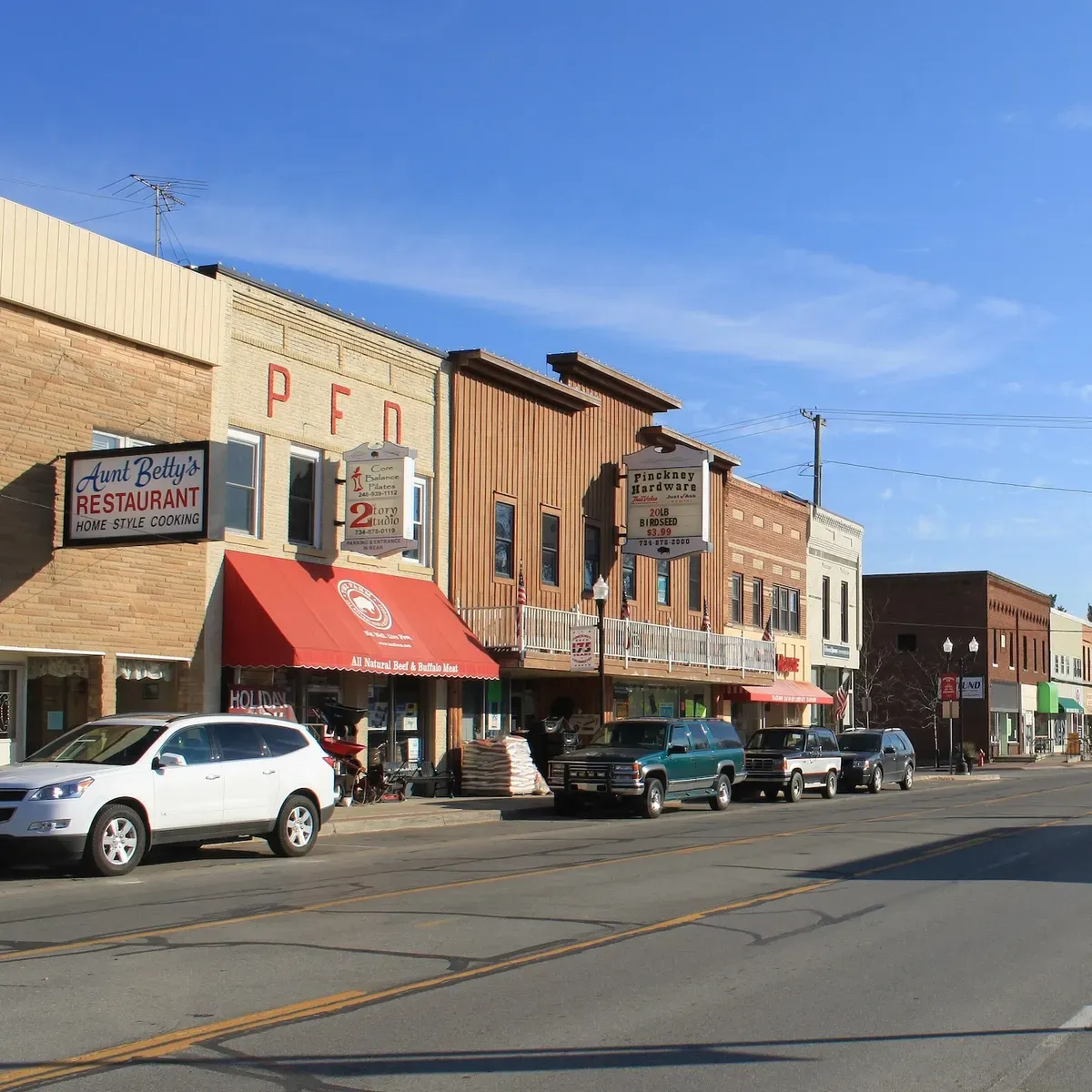
Eastpointe, Gibraltar, Lathrup Village, Marysville, Pinckney, and Ypsilanti are about to test whether small-scale manufacturing can do what big retail chains couldn't: bring their downtowns back to life.
The six communities are joining the Recast Leaders program, a 10-month initiative that helps local leaders identify the manufacturers already working quietly in their towns—the artisans, the tech makers, the small producers—and figure out how to help them grow. The idea is simple enough: strengthen the businesses that are rooted in place, and you strengthen the whole community.
Recast City, the Washington D.C.-based firm running the program, has been testing this theory since 2019. They've worked with over 200 cities across 44 states, from major urban centers down to towns with just 600 people. The definition they use is broad: any business with fewer than 50 employees making something tangible and replicable counts as small-scale manufacturing. That includes advanced manufacturers, tech producers, and home-based artisans ready to scale up.
We're a new kind of news feed.
Regular news is designed to drain you. We're a non-profit built to restore you. Every story we publish is scored for impact, progress, and hope.
Start Your News DetoxHow it works on the ground
The program doesn't impose a one-size-fits-all solution. Instead, local leaders spend 10 months mapping their existing maker ecosystem, talking to the people actually running these businesses, and then drafting action plans tailored to what their community actually needs. Some towns have launched grant programs or microloans. Others have opened shared commercial kitchens or production spaces where multiple makers can work affordably.
Ilana Preuss, who founded Recast City, points out that the real work is listening. "It really is dependent on the needs of the business owners who are in that community today, and responding to those needs," she says. The program typically focuses on Main Streets and downtown districts—the places where a vacant storefront can become a maker's workshop, and suddenly there's foot traffic, there's activity, there's a reason to walk downtown again.
When a small manufacturer succeeds locally, the effects ripple outward. There are jobs for people who want to stay in their hometown. There's a stronger tax base funding local schools and services. There's an entrepreneurial energy that can attract other businesses. And there's something harder to measure but just as real: the feeling that a place is making something, building something, rather than just waiting for outside investment to arrive.
These six Michigan communities will spend the next year finding out whether that theory holds up in their specific context. If it does, they could become a blueprint for how dozens of other towns facing similar downtown struggles might approach the problem differently—not by chasing big corporate relocations, but by nurturing the economic life already happening in their own backyard.