
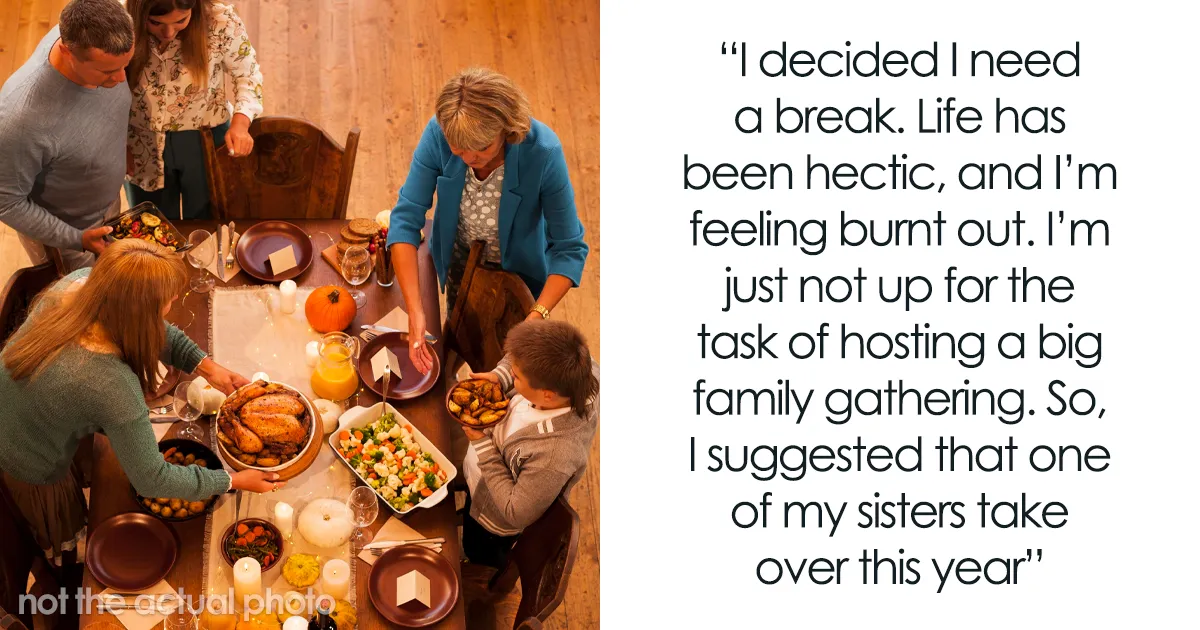
A woman asked her family a simple question: could someone else host Thanksgiving this year?
She'd had a rough year. The oldest sister in a large family, she'd been the one orchestrating their annual gathering for years—the seven-hour cooking marathons, the thousand-dollar grocery bills, the mental load of feeding 30 people and making it look effortless. This time, she needed a break.
Her sisters didn't see it that way. They accused her of being selfish, of abandoning tradition, of letting everyone down. The guilt-tripping began immediately.
We're a new kind of news feed.
Regular news is designed to drain you. We're a non-profit built to restore you. Every story we publish is scored for impact, progress, and hope.
Start Your News DetoxBut here's what the internet saw clearly: this wasn't about Thanksgiving dinner. It was about one person's labor being treated as an obligation rather than a gift.
The real cost of hosting
Thanksgiving hosting is genuinely brutal. A single person managing the meal, the prep, the cleanup, and the emotional labor of orchestrating 30 people's experience typically spends around seven hours cooking alone. The financial burden averages $1,000 just to feed eight people—scale that up and you're looking at a significant hit. Add in the stress of execution, the anxiety about whether there's enough food, the pressure to perform gratitude and abundance on a specific calendar date, and you've got a recipe for burnout that no one talks about until someone breaks.
The woman's sisters were operating from an old script: tradition equals non-negotiable. But tradition that requires one person to sacrifice their wellbeing isn't tradition—it's extraction dressed up as family values.
What actually happened next mattered more than the initial conflict. Once the sisters heard her clearly, something shifted. They recognized her struggle wasn't rejection of them or the holiday—it was a genuine need for support. So they reorganized. The hosting responsibilities got divided. The burden became shared. Thanksgiving stayed on the calendar, but it stopped belonging to one person.
That's the move that actually honors what Thanksgiving is supposed to be about: kindness, closeness, and genuine connection. Sometimes that means being flexible enough to change how you do things, compassionate enough to hear when someone is tired, and brave enough to let go of rigid roles that no longer serve anyone.
The holidays don't need a martyr. They need people who feel genuinely glad to be there.