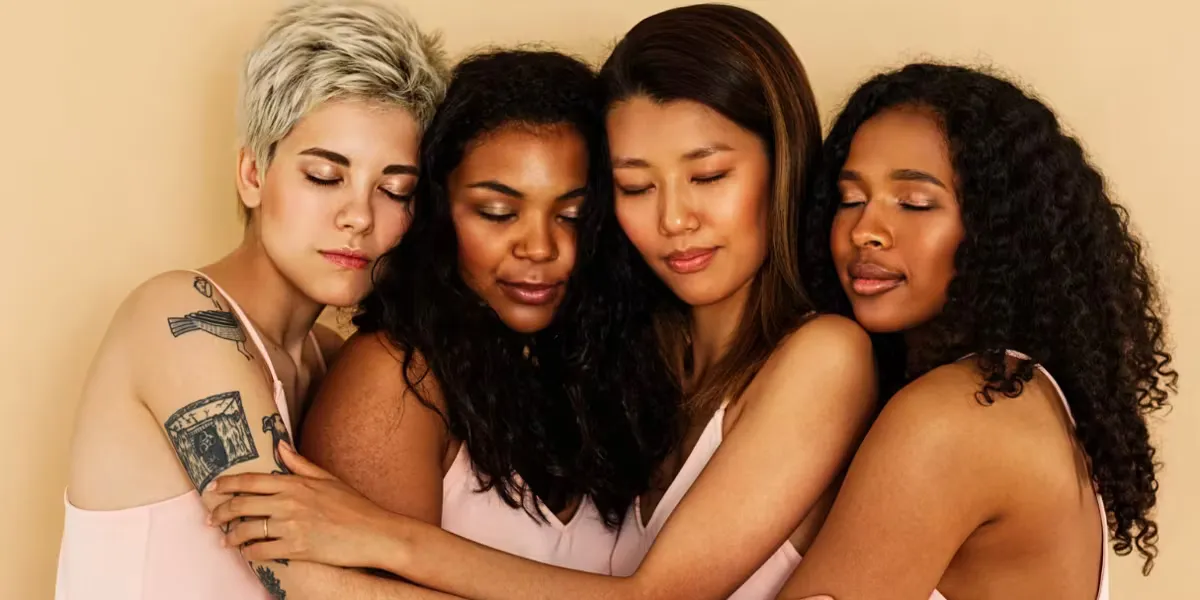
There's a quiet contract that exists between women—one nobody writes down, but almost everyone follows. It shows up in bathrooms, at parties, in moments of vulnerability. It's the thing that makes a stranger become an ally in seconds.
Women on Reddit recently shared examples of their "girl code"—those informal rules of solidarity that seem to transcend friendship status. What emerged wasn't a list of demands or judgment. It was something closer to a survival manual written in kindness.
The Rules Nobody Taught You
The bathroom is where it starts. One woman described it as sacred ground where "we are now best friends" the moment you share that space. It's where someone notices your dress is tucked into your underwear and tells you quietly. Where a stranger offers a tampon without hesitation or shame. Where if you're crying, another woman will ask if you're okay—and actually mean it.
We're a new kind of news feed.
Regular news is designed to drain you. We're a non-profit built to restore you. Every story we publish is scored for impact, progress, and hope.
Start Your News DetoxSafety is the non-negotiable core. Women described immediately stepping in when another woman signals distress, even if they've never met. Pretending to be a relative to extract someone from an uncomfortable situation. Making sure no one leaves a drunk friend alone at a party. "'Don't let that guy know I'm here or where I am' YES MRS PRESIDENT," one woman wrote, capturing the instant solidarity that kicks in when danger is present.
There's also a specific kind of honesty—one that protects rather than wounds. Women won't point out a stain or a smudged eyeliner if there's nothing to be done about it right then. But they'll tell you where they bought that jacket you complimented. They'll share the name of their hairdresser. And crucially, they'll keep your secrets. "Even if we aren't friends anymore, I'll never spread your secrets. They go to the grave with me," one woman said. That's not friendship. That's integrity.
The sharing economy of girl code is practical and matter-of-fact. Tampons, pads, hair ties—these belong to whoever needs them. No IOUs, no awkwardness. Some women even described a silent agreement: if someone's quietly shoplifting period products, you don't see it. The recognition that basic bodily needs shouldn't require money or shame is baked into the code.
And then there's the compliment policy. Women make an effort to tell each other when something works—a haircut, an outfit, a color. Not in a performative way, just as a matter of course. "I always tell a woman if I think an item of clothing or hair style looks stunning on her." Small moments, but they accumulate.
What's striking about these examples isn't that they're revolutionary. It's that they're so widely recognized and so quietly practiced. Women who've never met will move heaven and earth to protect each other. They'll share what they have. They'll keep what matters private. They'll notice when someone needs help and offer it without being asked.
It's a social fabric that's held together not by formal rules but by a shared understanding: we're all navigating the same world, and sometimes the smallest act of solidarity—a door held, a secret kept, a tampon offered—is the difference between feeling alone and feeling seen.