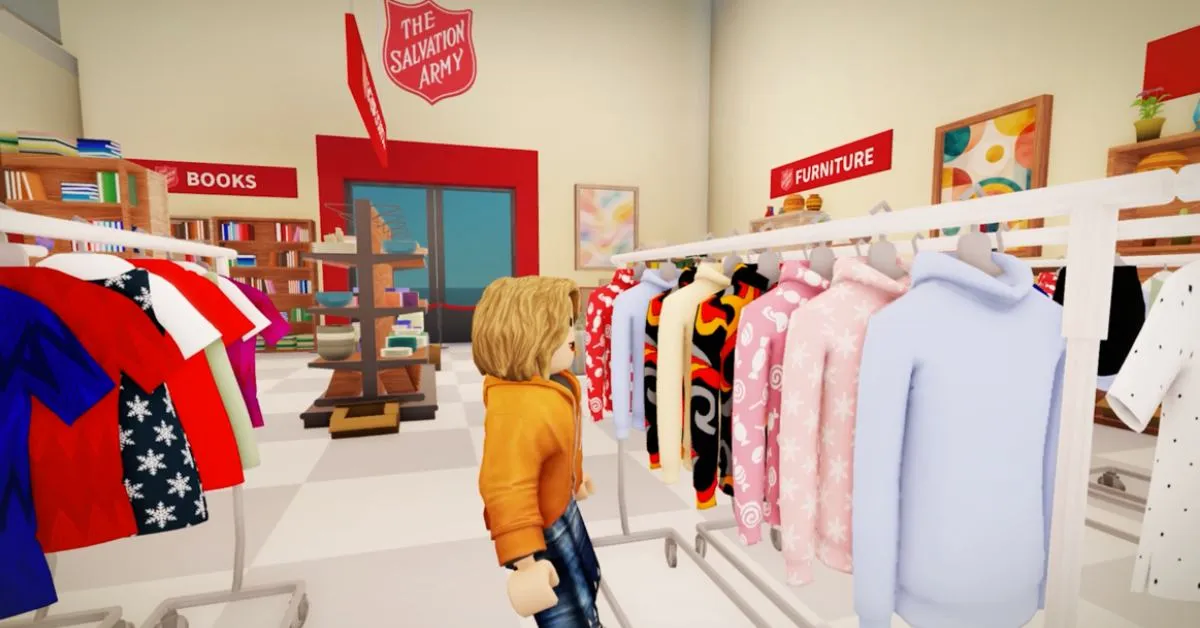
Inside Roblox, millions of players spend real money customizing their avatars with digital clothes and accessories. Now, when they browse a virtual thrift store called "Thrift Score," that money actually goes somewhere: to The Salvation Army, funding real social services in their communities.
It's a small shift, but it points to something bigger about how the next generation shops, plays, and gives.
Where Play Meets Purpose
The Salvation Army opened its digital storefront in Roblox environments like Seaboard City and Daycare Party, working with some of the platform's biggest creators — Preston Arsement (who has over 34 million YouTube subscribers), Brianna, and Russo — to design the clothes available for purchase. When players buy a digital outfit, the proceeds go directly to the organization's real-world work: food assistance, emergency disaster relief, addiction recovery programs, and shelter.
We're a new kind of news feed.
Regular news is designed to drain you. We're a non-profit built to restore you. Every story we publish is scored for impact, progress, and hope.
Start Your News DetoxLast year, The Salvation Army supported nearly 28 million people in the U.S. through these services, operating from more than 7,400 locations nationwide. The scale is hard to grasp until you think about what it means: someone getting a meal they couldn't afford, a family finding shelter after a disaster, a person accessing addiction recovery services.
What makes this partnership interesting isn't just that it raises money. It's that it meets people where they already are. Roblox has over 80 million monthly active players, many of them under 18. They're not scrolling charity websites or watching donation appeals. They're playing games and customizing their avatars. When The Salvation Army showed up in that space, it wasn't as an interruption — it was as part of the game itself.
"For me, everything starts with play," Arsement said in a statement. "Play is how we connect, how we create, and how we open the door to something bigger. But if you lead with play, heart follows." He described the partnership as a way for players to have fun and express themselves while realizing they're part of something meaningful.
This isn't the first time a nonprofit has tried to reach donors through gaming, but it's one of the clearest examples of a major charity meeting a massive player base on their own terms. The Salvation Army could have made a clunky ad or asked for donations. Instead, they built something people actually wanted to interact with.
The real test now is whether this becomes a one-off moment or part of a larger shift in how younger generations engage with charitable giving — not as a separate act of sacrifice, but as something woven into the spaces where they already spend their time.