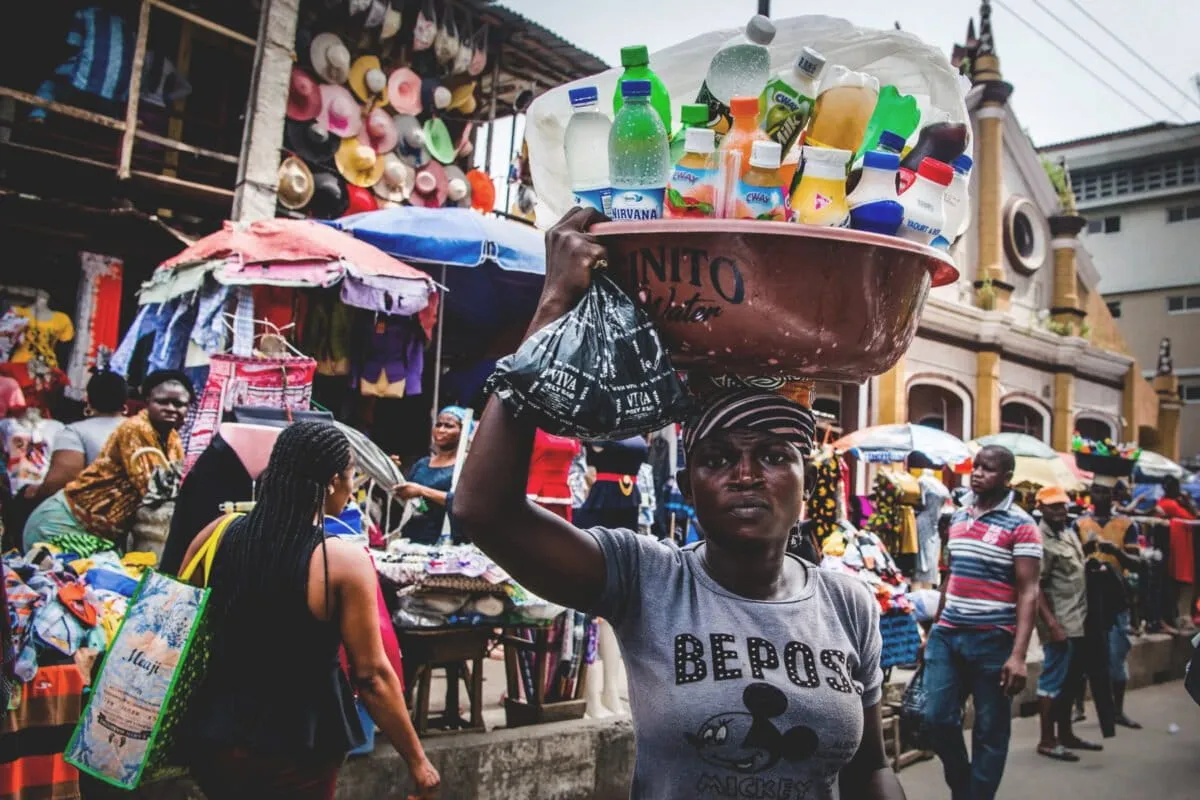
On Ojuelegba's crowded streets, buying a drink takes seconds. Finding a bin for the empty bottle takes much longer—if it happens at all. Glass, plastic, aluminum pile up at junctions and in open gutters, clogging drains and leaving stagnant water pooling between the hawkers and motorcycles.
Bayo Adeolu knew these streets well. After months of job hunting with a plant biology degree in hand, then a failed attempt at selling used phones, he was scrolling social media one afternoon when a post stopped him: "Earn-As-You-Waste." It was advertising Pakam, a recycling startup offering something he hadn't found elsewhere—actual work, and payment for it.
At the information session, the pitch was straightforward: collect recyclable waste from Pakam's clients, sort and weigh it, log everything digitally, then transport it to aggregation points. For each kilogram, you get paid. For Adeolu and thousands like him across Lagos, it was a door opening in a city where doors had been closing.
We're a new kind of news feed.
Regular news is designed to drain you. We're a non-profit built to restore you. Every story we publish is scored for impact, progress, and hope.
Start Your News DetoxA gap between crisis and action
Lagos generates nearly 5.5 million metric tons of solid waste annually—roughly 15,000 metric tons every single day. A 2024 World Bank study found that nearly 40% of this is recyclable. Yet most of it never gets recycled. Instead, it ends up in landfills, scattered across streets, or floating in waterways that people depend on.
That gap—between what could be recovered and what actually is—represents both a catastrophic environmental problem and an economic opening. Private recycling startups like Pakam are moving into that space, betting that they can solve waste while creating jobs and income streams that formal employment hasn't provided.
The model is appealing on paper. Train informal waste collectors, give them a digital platform to track their work, connect them to businesses willing to pay for sorted recyclables, and suddenly waste becomes a commodity. It sidesteps the need for massive government infrastructure investment and taps into existing networks of people already moving through these streets.
But scaling this approach across a city of 15 million people, where waste generation outpaces collection by a staggering margin, reveals the limits of what startups alone can achieve. The problem isn't just finding people willing to collect—it's building the aggregation centers, sorting facilities, and buyer networks that turn collected waste into actual recycling rather than just displacement.
Still, for Adeolu and others who've joined these programs, the immediate reality is different. There's income where there wasn't before. There's dignity in work, even if the work is sorting plastic. And there's a small but growing infrastructure of people and platforms treating waste not as a problem to ignore but as a resource to harvest.
As Lagos continues to drown in its own discards, these private solutions won't solve the crisis alone. But they're proving that the gap between waste and recovery doesn't have to stay empty.