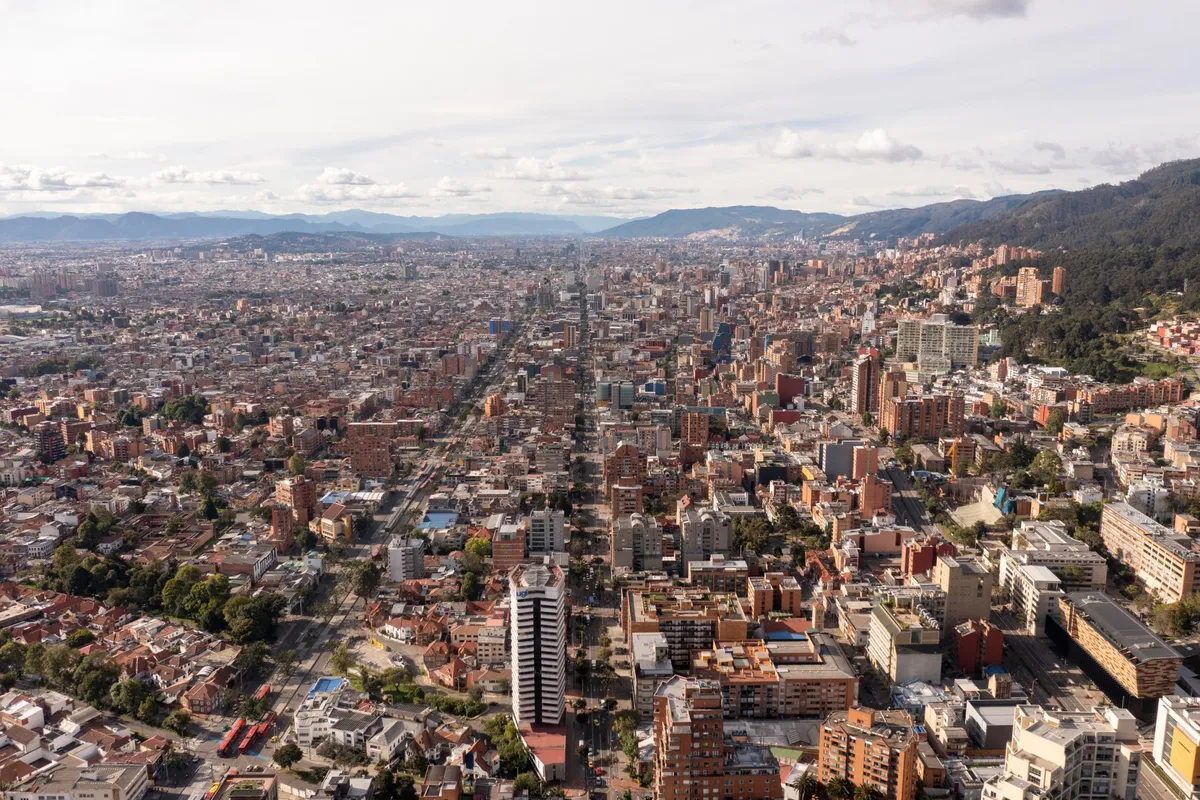
Bogotá didn't start its fight against toxic air in the wealthy districts where change is easiest. It started in Bosa, a southern neighborhood of 700,000 people where respiratory illness rates are climbing and pollution levels run three times above World Health Organization limits.
That choice—to tackle environmental damage where it hurts most—is reshaping how the Colombian capital thinks about equity and air quality.
The shift from crisis to measurable recovery
Twenty years ago, Bogotá ranked among Latin America's most polluted cities, with particulate levels reaching seven times WHO limits. The city's high altitude and geography trap pollution in a way that makes the problem visible on bad days—a gray haze that settles over neighborhoods and stays. But something has shifted. Between 2018 and 2024, Bogotá cut pollution by 24 percent.
We're a new kind of news feed.
Regular news is designed to drain you. We're a non-profit built to restore you. Every story we publish is scored for impact, progress, and hope.
Start Your News DetoxThe change came from transportation. The city built 350 miles of cycle lanes—the largest network in Latin America. It deployed 1,400 electric buses, one of the world's biggest fleets. Three cable car lines now carry residents from hillside communities down to the city center, replacing journeys that used to mean sitting in traffic-choked streets. Two more lines are under construction.
These aren't small moves. They're the infrastructure that changes how a city breathes.
Why Bosa matters
But Bogotá's real gamble came with the ZUMAs—urban zones for better air—launched not as a pilot in a manicured neighborhood, but in Bosa. "This is where air pollution has the most serious impacts on people's health," Adriana Soto, Bogotá's Secretary for the Environment, said plainly. "It's really killing people."
A ZUMA isn't just a vehicle restriction zone. It's a complete neighborhood overhaul. Roads get repaved. Freight traffic reroutes away from schools. Trees are planted in buffer zones between motorways and homes. Schools become the anchors for 39 planned upgrades: new parks, urban forests, green corridors threading through the neighborhood.
The vision is specific: by 2027, Bogotá will have planted 1,500 trees, created over 2,700 gardens, built 362 urban gardens, and established three urban forests. Mayor Carlos Fernando Galán has even announced plans to turn city bridges and sections of the new metro into walled gardens.
"Clean air should not be a privilege," Galán said. "With the ZUMAs we are bringing environmental action to neighborhoods that have carried the heaviest burden for too long."
The ripple effect
The Earthshot Prize named the ZUMA project one of five winners in 2025. More tellingly, other neighborhoods are already asking for one. Jane Burston, CEO of the Clean Air Fund, noted the excitement spreading: "Improving the green spaces and public transport as well means there is a lot of excitement about the clean air zone."
Bogotá is proving something cities rarely demonstrate: that environmental justice and measurable progress aren't competing goals. That you can cut pollution, fight climate change, and prioritize the communities that have borne the worst of it—all at once.
Other cities are watching.