Over 600 lakes, ponds, and reservoirs across India have been cleaned and revived by a single nonprofit — not through industrial machinery, but through landscape engineering rooted in the country's own water-worship traditions.
The Environmentalist Foundation of India (EFI), led by environmentalist and editor Arun Krishnamurthy, has spent years undoing decades of neglect. Silt chokes the water table. Pollution strangles aquatic life. Flooding devastates nearby towns. Each problem traces back to the same root: water bodies abandoned, treated as dumping grounds instead of sacred resources.
Krishnamurthy's approach starts with a cultural insight. "Water and nature worship has been an integral part of our cultural evolution," he says. "We understood that without water, there's no life. For us, water is God." Rather than impose external solutions, EFI works with what the landscape already knows.
We're a new kind of news feed.
Regular news is designed to drain you. We're a non-profit built to restore you. Every story we publish is scored for impact, progress, and hope.
Start Your News DetoxTheir methods are specific and elegant. Shallow-shored embankments let cattle and wildlife drink without getting trapped. Recharge boxes funnel monsoon rains directly into underground aquifers, replenishing supplies that feed agriculture and drinking wells. Islands shaped within lakes become nesting sites for birds while improving water circulation — a detail that sounds small until you realize it transforms a stagnant pool into a living system.
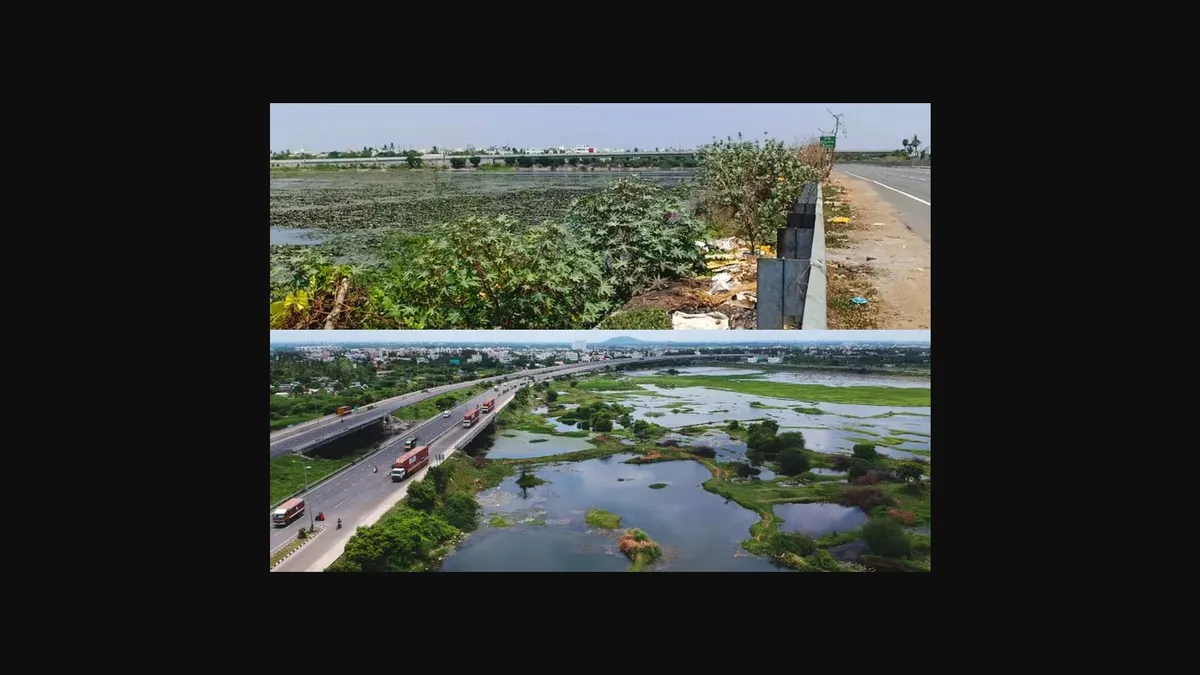
Take Vandalur Lake near Chennai, a 76-acre body of water buried under layers of accumulated silt. The buildup had strangled infiltration rates, leaving the lake unable to absorb water. When monsoons came, it flooded surrounding towns instead of soaking into the earth. EFI's restoration work reversed this entirely — the lake is now what Krishnamurthy describes as a "natural paradise of green and blue."
Chennai alone has seen nearly 75 water bodies restored. But EFI's footprint spans 19 Indian states, each with its own geography, climate, and relationship to water. This isn't a one-size-fits-all intervention. It's landscape restoration that listens.
The numbers matter because they hint at scale — 600 water sources is not a pilot project or a symbolic gesture. It's infrastructure repair happening at the speed of careful, community-rooted work. And it's working. Siltation decreases. Flooding eases. Wildlife returns. Underground water tables rise.
What makes this work endure is that it's not imposed from outside. It's framed in the language of what the culture already values — water as sacred, as life itself. That's not just philosophy. It's the difference between a project that gets funding and a movement that becomes how people think about their landscape.