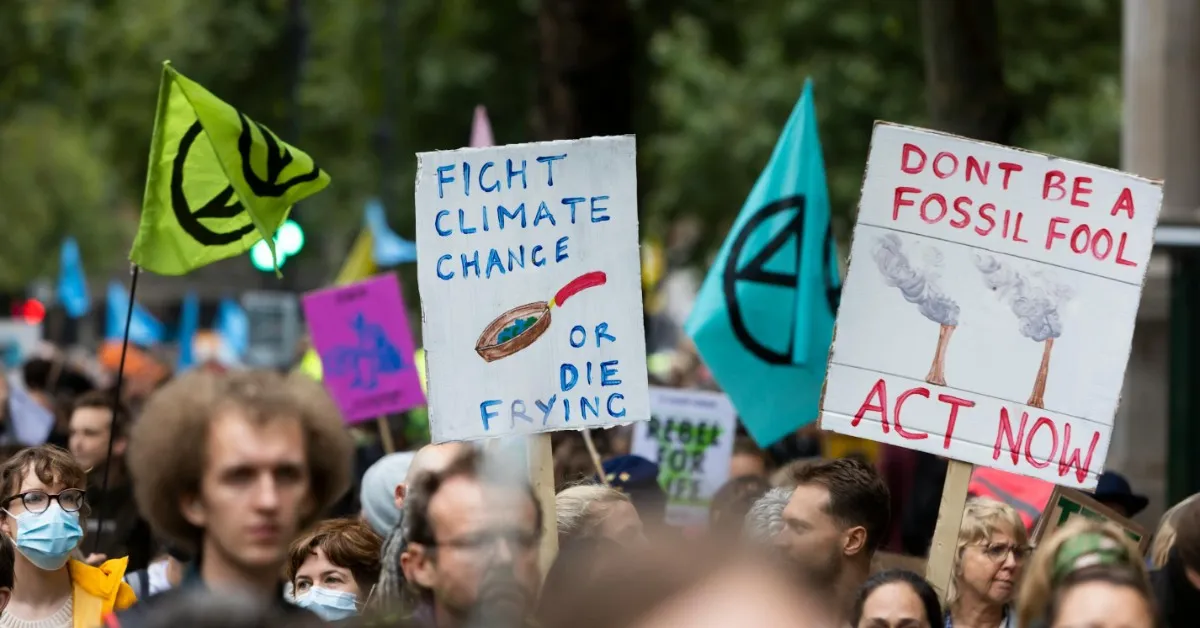
Remember when climate change was called a "con job"? Apparently, the planet didn't get the memo. While some political rhetoric might suggest otherwise, the global effort to keep Earth from becoming a giant sauna is quietly, and sometimes not-so-quietly, chugging along.
Turns out, a lot of this progress is happening whether the top brass is on board or not. China hit its 2030 climate targets five years early, just because. Uruguay now runs 99% of its power grid on renewables, making the rest of us look a little slow. And in South Africa, courts actually told Shell to pump the brakes on oil exploration because, you know, communities have a say.
Even in the U.S., where things can feel a bit... complicated, there are wins. Hawaiian researchers found a native fungi that eats microplastics for breakfast. Long Island Sound's hypoxia levels are the lowest in four decades. New Mexico dropped $50 million on wildlife corridors. Much of this good stuff is bubbling up from the states.
We're a new kind of news feed.
Regular news is designed to drain you. We're a non-profit built to restore you. Every story we publish is scored for impact, progress, and hope.
Start Your News DetoxAnd then there's the Kigali Amendment. The world, including the U.S., agreed to slash hydrofluorocarbons (HFCs) — those super-pollutants from your fridge and AC that trap way more heat than CO2. This international agreement, ratified in 2022, means over 171 countries are planning to cut or stop HFC use by 2026. Because apparently, we all still like cold drinks and breathable air.
The Unstoppable Green Machine
Even programs that faced the chopping block found unexpected allies. The federal Energy Star program, which helps you find appliances that won't make your utility bill cry, was targeted for elimination in 2025. Not only was it saved, but it actually saw increased support after a decade of budget cuts. Republicans, Democrats, over 1,000 manufacturers — everyone decided that energy efficiency is just good sense. Ben Evans of the U.S. Green Building Council put it simply: "strong bipartisan support."
Similar efforts to kneecap electric vehicle infrastructure also backfired spectacularly. When a $5 billion bipartisan plan for EV chargers was paused, more than 40 U.S. states just went ahead and built more charging stations anyway. Joshua Rodriguez of the American Association of State Highway and Transportation Officials noted that states, "red or blue or purple," are all recognizing that EVs aren't going anywhere.
Data Lives!
Of course, there's always a twist. While lawmakers were occasionally agreeing, some administrations were busy trying to make environmental data disappear. Thousands of federal datasets, including tools for tracking climate risks, were changed or removed in one administration's first year alone. Because apparently, if you don't see the problem, it doesn't exist.
Enter Eric Nost, a geographer at the University of Guelph. Anticipating this, his team at the Environmental Data and Governance Initiative (EDGI) started archiving public datasets in 2024. This included the Climate and Economic Justice Screening Tool, which helped identify communities that would benefit from Biden’s Justice40 initiative, allocating 40% of climate investments to "disadvantaged communities." When the Trump administration took down the EPA's EJScreen tool – a vital resource for communities facing toxic pollutants – Nost and his team promptly made it functional again. As Nost put it, the U.S. government is a major publisher of information, and taking it down or changing it is censorship. Fortunately, when environmental data vanishes, people like Nost make sure it reappears.
Because everyone, especially minority communities disproportionately harmed by pollution, deserves fair access to the information that helps them fight for justice. Climate progress, it seems, has a stubborn streak.