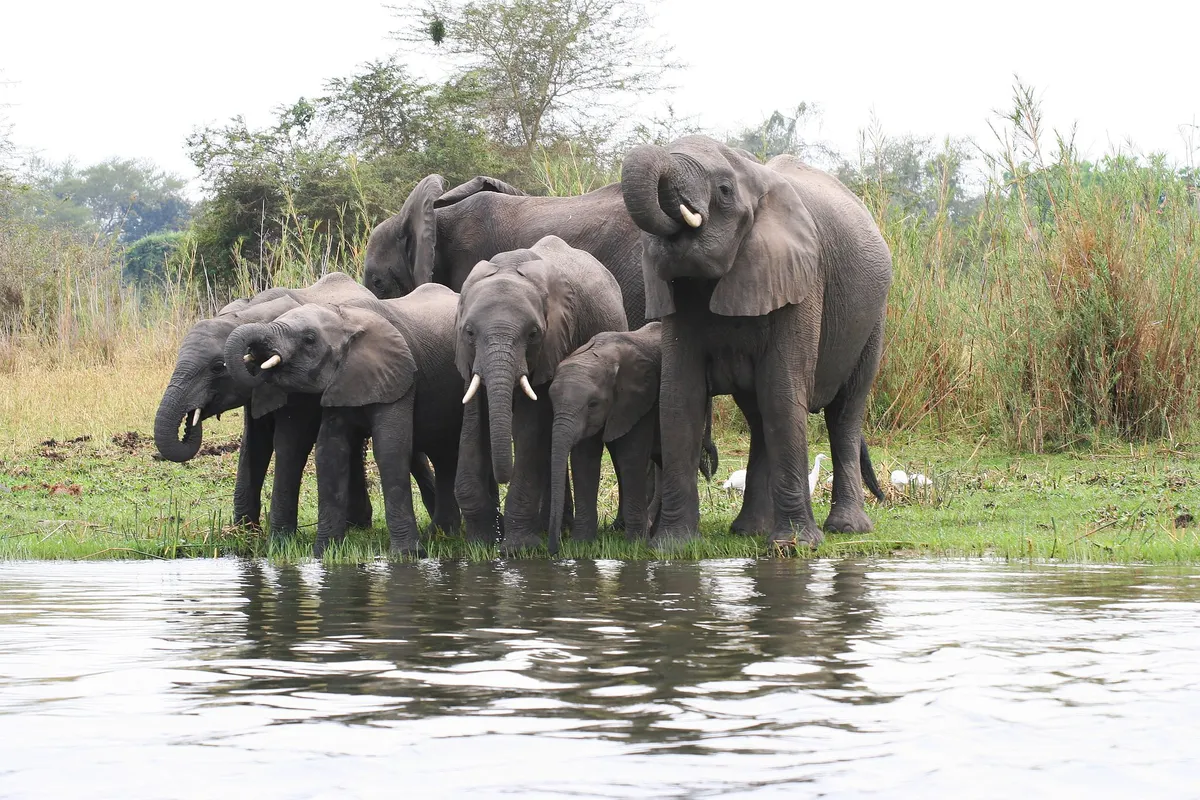
For Zambian farmer Esnart Banda, the idea of her maize and tobacco fields — mere spitting distance from Malawi's Kasungu National Park — surviving an elephant encounter used to be a punchline. Now, two unassuming strands of orange wire are doing the impossible.
These aren't just any wires; they're polywire fences, a rather ingenious solution provided by the conservation group IFAW and Zambia’s Department of National Parks and Wildlife (DNPW). Banda and her team handled the heavy lifting of putting up the fence poles, and the results? "The fence is strong, it helps us," she says, adding with a certain dry satisfaction, "If someone touches it, they fall."

Harry Msimuko, another farmer, has taken this co-existence thing to the next level. His living room now doubles as a "power house," complete with two solar-powered batteries. Every night, he flips a switch, sending a jolt through 6 kilometers (that's nearly 4 miles) of fencing. This isn't just protecting his crops; it's safeguarding the livelihoods of 19 of his neighbors.
We're a new kind of news feed.
Regular news is designed to drain you. We're a non-profit built to restore you. Every story we publish is scored for impact, progress, and hope.
Start Your News DetoxHis biggest recent challenge? Apparently, it's not the world's largest land mammals, but rather hyenas. Let that sink in for a moment. Elephants: deterred. Hyenas: still working on it. Which, if you think about it, is both impressive and slightly terrifying.