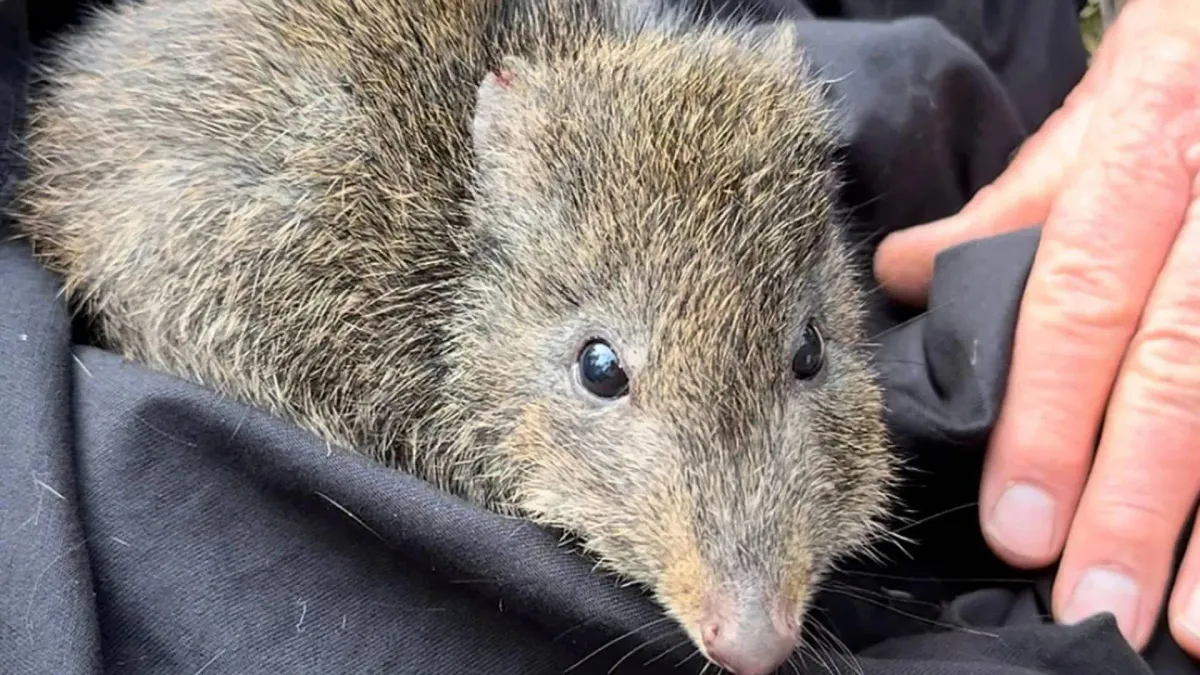
There are fewer than 150 Gilbert's potoroos left on Earth. These tiny, adorable marsupials, native to Western Australia, are so critically endangered that scientists are doing what any good detective would: sifting through their leavings.
Yes, researchers are analyzing DNA from potoroo poop to figure out their favorite fungi. Because, apparently, these little guys are very particular about their mushrooms. And understanding their fungal fixations is key to finding them new, safer homes — especially important when bushfires threaten their already limited real estate.
The Scat-ter Report
Edith Cowan University (ECU) scientists, working with the Department of Biodiversity, Conservation and Attractions (DBCA), are on a mission. Their goal? To create "insurance populations" of potoroos in new, secure locations. The big hurdle has been figuring out what exactly these elusive creatures eat in the wild.
We're a new kind of news feed.
Regular news is designed to drain you. We're a non-profit built to restore you. Every story we publish is scored for impact, progress, and hope.
Start Your News DetoxTraditionally, you'd look for undigested bits in scat. But identifying fungal spores that way is about as easy as finding a specific grain of sand on a beach. Enter eDNA metabarcoding — a fancy way of saying they're pulling tiny bits of genetic material from the droppings. It’s non-invasive, surprisingly effective, and a whole lot less messy than you might think.
They didn't stop there. The team also checked if other local fungi-eaters — like quokkas, quendas, and bush rats — shared the potoroo's gourmet fungal tastes. Turns out, there's quite a bit of overlap. And where quokkas and potoroos roam, the habitat use is strikingly similar.
This means that if you find a spot where these three species are thriving, you might just have found a five-star restaurant and resort for a new potoroo population. Who knew a shared love of fungi could be such a good indicator of real estate potential?
From Presumed Extinct to Poop-Powered Comeback
The Gilbert's potoroo was actually thought to be extinct until its rediscovery in 1994. Since then, conservation efforts have been a bit of a rollercoaster. Turns out, breeding them in captivity is tough because, again, picky eaters. This makes relocating them to new wild areas even more critical.
Good thing they started early. In 2015, a massive bushfire wiped out 90% of the potoroo's main habitat. Luckily, backup populations had already been established on Bald Island and in a fenced area at Waychinicup National Park. Because sometimes, the best defense is a good offense… and a few well-placed islands.
Now, armed with their scat-based dietary insights, researchers are hunting for yet another suitable mainland site. The species currently lives in four spots, two of which are islands off Western Australia. The more options, the better, especially when you're dealing with a creature that survived being declared extinct once already.
These fungi-eating mammals, by the way, are more than just cute. They're "ecosystem engineers," digging for fungi and spreading spores, which helps keep soil healthy and plants thriving. So, saving the potoroo isn't just about one adorable marsupial; it's about giving a whole ecosystem a much-needed boost. And all thanks to a little bit of poop.