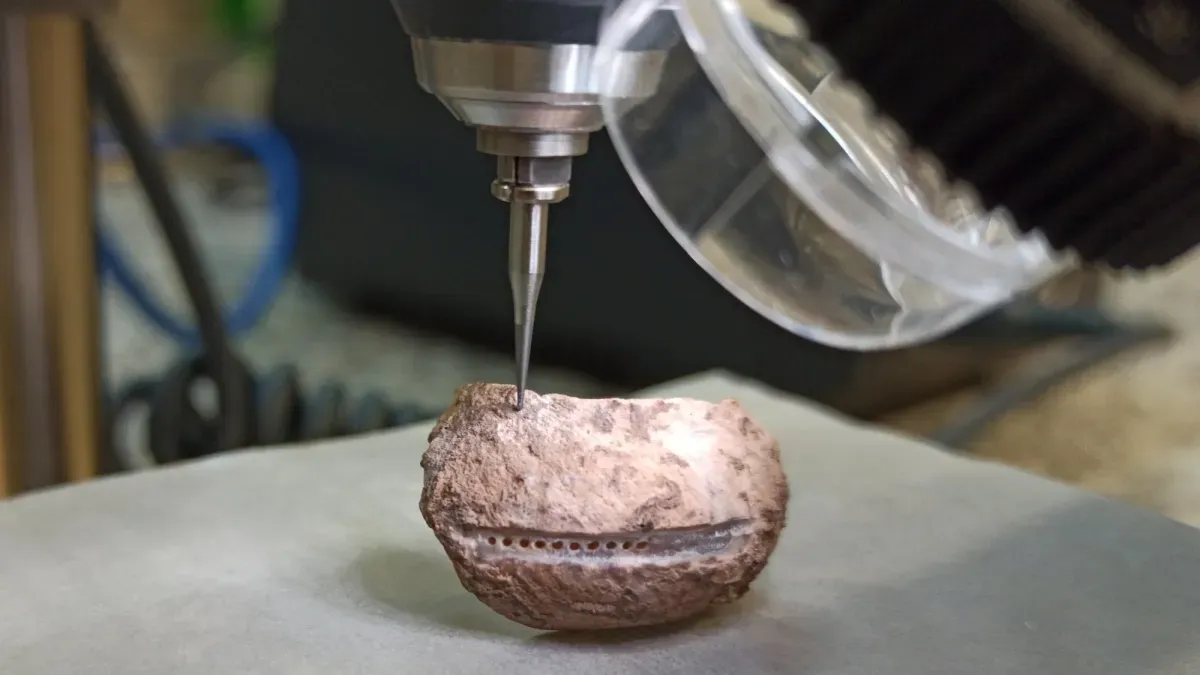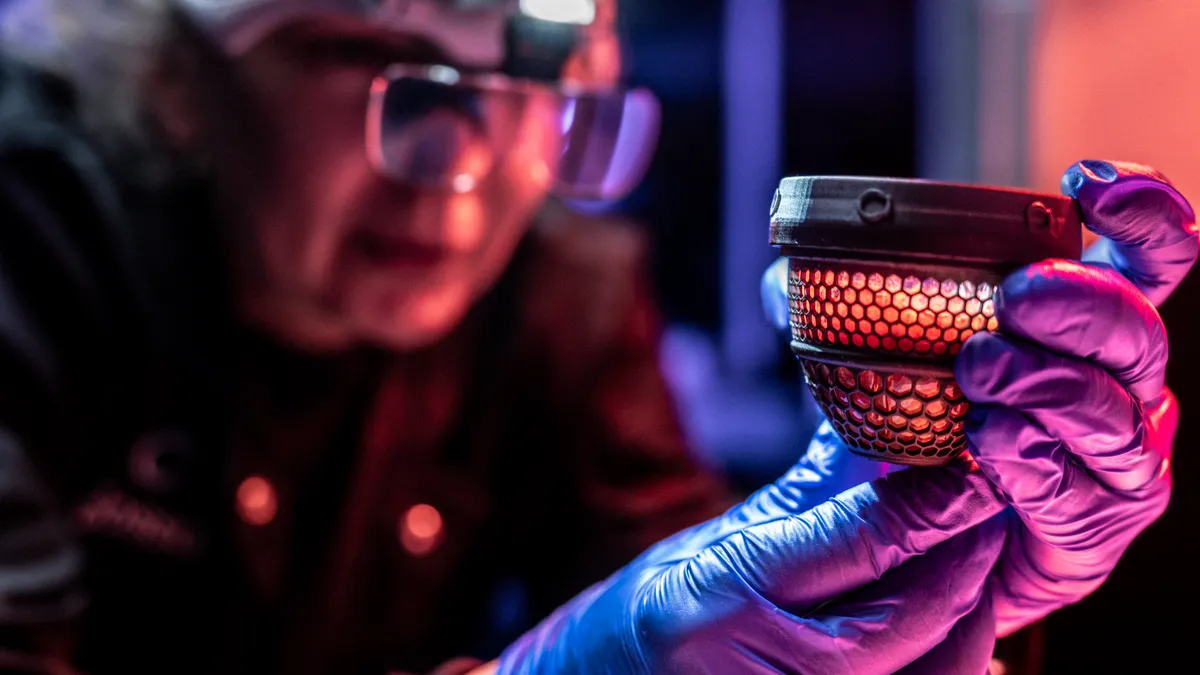
Imagine a high-tech coffee pod, but instead of a latte, it's brewing something far more… feathery. That's essentially what bioengineer Trevor Snyder at Colossal Biosciences just showed off: an artificial egg, 3D-printed, with a chicken embryo happily wiggling inside.
"You can see the little chicken embryos moving around in there," Snyder said, clearly delighted. "It has eyes. It has a heartbeat. It has a beak. It has feathers. It has an eyelid. You can see the wings are developing. Legs. It even is beginning to get little claws on its feet." Which, if you think about it, is both impressive and slightly terrifying.
This isn't just a fancy incubator for your breakfast. It's a critical step for Colossal Biosciences, a company with the rather ambitious goal of bringing back the dodo and the giant moa – two birds that have been, shall we say, permanently unavailable for quite some time.
We're a new kind of news feed.
Regular news is designed to drain you. We're a non-profit built to restore you. Every story we publish is scored for impact, progress, and hope.
Start Your News DetoxBig Birds, Bigger Ambitions
The dodo, for those who need a refresher, was a flightless bird from an Indian Ocean island, sporting eggs a bit bigger than a chicken's. The giant moa, on the other hand, was New Zealand's answer to an ostrich on steroids, with eggs roughly the size of a football. And therein lies the problem for traditional re-population efforts.
"There's no bird on Earth today that could grow a moa embryo inside of one of their eggs," Snyder explained. Which makes sense. You can't just ask a pigeon to carry a football-sized egg. So, artificial eggs aren't just a nice-to-have; for the really big extinct birds, they're the only game in town. The team started with chickens to iron out the kinks.
And iron them out they did. Colossal recently announced a breakthrough: healthy chicken chicks have successfully hatched from these artificial eggs. "The coolest thing I've ever worked on," Snyder called it. So far, more than two dozen chickens have popped out, ready to cluck their way into history.
Now, the team is scaling up for dodo and moa embryos. The plan is to gene-edit cells from the dodo's closest living relative (the Nicobar pigeon) and potentially the moa's (the emu), then grow these modified embryos in the artificial eggs. These high-tech shells are designed to mimic nature, letting oxygen in while keeping everything else safely contained. Andrew Pask, Colossal's chief biology officer, rightly called it "an incredible feat."
The Re-Extinction Debate
Naturally, this kind of science doesn't happen without a few raised eyebrows. Neil Gostling, a paleobiologist at the University of Southampton, is enthusiastic, calling it "brilliant" and suggesting it could help save endangered birds and reptiles. Which is a nice thought.
But critics have questions. Lots of them. Is it ethical? Is it safe? What if these resurrected creatures suffer because their original habitats are gone? Or worse, what if reintroducing them messes up the existing ecosystem? Nic Rawlence, an associate professor of ancient ecology, even argues that this isn't true de-extinction, but rather genetically engineered versions of existing species. "Extinction is still forever," he maintains, which is a bit of a buzzkill.
Colossal, however, is undeterred. Snyder believes they're fundamentally changing the definition of extinction. "We can literally wind back the clock and bring back things that humans caused to disappear," he said. They're even working on artificial wombs for woolly mammoths. Because apparently, that's where we are now. As Brian Lamm, Colossal's co-founder and CEO, put it, "There's nothing more ethical than what we're doing." Which, of course, is a statement that will continue to fuel many, many dinner party debates.