For a long time, scientists thought human evolution was like a tree. Each human relative, or hominin, was a separate branch. The idea was that Homo sapiens emerged in Africa, spread globally, and replaced all other ancient humans.
Neanderthals and Homo erectus were seen as evolutionary dead ends. They were thought to be cousins who left no descendants. But in the last 30 years, these ideas have changed a lot.
A New Look at Ancient Genes
The old "replacement story" is now largely incorrect. This is thanks to new studies, like one published in Nature by Qiaomei Fu and her team. This research did something amazing: it found important biological information from H. erectus fossils that are too old for DNA.
We're a new kind of news feed.
Regular news is designed to drain you. We're a non-profit built to restore you. Every story we publish is scored for impact, progress, and hope.
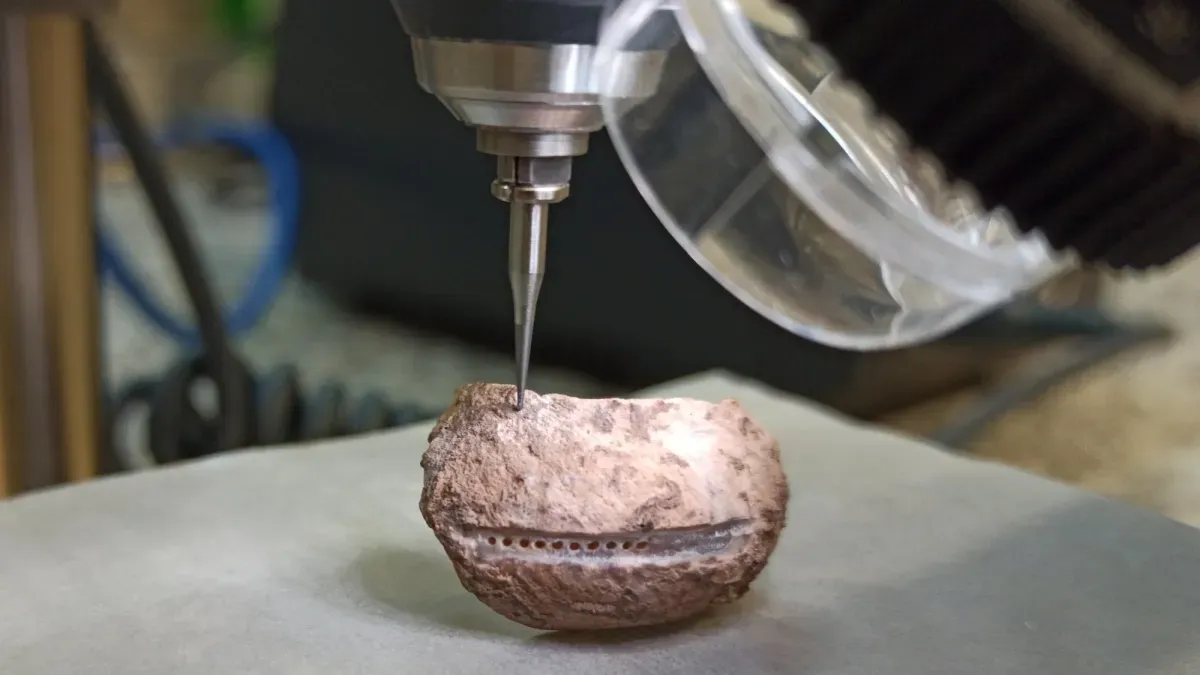
Start Your News DetoxInstead of DNA, the team took ancient proteins from the enamel of six teeth. These teeth came from three sites in China: Zhoukoudian, Hexian, and Sunjiadong. They are all about 400,000 years old.
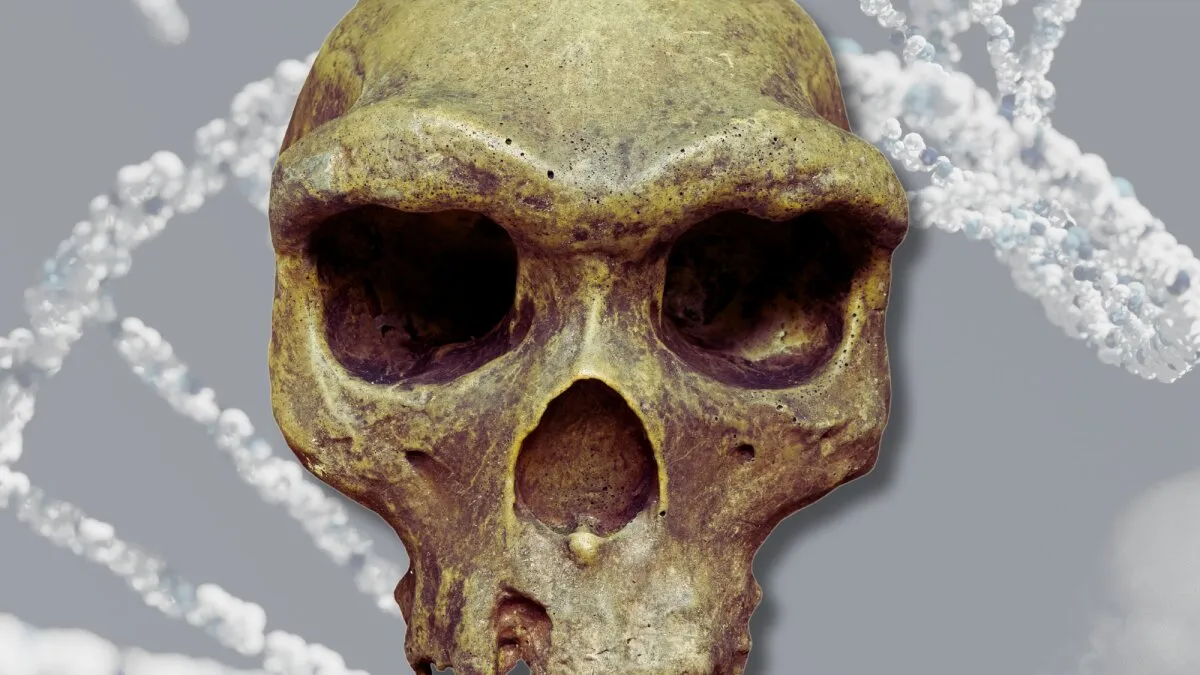
Homo erectus is believed to be the first hominin to leave Africa. Evidence shows this species moved into Eurasia almost two million years ago. It was the most widespread human ancestor ever. The new study suggests that Homo erectus exchanged genes with Denisovans in East Asia around 400,000 years ago. This likely happened through interbreeding.
It now seems some of this genetic legacy was passed to people living today in the Philippines, Papua New Guinea, and across Southeast Asia.
Tooth enamel is the body's hardest tissue. Its proteins can last long after DNA has broken down. The team found something remarkable in these proteins. All six tooth samples had a unique amino acid variant. This tiny molecular signature, a single letter change in the protein, had never been seen in any other hominin, living or extinct.
This variant groups these East Asian H. erectus into a distinct group. It confirms their identity and settles a long debate about whether the unusual Hexian fossils were H. erectus. However, a second variant they share is not unique to H. erectus.
This second variant also appears in Denisovans. Denisovans are a mysterious ancient human group mostly known from a cave in Siberia. The same genetic variant is found in living people. It appears in 21% of people in the Philippines and about 1% in India. This pattern suggests it entered modern humans through Denisovan ancestry.
The most likely explanation is that H. erectus populations in East Asia passed this variant to Denisovans through interbreeding. Then, Denisovans later passed it to the ancestors of modern Southeast Asians and Oceanians. This transfer of genetic material between species is called introgression.
The lineage once thought to be a dead end has left a small but noticeable trace in living human genomes. It's like a molecular thread connecting a Peking Man tooth to people living in Asia today.
Interbreeding Was Common
This study shows that interbreeding between ancient human lineages was not rare. It was routine.
Every major hominin lineage scientists have studied genomically shows mixing. Modern humans outside Africa carry about 2% Neanderthal DNA. People from Papua New Guinea and Aboriginal Australians have an additional 2–5% Denisovan ancestry.
West African populations carry genetic signatures from an unknown ancient lineage. Even Denisovans themselves received genes from something older and more distinct, likely H. erectus.
A 2019 review in the American Journal of Physical Anthropology found at least three separate introgression events from Denisovan-like populations into Southeast Asian and Oceanic ancestors. Some happened as recently as 20,000 years ago. The picture is not one of clear lineages but a complex web of contact and exchange over millions of years.
The implications are huge. Our genomes are not from a single unbroken lineage from Africa. They are mosaics, made from contributions by many ancient groups. Each group was adapted to its own regional environment.
For example, some Denisovan-derived variants in Papuan genomes seem to affect immune function. The H. erectus-derived variant found in this new study has unknown effects. But other introgressed gene variants suggest that adapting to new environments might have been part of the story.
Unseen Populations
Perhaps most interesting is what this new paper suggests about populations we cannot yet study.
H. erectus lived in Indonesia until about 100,000 years ago. Homo floresiensis, the small "hobbit" species, was on Flores when modern humans arrived. Another human lineage, Homo luzonensis, lived in the Philippines.
None of these populations have yielded DNA. Until now, none had provided any molecular data. Were they also absorbed, at least partly, into the human populations that replaced them? Genomic evidence from living people has not clearly detected their signal yet. But the tools available until recently were not precise enough.
The protein-based approach used in this study offers a new way forward. If proteins can be recovered from H. erectus enamel from 400,000 years ago, the same method could be used on floresiensis or luzonensis material. This might finally show if those lineages also contributed to the humans who came after them.
The old idea of a human family tree, with distinct branches, has been replaced. It's better to think of it as a braided river. Many channels run partly together and partly apart, constantly exchanging water.
This new study confirms that when ancient human populations disappeared, they left traces of themselves behind.