Childbirth is often seen as a unique challenge for humans. This is because we walk upright and have babies with large brains, making delivery difficult. However, new research suggests this idea might be too simple.
A study found that dangerous and difficult births are common across many mammals. This includes wild animals, even though natural selection should reduce such risks. In some species, the number of mothers who die during childbirth is similar to human societies without modern medicine.
Challenging the "Obstetrical Dilemma"
For a long time, scientists used the "obstetrical dilemma" to explain difficult human births. This theory says that evolution balanced walking upright with the need to deliver large-brained babies through a narrow pelvis. But researchers rarely checked if difficult childbirth was truly unusual in other mammals.
We're a new kind of news feed.
Regular news is designed to drain you. We're a non-profit built to restore you. Every story we publish is scored for impact, progress, and hope.
Start Your News DetoxNicole Grunstra from the University of Vienna looked at reports on birth complications in many species. These included farm animals like cows and sheep, and wild mammals like seals, deer, whales, and elephants.
Birth Risks Across Mammals
The study showed that birth complications are not just a human problem. They happen in many placental mammals, even wild ones. For example, whale and dolphin calves can get stuck during birth, even without a bony pelvis.
In some species, like deer and antelope, the rates of birth complications and mother deaths are similar to human groups without modern medical care. The types of problems and their causes are also alike.
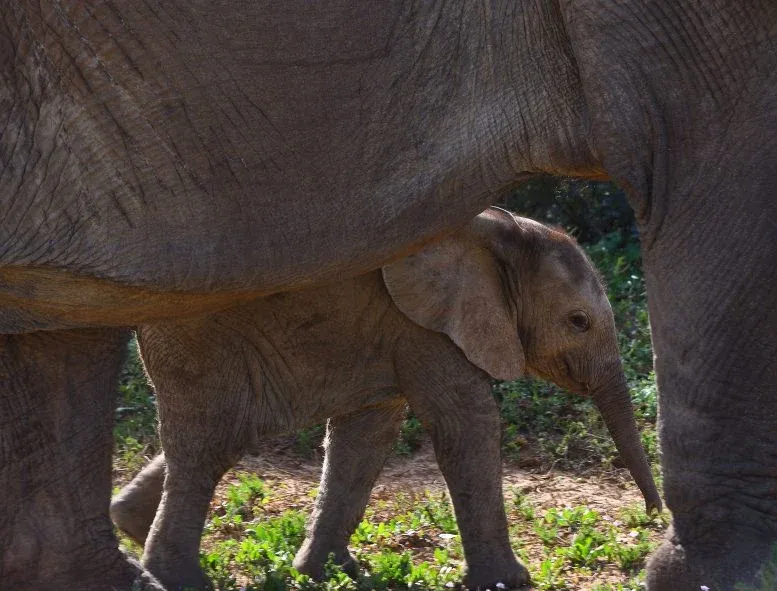
For instance, a tight fit between the baby and the birth canal is common in species with large, well-developed offspring. This includes monkeys, hoofed animals, and elephants. Too much nutrition can also make babies larger in humans, other primates, and rodents, increasing delivery risks.
Evolutionary Trade-Offs
If birth complications can be deadly, why haven't they disappeared through evolution? The study suggests it's due to evolutionary trade-offs.
Larger babies often have a better chance of surviving after birth. However, they are also harder to deliver. This creates a delicate balance: babies that are too small might die early, while those that are too large might not survive birth.
In species that have many babies at once, like dogs and pigs, there's a different trade-off. Both very small and very large litters can lead to birth problems. Small litters often have larger pups that get stuck. Large litters have many smaller babies that can be poorly positioned and block the birth canal. These patterns help explain why birth complications continue to exist, even in natural populations.
A Broader View of Childbirth
This research puts human childbirth into a larger evolutionary picture. Instead of being uniquely difficult, human birth seems to follow a pattern shared by many mammals.
For humans, the tight fit comes from a large brain and a pelvis shaped for walking upright. Other species face different body challenges. Cows, horses, and deer, for example, must deliver babies with both the head and front legs passing through a stiff pelvis at the same time.
The study challenges old ideas about human childbirth. It shows how important it is to compare humans with other species. It also moves the focus from seeing human birth as special to understanding it as part of a wider evolutionary story. ## Deep Dive & References
Humans are not unique: difficult birth is common in placental mammals - Biological Reviews, 2026