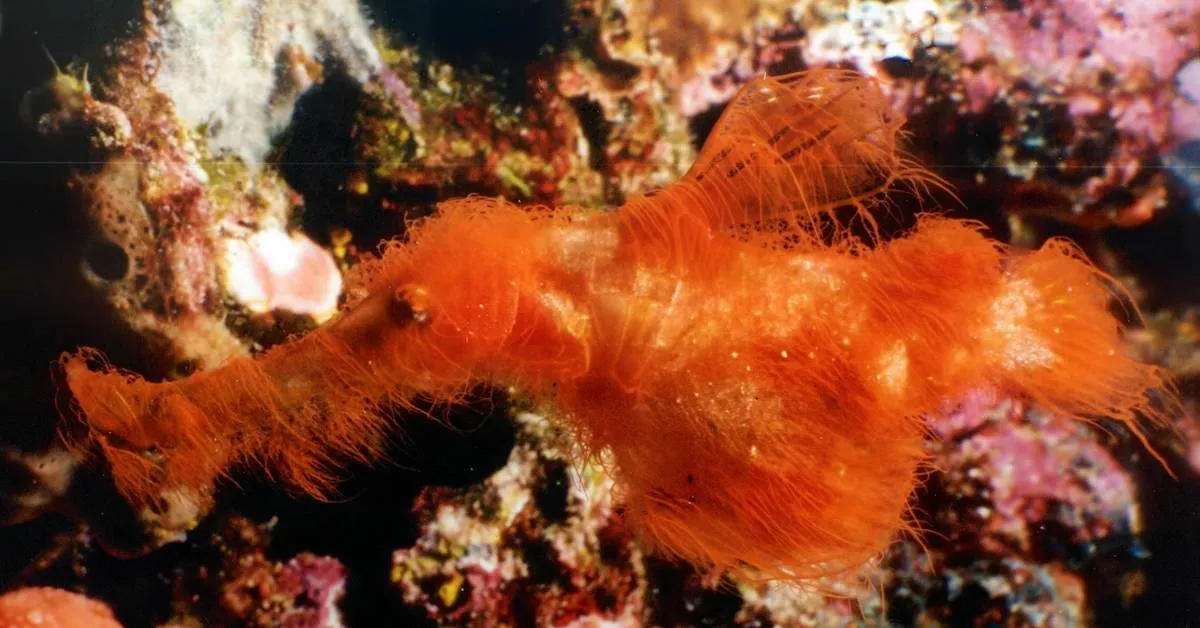
In 2003, marine biologist David Harasti was diving near Papua New Guinea. He saw a small, red, hairy fish-like creature. It was unlike anything he had ever seen.
Harasti returned to the same dive spot six more times but could not find it again. The fish stayed on his mind. He then asked Graham Short for help. Short is an expert in fish and classification at the California Academy of Sciences and the Australian Museum.
Discovering a New Species
Together, Harasti and Short worked with divers from the Great Barrier Reef. They also searched many museum collections. Their goal was to prove the sea creature was real.
We're a new kind of news feed.
Regular news is designed to drain you. We're a non-profit built to restore you. Every story we publish is scored for impact, progress, and hope.
Start Your News DetoxTheir research confirmed Harasti had found a new species of hairy ghost pipefish from the Southwest Pacific. It was as red and "hairy" as he remembered.
On May 10, 2026, Harasti and Short published their findings in the Journal of Fish Biology. They formally described the new species.
They named it Solenostomus snuffleupagus. This name comes from Mr. Snuffleupagus, Big Bird’s friend from "Sesame Street." The fish's shaggy look and snout reminded them of the character.
Short told Scientific American that the resemblance was "scary." He also mentioned they contacted "Sesame Street Australia" for permission, which they received.
The Hairy Ghost Pipefish
The S. snuffleupagus is now the seventh known species of ghost pipefish. Ghost pipefishes are related to seahorses, pipefishes, and sea dragons.
 Images: David Harasti
Short and Harasti say these fish are masters of camouflage. They often blend in with algae, seagrasses, and corals. They match both the shape and color of their surroundings.
The S. snuffleupagus is tiny, only one to 1.5 inches long. This is about half the size of an average pinky finger. They eat small creatures like shrimp-like crustaceans and zooplankton.
Short noted how hairy this species is compared to others. Its filaments stick out like an exoskeleton. Other ghost pipefish might be slightly hairy in some spots, but this one is hairy all over.