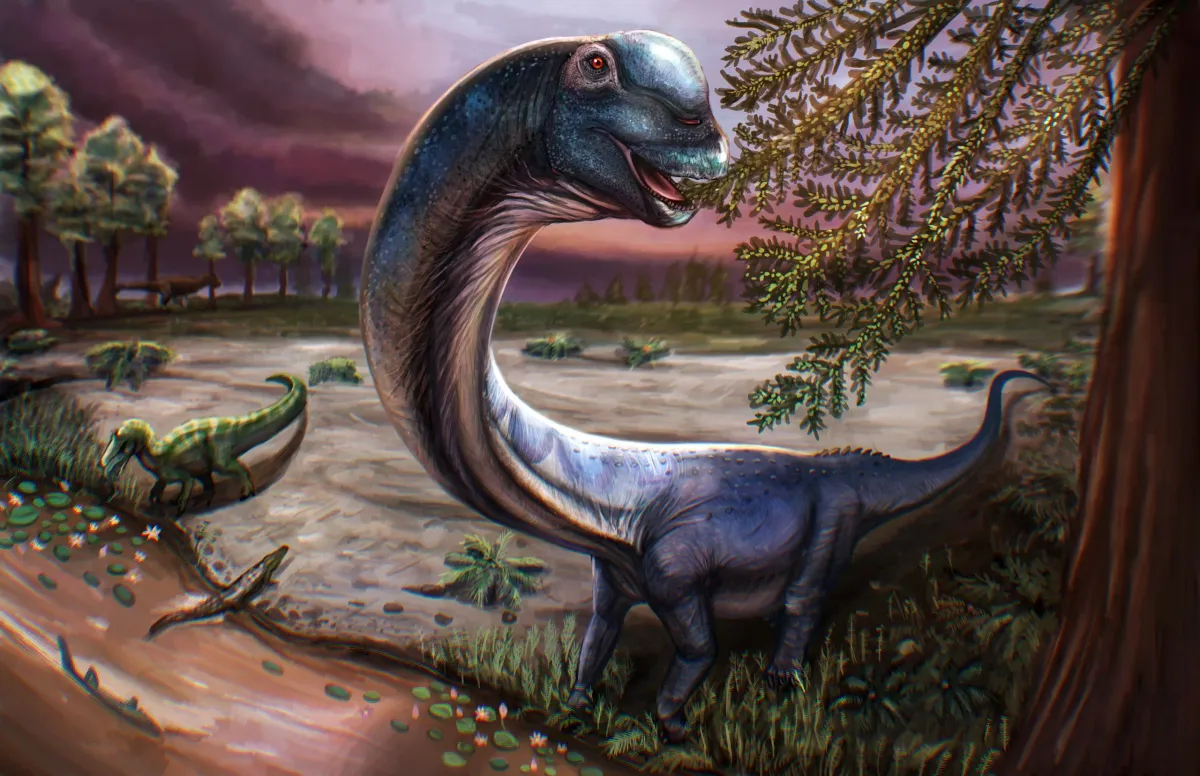
A new dinosaur, Nagatitan chaiyaphumensis, has been discovered in Thailand. This giant plant-eater is the largest dinosaur found in Southeast Asia. It was nearly 90 feet long and weighed about 27 tonnes, which is as much as nine adult Asian elephants.
Discovering Thailand's "Last Titan"
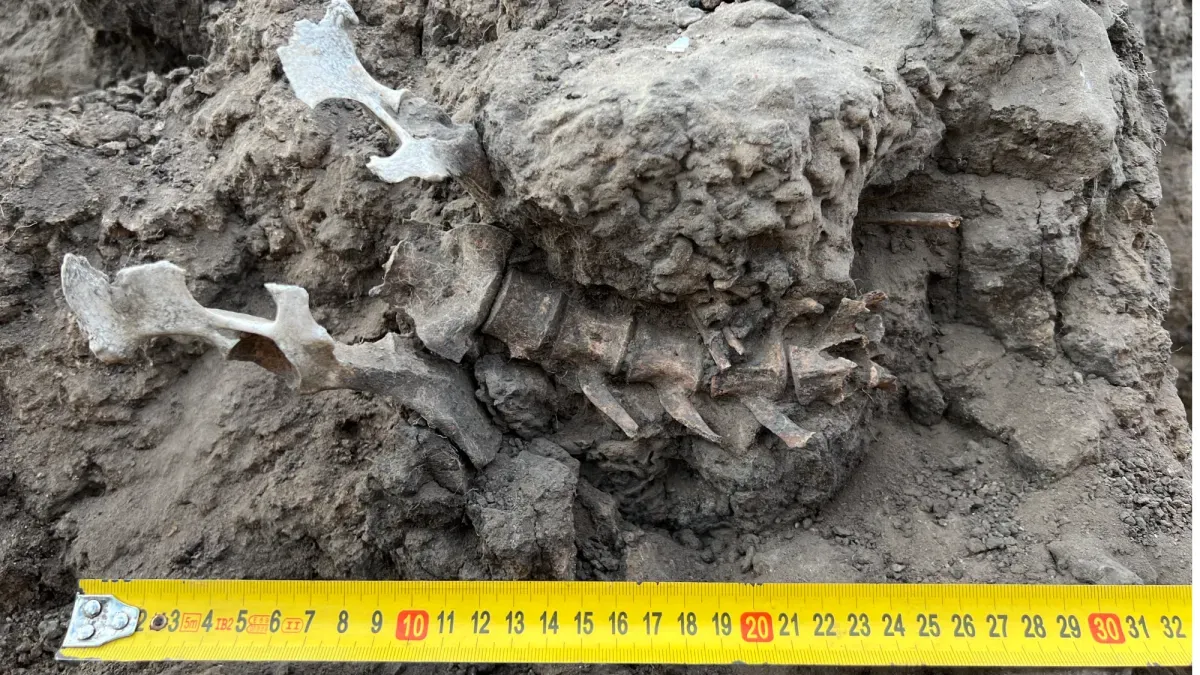
Scientists from University College London (UCL), Mahasarakham University, Suranaree University of Technology, and the Sirindhorn Museum in Thailand led the study. The fossils were first found about 10 years ago near a pond in northeastern Thailand. Researchers analyzed bones from the dinosaur's spine, ribs, pelvis, and legs.
One front leg bone measured 1.78 meters, about the height of a human. This evidence helped scientists estimate the dinosaur's massive size.
We're a new kind of news feed.
Regular news is designed to drain you. We're a non-profit built to restore you. Every story we publish is scored for impact, progress, and hope.
Start Your News DetoxThe name Nagatitan combines "Naga," a legendary serpent from Thai folklore, and "Titan," referring to Greek giants. The species name chaiyaphumensis honors Chaiyaphum province, where the fossils were found. This is the 14th dinosaur species officially named in Thailand.
Nagatitan chaiyaphumensis was a sauropod, a group known for long necks and tails, like Diplodocus and Brontosaurus. It lived during the Early Cretaceous period, between 100 and 120 million years ago.
Thitiwoot (Perth) Sethapanichsakul, a PhD student at UCL Earth Sciences and lead author, noted that Nagatitan weighed at least 10 tonnes more than Dippy the Diplodocus. He called it "the last titan" of Thailand because it was found in the region's youngest dinosaur-bearing rock formation. This suggests it might be the most recent large sauropod discovered in Southeast Asia.
An Ancient Ecosystem
Researchers believe Nagatitan lived in an arid or semi-arid environment during the Early Cretaceous. Sauropods likely thrived in these conditions, possibly using their long necks and tails to help control body heat.
The fossil site shows the area once had winding rivers with fish, freshwater sharks, and crocodiles. Nagatitan shared its home with smaller plant-eaters like iguanodontians and early ceratopsians. Large predators, including carcharodontosaurians and spinosaurids, also lived there, along with pterosaurs that hunted fish.
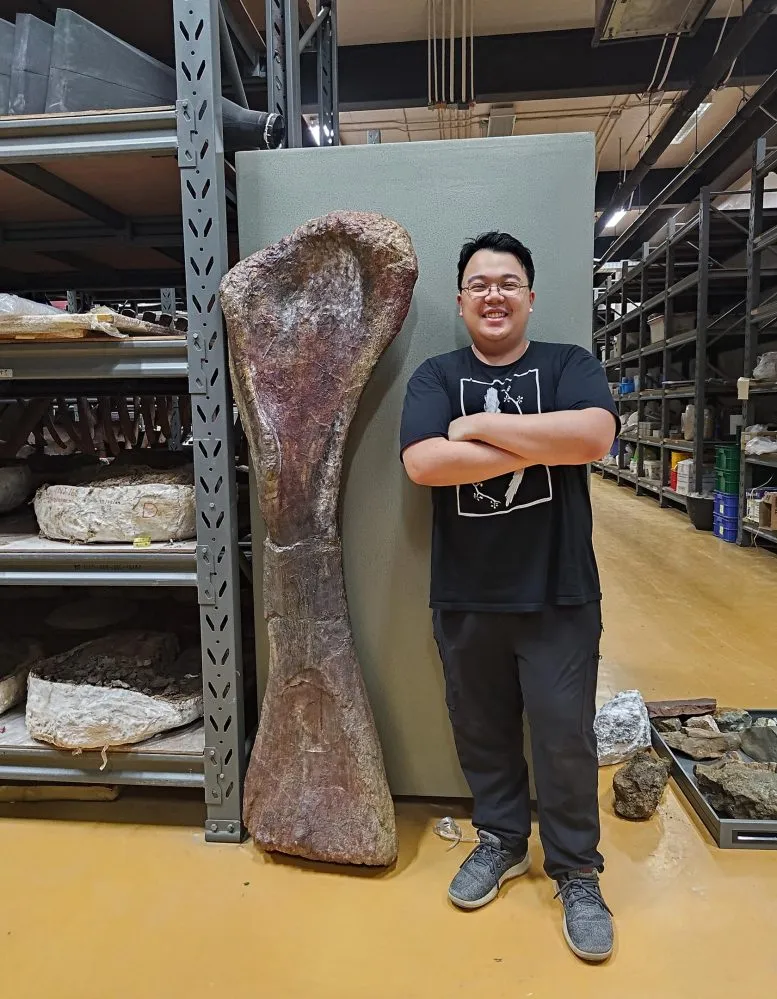 Thitiwoot Sethapanichsakul and the front leg bone (humerus). Credit: Thitiwoot Sethapanichsakul
Nagatitan is classified as a somphospondylan sauropod, a subgroup that became common around 120 million years ago. Specifically, it belongs to Euhelopodidae, a branch of somphospondylan sauropods found only in Asia. Its unique spine, pelvis, and leg bone features helped scientists identify the species. A full-size reconstruction is now on display at the Thainosaur Museum in Bangkok.
Sethapanichsakul hopes to bring more international recognition to Southeast Asian dinosaurs. He believes collaborations, like the one with UCL, can deepen understanding of the region's ancient life.
Collaborative Research Efforts
Professor Paul Upchurch of UCL Earth Sciences highlighted the new collaboration with Thai colleagues. He noted that 3D scanning and printing allowed them to study specimens and collect data without extensive travel, reducing their carbon footprint. UCL's dinosaur evolution group has a long-standing interest in these giant plant-eaters and works with researchers globally.
Dr. Sita Manitkoon, project leader and National Geographic Explorer from Mahasarakham University, noted Thailand's rich diversity of dinosaur fossils. She said that despite being a small country, Thailand has possibly the third most abundant dinosaur remains in Asia. She also highlighted the rise of a younger generation of paleontologists actively researching and promoting paleontology in the country.
Deep Dive & References
The first sauropod dinosaur from the Lower Cretaceous Khok Kruat Formation of Thailand enriches the diversity of somphospondylan titanosauriforms in southeast Asia - Scientific Reports, 2026