A new study challenges the long-held idea that Europe was once covered by dense, dark forests. Instead, researchers found that for over 20 million years, Europe's landscape was a mix of open woodlands and grasslands.
This means that many current efforts to plant dense forests might be going against Europe's natural ecological history.
Europe's Ancient Landscape
Imagine Europe 100,000 years ago. Many people picture a thick, dark forest where sunlight barely touched the ground. However, this image is likely wrong. It's closer to a modern tree farm than to Europe's ancient past.
We're a new kind of news feed.
Regular news is designed to drain you. We're a non-profit built to restore you. Every story we publish is scored for impact, progress, and hope.
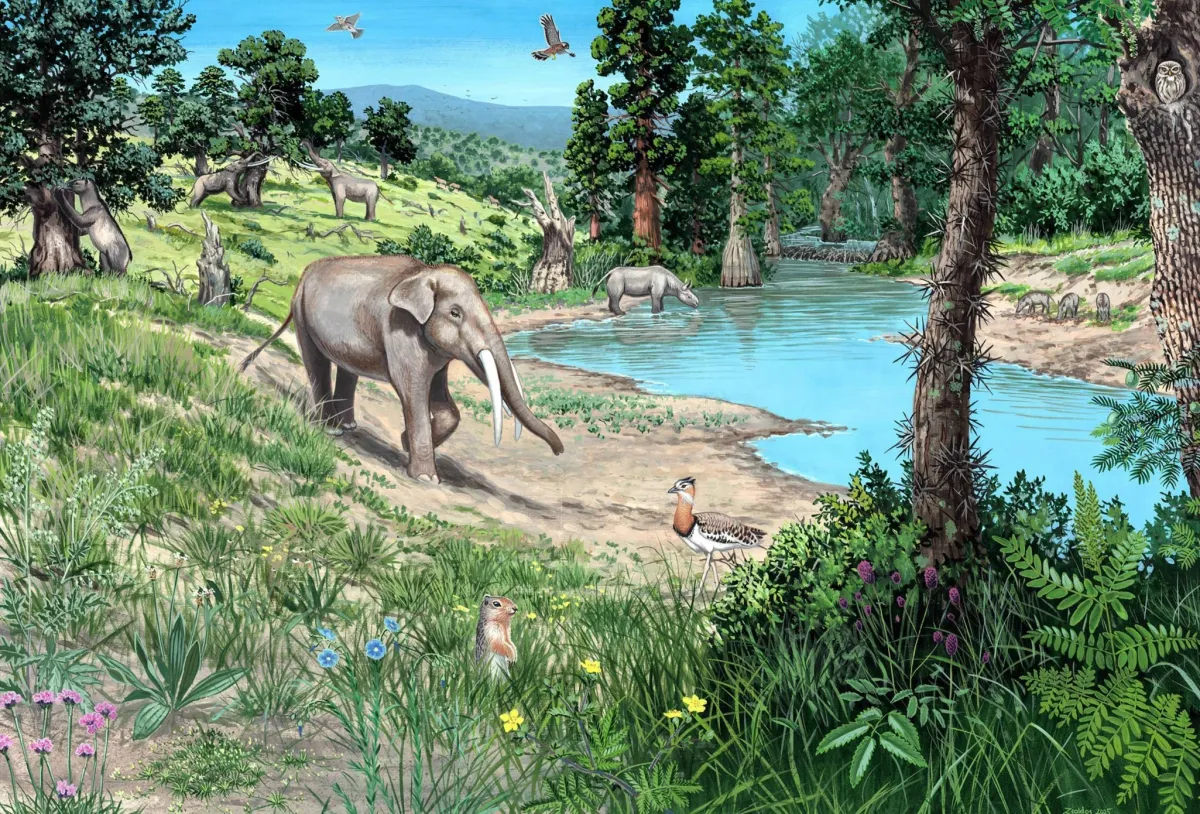
Start Your News DetoxA more accurate picture would be open patches of woodland mixed with colorful, flower-filled meadows. These areas would have been full of birds and butterflies. Dense forests are a relatively new development in Europe's history.
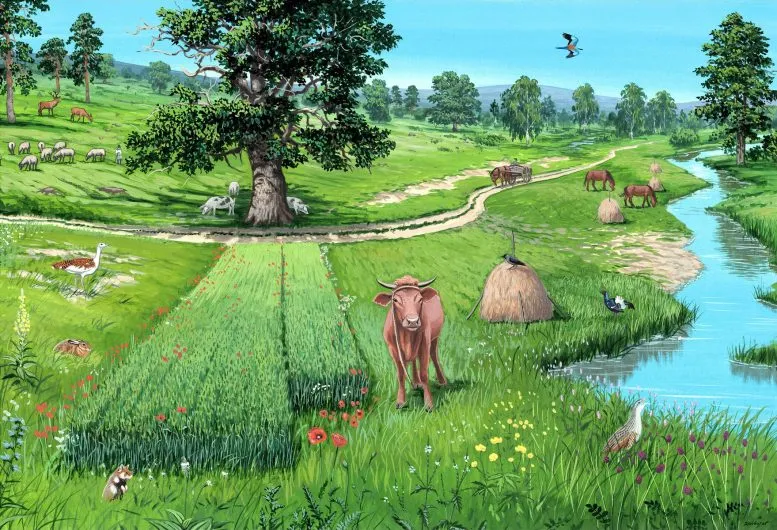
A study from Aarhus University shows that Europe's landscapes were usually mosaics of grasslands, scrub, and woodlands with varying tree cover. These were bright, open woodlands, rich in flowers. Large grazing animals played a big role in shaping these landscapes, not dense canopies.
Professor Jens-Christian Svenning, a senior author of the study, noted that current reforestation practices are misguided. He explained that planting dense forests goes against the ecosystems Europe's species have evolved in for millions of years. This approach could harm biodiversity.
Svenning added that the idea of "closed forests" has influenced nature management for decades. This view suggests that dense, closed forests were Europe's natural state before humans had a major impact.
Evidence from the Past
The new study looked at paleoecological evidence from the Miocene epoch (about 23 million years ago) up to the time before industrialization. This research combined several scientific methods to understand past vegetation and ecological processes.
Researchers used pollen records, plant fossils, charcoal from ancient fires, and stable isotope analysis of animal teeth and bones. They also studied fossil insects and mammals, and ancient environmental DNA found in sediments.
Szymon Czyzewski, the lead author, explained that each method offers a different view. Together, they show whether landscapes were dense forests, open grasslands, or a mix. Combining these datasets over millions of years helped them trace changes in vegetation and the role of large herbivores with more certainty.
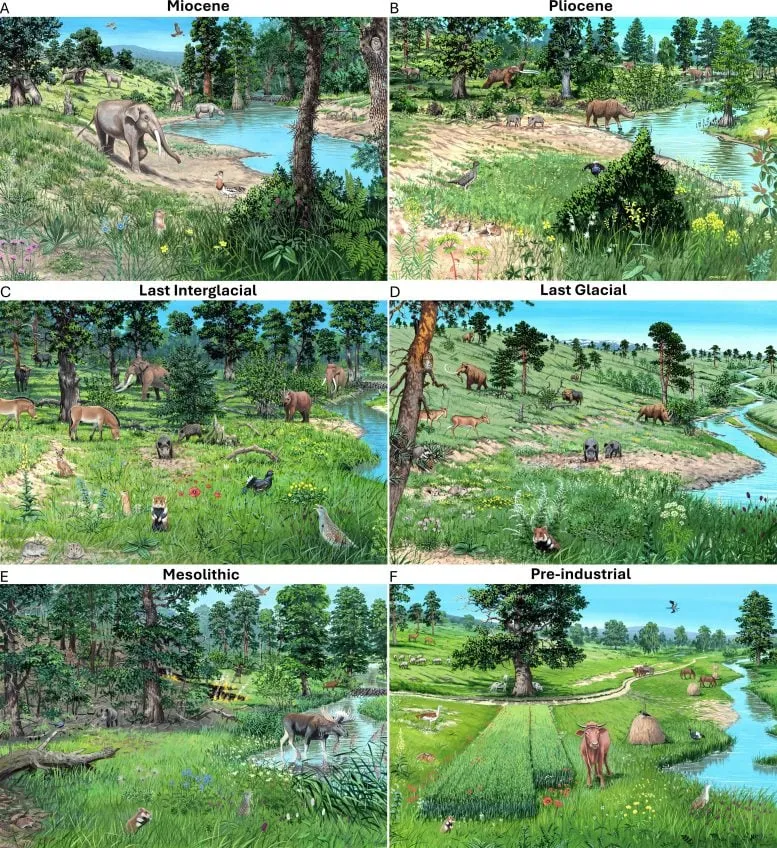
The study's findings are clear. For millions of years, Europe's typical landscape was a dynamic mix of trees and flowers. Large wild herbivores like elephants, rhinoceroses, aurochs, and bison helped keep the vegetation partly open and diverse. This pattern held true in various climates, including those similar to Europe today.
Modern Europe's Unique Ecology
The study also found that modern Europe is ecologically unusual.
Czyzewski noted that today's European ecosystems lack the large wild herbivores that shaped landscapes and supported biodiversity for millions of years. This dramatic change has mostly happened in the last hundred years, as traditional grazing disappeared from much of the landscape.
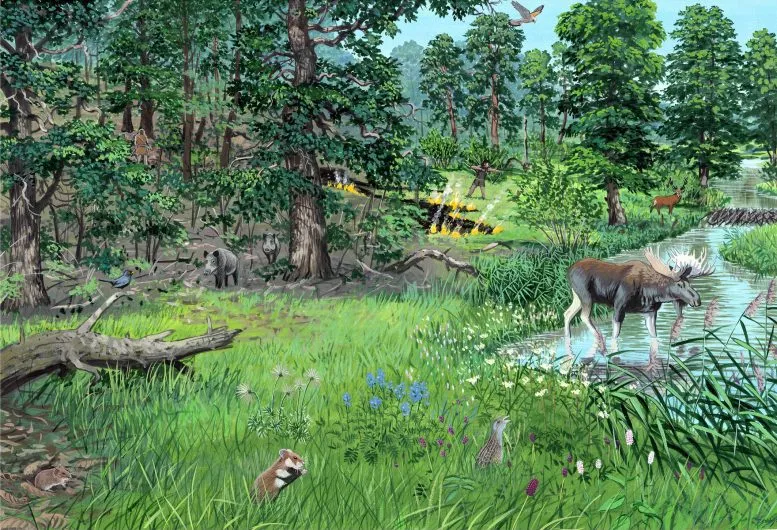
Many species now linked to human-influenced landscapes, such as larks and European hamsters, likely evolved in these ancient open woodland systems. Even wild poppies, often seen in fields today, once grew in disturbed areas within these woodlands, shaped by herbivores.
This highlights a problem in modern conservation. The strict division between "forest" and "open habitats" might be a recent human idea, not a reflection of Europe's long ecological history.
Guiding Future Restoration
These findings have direct implications for nature management and biodiversity in temperate Europe. Especially now, with tree planting promoted for climate and biodiversity goals.
If the goal is to restore ecosystems that resemble those where Europe's species evolved, then uniform, dense forests are not the answer.
Svenning concluded that restoration efforts should focus on creating and maintaining mosaics of woodland and open habitats. This includes bringing back naturally living large herbivores.
This study adds to growing evidence that Europe's past was brighter, more diverse, and more influenced by large animals than previously thought. The idea of a dark, dense primeval forest continues to lose its scientific support.
Deep Dive & References
Revisiting Europe’s temperate forests: Palaeoecological evidence for an herbivory-driven woodland-grassland mosaic biome - Biological Conservation, 2026