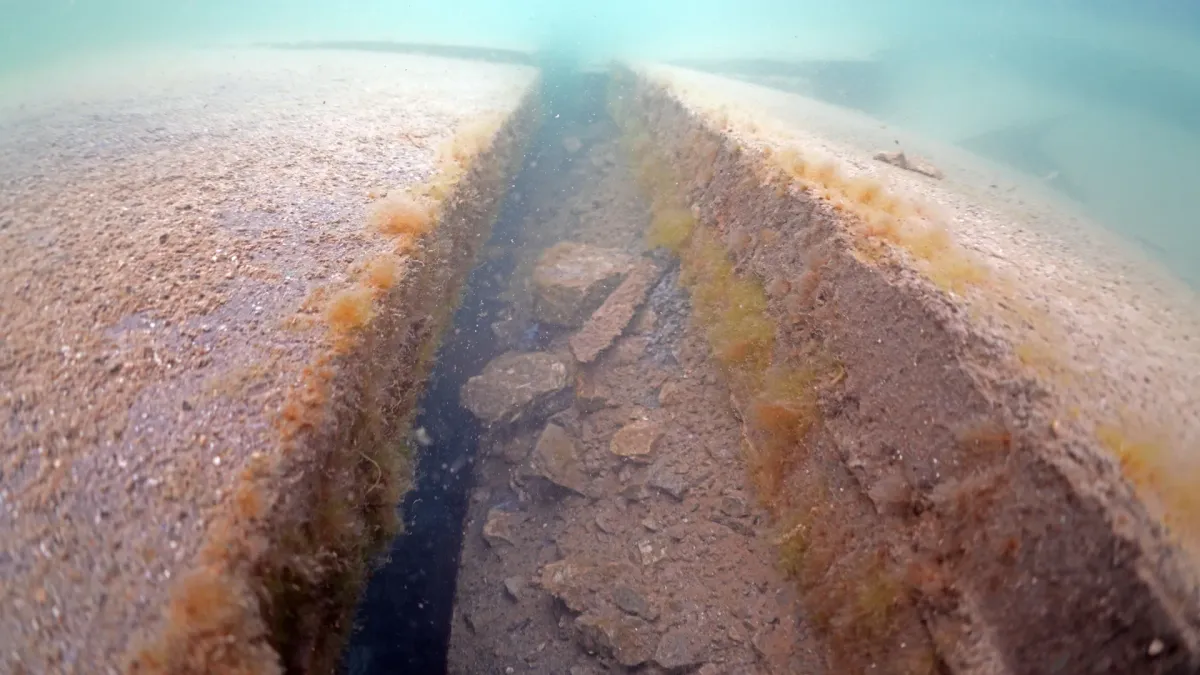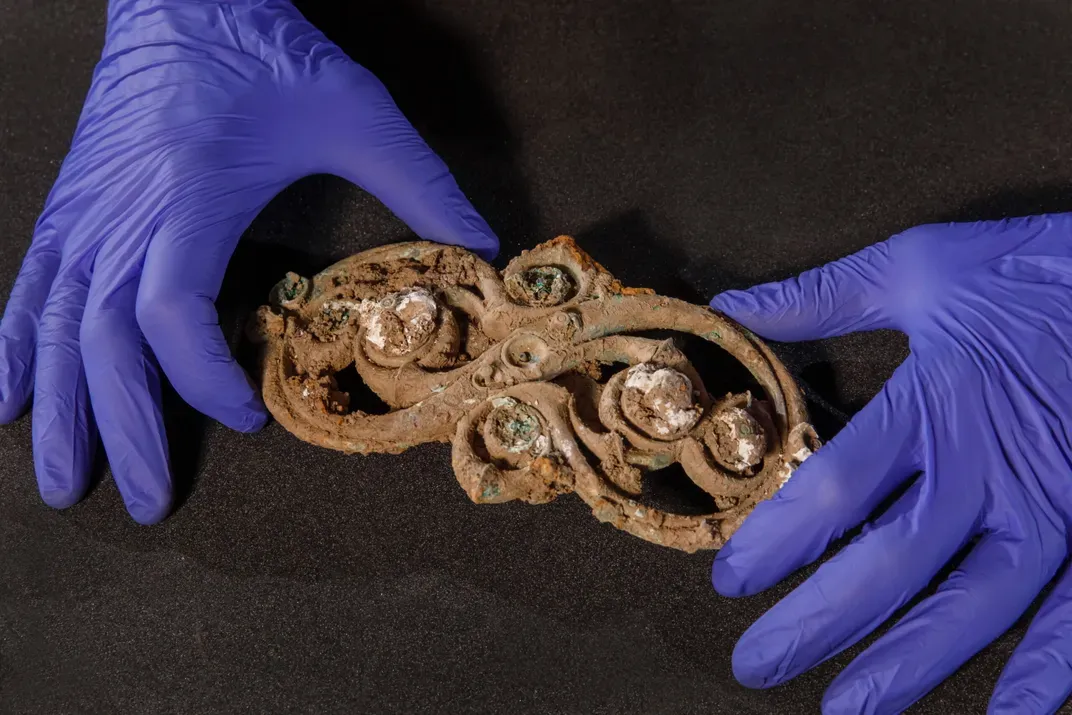
Five years ago, a metal detectorist in northern England stumbled upon some ancient metal. As one does. What followed was an archaeological dig that unearthed roughly 800 Iron Age artifacts – a collection so vast, it's now the largest of its kind ever found in the United Kingdom.
Enter the Melsonby Hoard, a treasure trove that includes 2,000-year-old horse bridle bits, a feasting cauldron, and a mirror that might have belonged to a powerful queen. Tom Moore, head of archaeology at Durham University, called it "unprecedented." And now, for the first time, it's all on public display at the Yorkshire Museum, giving us a peek into Britain's age of tribes.
The Iron Age's Biggest Unboxing
The star of the show? A rather unassuming "block" – a 330-pound fused mass of artifacts. Spearheads, wagon parts, and harness pieces are visible from the outside, but what's inside remains a delicious mystery. Emily North, the museum's archaeology curator, describes it as "incredibly tantalizing," noting a stylized boar's head and even a man's face peeking out. Talk about a historical surprise package.
We're a new kind of news feed.
Regular news is designed to drain you. We're a non-profit built to restore you. Every story we publish is scored for impact, progress, and hope.
Start Your News DetoxThese items were carefully wrapped in cloth and buried in one ditch, while the rest of the hoard, mostly related to horse-drawn vehicles, was found nearby. We're talking 28 stacked iron tires, U-shaped brackets, linchpins – the works. Researchers believe these are the remnants of four-wheeled horse-drawn wagons, the first evidence of such vehicles in Iron Age Britain. Emily Williams, a conservator at Durham, noted her lab was "covered" in Melsonby objects. Imagine the historical clutter.
Then there's the mirror. Mirrors in the Iron Age weren't just for checking your teeth; they were often linked to powerful women. North calls it her "absolute favorite object" and believes it could solve the puzzle of why the hoard was buried. Melsonby is right near Stanwick, an Iron Age fort once ruled by Queen Cartimandua – Britain's first documented female ruler. While the mirror might not have been hers directly, it could have belonged to her mother or grandmother. North calls it a "magical object associated with female power." Which, if you think about it, is still pretty magical.
Challenging History, One Hoard at a Time
The sheer amount of wealth here could only have belonged to someone very important. The hoard also includes a large cauldron and bowl, "almost certainly used for feasting," according to Moore. The cauldron likely held stew, and the bowl, decorated with carved coral from the Mediterranean, probably held wine or beer. This, Moore explains, shows just how connected these people were across Europe. Forget your modern-day influencer networks; these folks had coral from halfway across the continent.
Historically, it was thought that wealth in Iron Age Britain was concentrated in the south. The Melsonby Hoard flips that idea on its head, proving the north was just as interconnected, powerful, and wealthy – not some historical "backwater."
So, why was all this valuable stuff buried? The exhibition offers four theories: a feast, a festival, a fight, or a funeral. Many pieces were damaged before burial – bent, burned, even bashed with a rock (looking at you, cauldron). No human remains were found, ruling out a grave. So, perhaps a commemorative feast where valuable items were ritually destroyed?
North calls it an "absolute mystery" why this vast collection of luxury objects was destroyed and buried. She doubts she'll ever see anything like it again in her career. Which, considering the scope, is probably a safe bet. The exhibition runs through summer 2027, so you have plenty of time to ponder the destruction of ancient treasures.