Turns out, we’re all just space dust. Specifically, Earth is currently sailing through a cosmic cloud of debris left behind by an ancient exploded star. Scientists figured this out by digging into Antarctic ice that’s a mind-boggling tens of thousands of years old.
The smoking gun? Iron-60. This isn't your grandma's iron. It's a rare radioactive isotope that only forms when truly massive stars decide to go out with a bang – a supernova. Think of it as the universe's unique fingerprint for stellar explosions.
Cosmic Dust Bunnies
Iron-60 is forged in the heart of giant stars, then flung across the cosmos during their dramatic demise. We've known for a while that Earth got a dose of iron-60 from nearby supernovae millions of years ago. But here's the kicker: no recent stellar explosions have happened close enough to shower us with new iron-60. So, finding fresh traces of it in relatively new Antarctic snow was, shall we say, a bit of a head-scratcher.
We're a new kind of news feed.
Regular news is designed to drain you. We're a non-profit built to restore you. Every story we publish is scored for impact, progress, and hope.
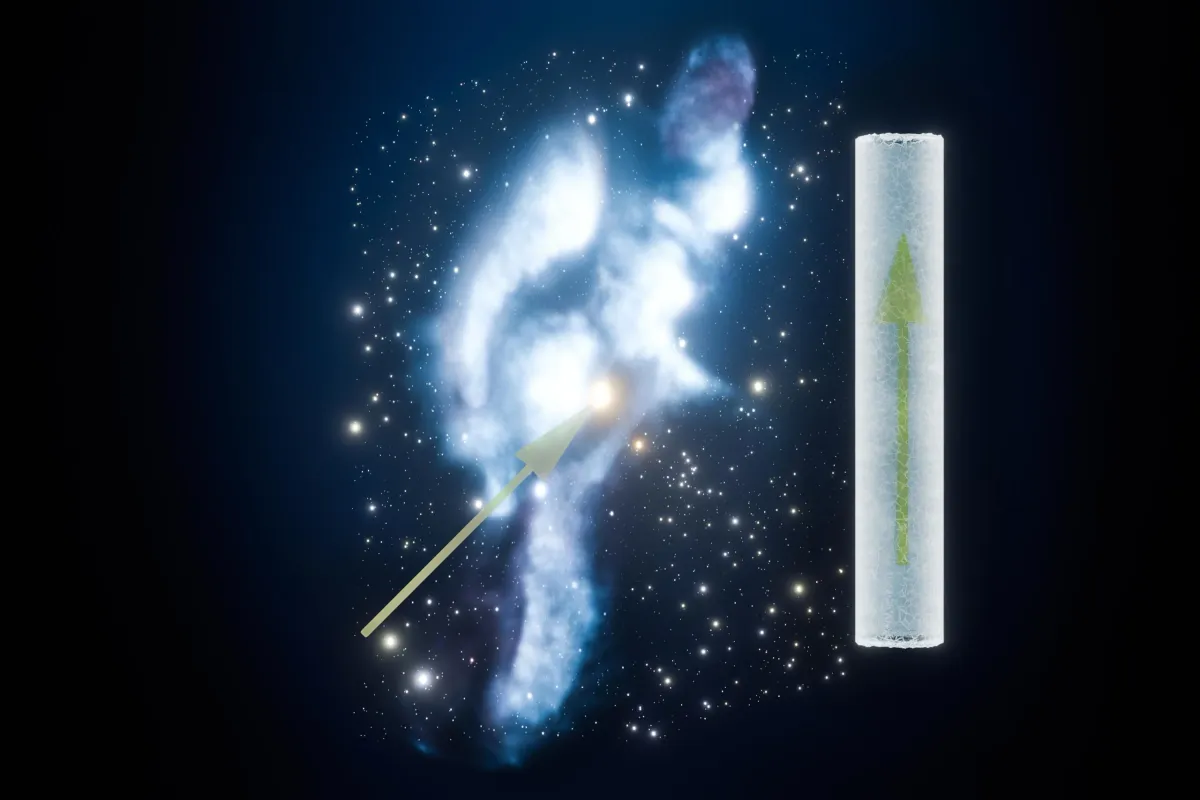
Start Your News DetoxDr. Dominik Koll from HZDR, one of the brilliant minds behind this, suggested that our solar system's local hangout — the Local Interstellar Cloud — might be collecting and storing this iron-60. As we drift through this cloud, Earth could just be picking up the cosmic crumbs.
Koll and Prof. Anton Wallner have spent years sifting through samples, including deep-sea sediments up to 30,000 years old, which also contained iron-60. But until now, other explanations for its presence couldn't be fully ruled out. The new Antarctic ice samples, dating back 40,000 to 80,000 years, strongly point to the Local Interstellar Cloud as the definitive source. Which, if you think about it, is both impressive and slightly terrifying.
Our solar system reportedly entered this dusty cloud tens of thousands of years ago and is expected to exit in a few thousand more. We’re currently near the edge, apparently.
Finding a Needle in a Cosmic Haystack
To pull off this celestial detective work, about 300 kilograms of ice were hauled from Bremerhaven to Dresden. After extensive chemical processing, they were left with a few hundred milligrams of dust. From that tiny speck, scientists carefully isolated the iron-60, making sure not to lose a single atom. They used the DREsden Accelerator Mass Spectrometry (DREAMS) lab for initial testing, cross-referencing with other known radioisotopes to ensure accuracy.
For the final, incredibly precise measurements, they shipped samples to the Heavy Ion Accelerator Facility (HIAF) in Australia. This facility can detect the most minuscule amounts of iron-60. Electric and magnetic filters meticulously separated unwanted atoms until only a handful of iron-60 atoms remained from an original sample of 10 trillion. Annabel Rolofs from the University of Bonn aptly described it as “searching for a needle in 50,000 football stadiums filled to the roof with hay.” The machine, however, finds that needle in about an hour. Let that satisfying number sink in.
Prof. Anton Wallner noted that years of collaboration have resulted in a method so sensitive, it can now clearly detect the faint echoes of cosmic explosions from millions of years ago in today's geological records. Next up: even older Antarctic ice cores, from before our solar system decided to take a detour through the universe's attic.