For nearly 80 years, our digital world has run on electrons, zipping through circuits from the clunky ENIAC to the sleek smartphone you're probably holding. But now, artificial intelligence is pushing this old system to its breaking point. Turns out, electrons are messy. They generate heat, lose energy, and become a nightmare to manage as chips get more complex.
Training a single advanced AI model already devours enough electricity to power a small town. This isn't just an environmental concern; it's a looming roadblock for future AI. So, scientists have been dreaming of a different kind of power: light.
The Light-Speed Problem
Photons, the particles of light, are basically the superheroes of data transfer. They're fast, they travel long distances without losing steam, and they don't have all that pesky electrical charge or mass. This is why the internet runs on fiber-optic cables, not copper wires. Light is fantastic at carrying information.
We're a new kind of news feed.
Regular news is designed to drain you. We're a non-profit built to restore you. Every story we publish is scored for impact, progress, and hope.
Start Your News DetoxBut here's the catch, as Montana State physics professor Li He explains: photons are too good at minding their own business. They barely interact with anything, which makes them terrible at the 'switching logic' — the on-off decisions — that computers need to actually compute.
Enter researchers at the University of Pennsylvania, who decided to play Frankenstein with physics. They've cooked up a bizarre new hybrid particle that's part light, part matter, and all kinds of promising.
Meet the Exciton-Polariton: The Best of Both Worlds
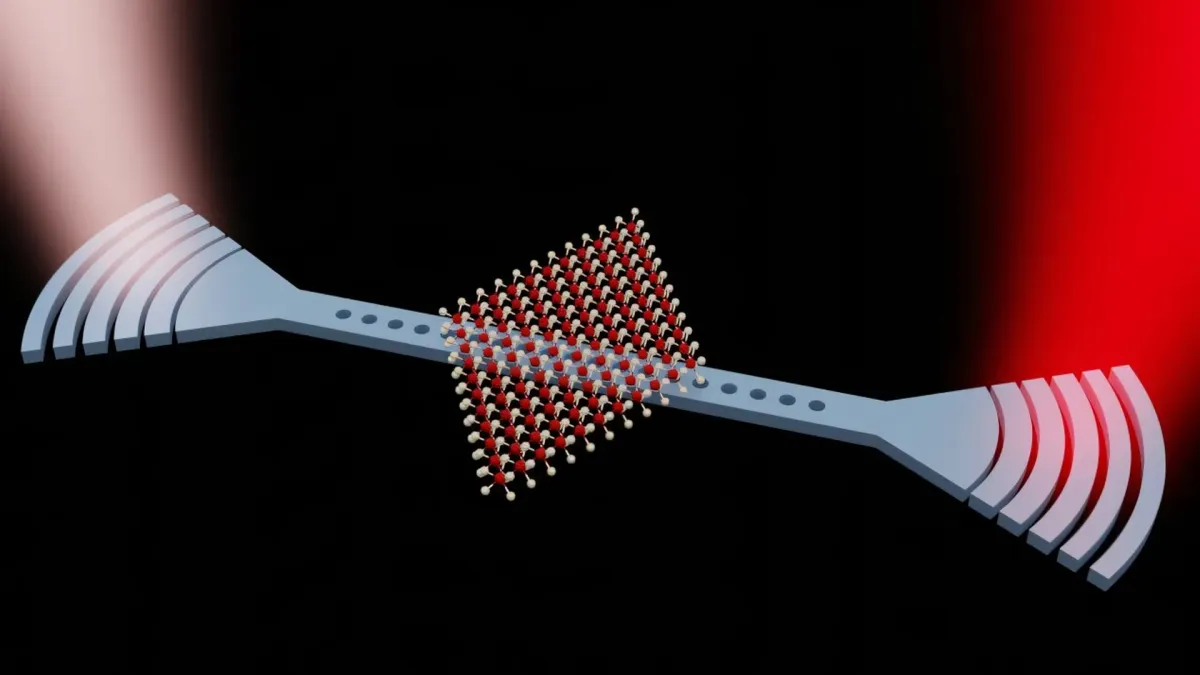
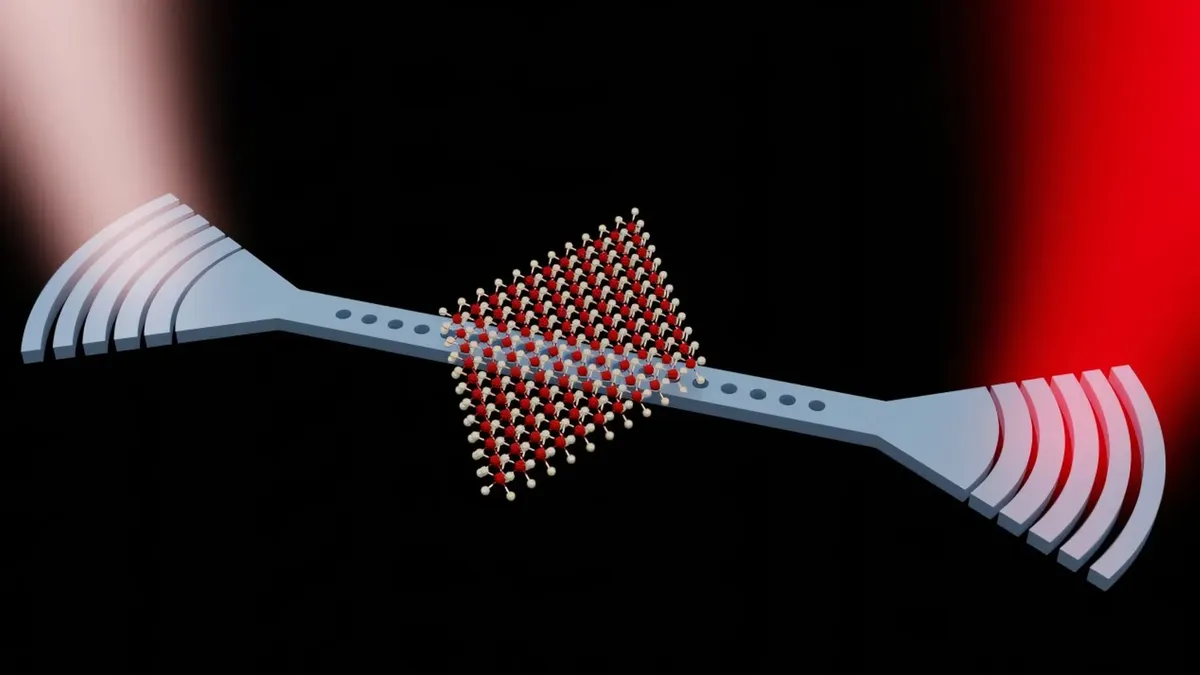
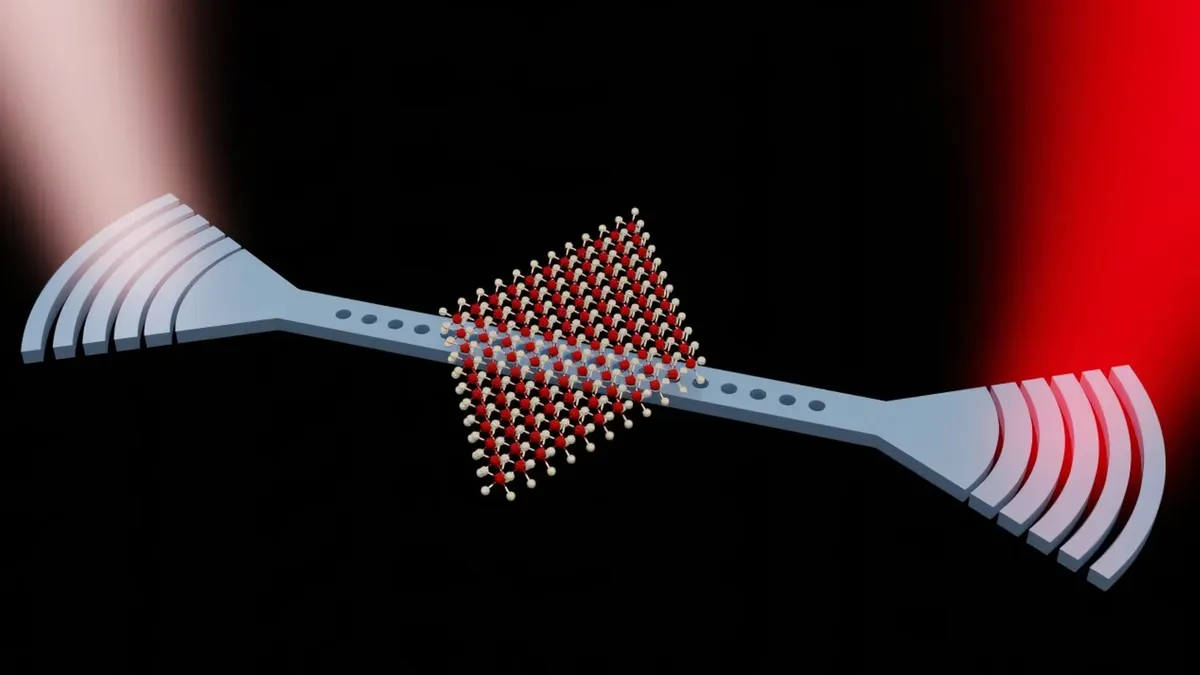
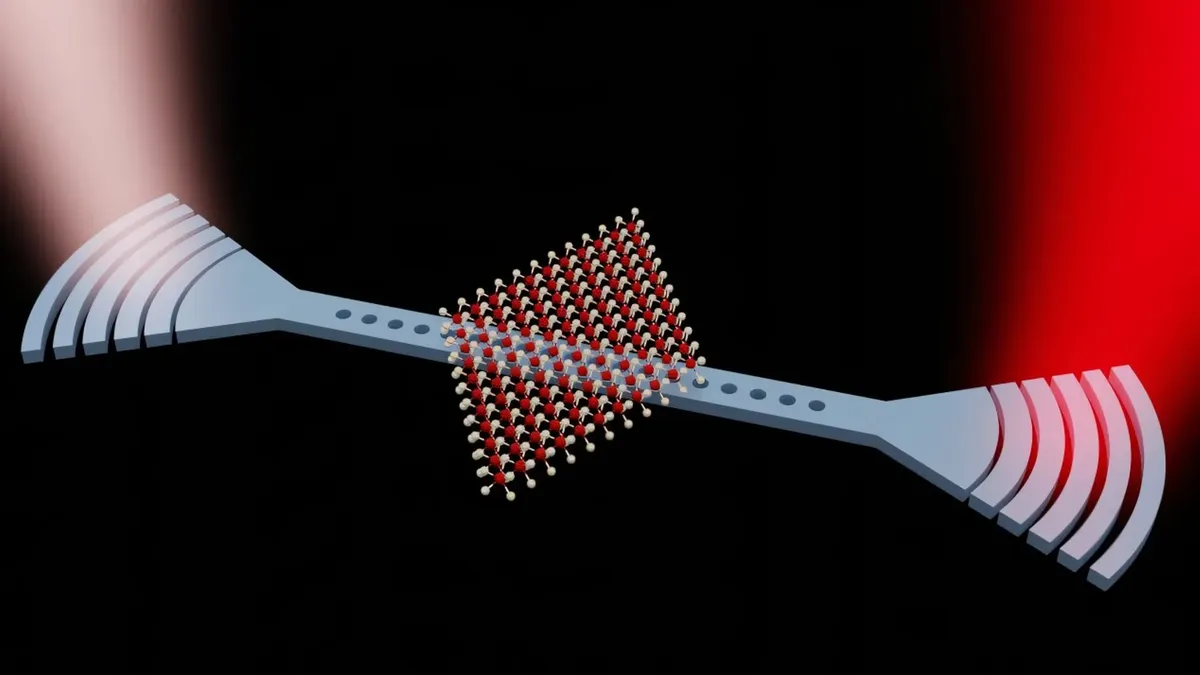
These aren't natural-born particles. They're what scientists call 'quasiparticles' — exciton-polaritons. Imagine a photon and an electron getting so tangled up, they essentially become a single, new entity. The team achieved this by sandwiching an ultra-thin semiconductor layer inside a tiny optical cavity, essentially a light trap.
Inside this microscopic disco, photons got cozy with 'excitons' (pairs of electrons and the 'holes' they leave behind). Under just the right conditions, this interaction became so strong it birthed the exciton-polaritons. And these hybrids inherited the best traits from both parents:
- From light: Incredible speed and low-energy movement.
- From matter: The crucial ability to actually interact with other signals.
This interaction, a 'nonlinear response,' is far stronger than anything traditional optical materials can offer. It's the key to making light do the heavy lifting of computation, not just communication.
The Holy Grail: All-Optical Switching
Exciton-polaritons aren't entirely new, but getting them to perform strong, low-energy optical switching in a compact device has been a major hurdle. Traditional photonic systems struggle because photons, bless their hearts, usually just pass right through each other. Great for communication, terrible for computation.
Many experimental AI chips that use light still have to convert those light signals back to electrons for processing. Every conversion is a speed bump and an energy drain. This new exciton-polariton platform sidesteps that whole messy process, allowing one light signal to directly control another, no electron detour required.
The researchers demonstrated switching at an astonishingly low energy level: about four quadrillionths of a joule. That's 4 femtojoules, a number so small it makes the energy needed to briefly flicker an LED look like a supernova. It's a new record for 2D exciton-polariton systems, and it's a huge step toward entirely light-based computing.
Saving AI From Its Own Success
If this tech can scale, it could dramatically cut the energy demands of AI. Modern AI infrastructure isn't just sucking up power for processing; it's also using colossal amounts of electricity just to cool down overheated electronic chips. Microsoft, for instance, is building AI data centers with liquid-cooling systems because air just can't keep up with the heat generated by dense clusters of AI processors.
Photonic systems, which generate far less heat, could bypass much of that waste. The study's authors believe this system could accelerate the development of all-optical neural networks — AI that computes entirely with light, offering speeds and efficiencies currently unimaginable with electrons.
They even envision future photonic chips processing visual information directly from cameras, eliminating more signal conversions. Of course, this is still a proof-of-concept, not a computer you can buy. Scaling it up and proving its reliability outside the lab are the next big challenges. But if they pull it off, the future of AI might just be a whole lot brighter, and a lot less thirsty for power.