Making many everyday products like medicines, plastics, and coatings needs chemical catalysts. These catalysts are often expensive noble metals, which are hard to find.
Researchers at the Karlsruhe Institute of Technology (KIT) have found a solution. They created the first air-stable iron compound. This compound allows iron(I) to be used directly for catalysis. Unlike older methods, it doesn't need strong reducing agents. Early tests showed it created active iron catalysts.
The study, "A Simple, Air Stable Single-Ion Source of Iron(I)," was published in the Journal of the American Chemical Society.
We're a new kind of news feed.
Regular news is designed to drain you. We're a non-profit built to restore you. Every story we publish is scored for impact, progress, and hope.
Start Your News DetoxWhy Iron Matters
Catalysts help chemical reactions happen faster or even make them possible. Industries often use noble metals like rhodium, iridium, or palladium as catalysts. These metals work well but are costly and rare.
Dr. Oliver Townrow from KIT's Institute of Nanotechnology explained that their research looks for sustainable and eco-friendly options. Iron is the fourth most common element in Earth's crust. It can work as well as noble metals in some catalytic reactions.
Making Reactive Iron Stable
The researchers focused on a special iron(I) source for catalysis. The Roman numeral (I) shows the metal's oxidation state. Iron usually appears as iron(II) or iron(III) in compounds. But for some reactions, iron(I) is better because it can easily gain or lose electrons, opening up new reaction paths.
Before, researchers had to create iron(I) during the reaction using extra substances. These substances, called reductants, change iron to the right form. However, they could also change other parts of the reaction.
Luise Kink, the lead author and a chemistry student at KIT, noted that this made it hard to know which iron compound would form or how it would react. Their new method allows for more reliable use of this reactive iron.
Creating and Testing New Iron Compounds
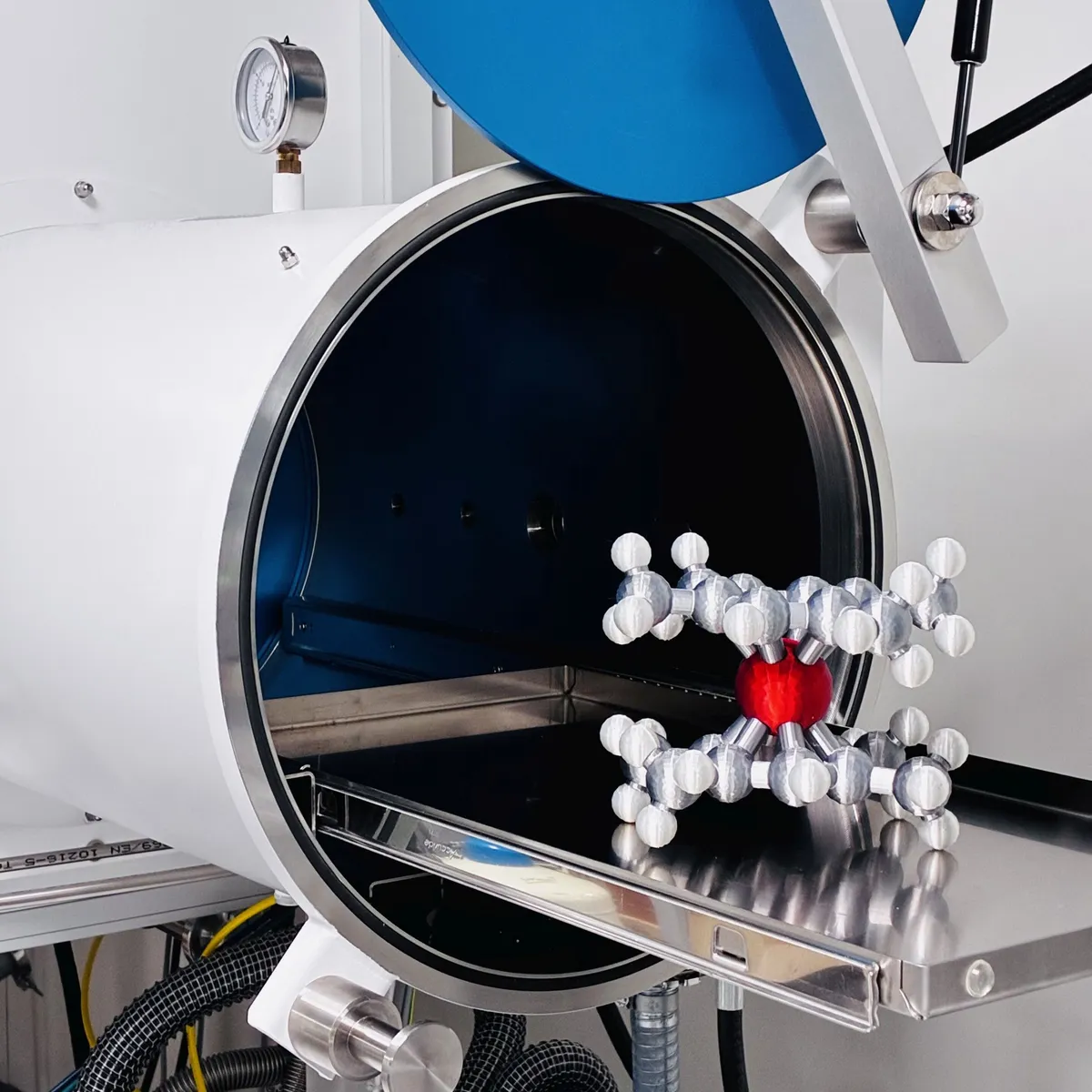
The team first made a separate iron(I) compound. They placed the iron between two ring-shaped hydrocarbons called durene molecules. These molecules stabilize the reactive metal. This keeps the sensitive iron(I) stable against air and moisture for later reactions.
Next, the researchers replaced durene with other molecules to create different iron(I) compounds. They studied these compounds using X-ray structure analysis, spectroscopy, and magnetic measurements. A first catalytic test showed the new compound worked well as a source for an active iron catalyst.
Improving Iron Catalysts
This new iron(I) compound can lead to more uses. Researchers now have a better way to find out which iron variants work best for different catalytic reactions.
Townrow said their findings show they can prepare and use iron(I) more effectively than before. The long-term goal is to help industries replace noble metals with iron.
Deep Dive & References
A Simple, Air Stable Single-Ion Source of Iron(I) - Journal of the American Chemical Society, 2026