A new study suggests that complex gene control, where genes are activated from a distance, appeared much earlier than thought. This advanced system likely emerged between 650 and 700 million years ago. This pushes the timeline back by about 150 million years.
This means that this complex genetic mechanism was already present when animal life first began.
How Distant Gene Control Works
Normally, genes are controlled by switches right next to them. But this new research focuses on "distal regulation." This process involves DNA strands and proteins folding into loops. These loops allow parts of DNA that are far apart to connect and activate genes from a distance.
We're a new kind of news feed.
Regular news is designed to drain you. We're a non-profit built to restore you. Every story we publish is scored for impact, progress, and hope.
Start Your News DetoxScientists believe this ability helped early multicellular animals use existing genes in new ways. This allowed them to create different cell types and tissues without needing entirely new genetic instructions.
Dr. Iana Kim, a lead author of the study, compared this to a "Swiss knife." It allowed creatures to reuse their genetic tools in different ways, helping them develop new survival strategies. Researchers did not expect this level of complexity to be so old.
Discovering the Ancient Mechanism
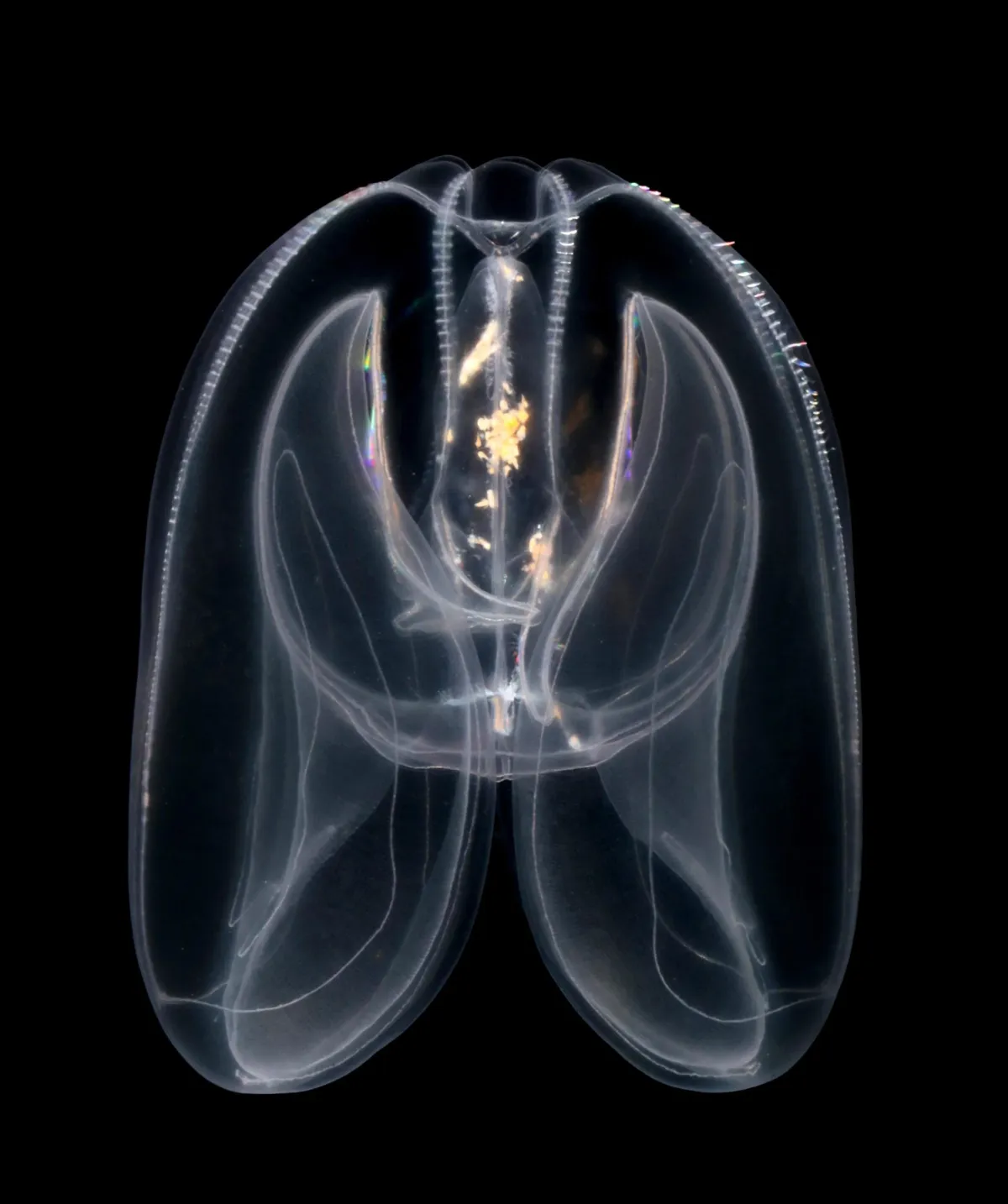
The discovery came from studying the genomes of some of the oldest animals. These include comb jellies like the "sea walnut" (Mnemiopsis leidyi), placozoans, cnidarians, and sponges. They also looked at single-celled relatives that share a common ancestor with animals.
Arnau Sebe-Pedrós, a corresponding author, noted that "weird sea creatures" can reveal a lot of new biology. He explained that new methods allow scientists to analyze gene regulation mechanisms across species, not just compare genome sequences.
The team used a technique called Micro-C to map how DNA folds inside cells. They studied 11 different species. For context, a human cell nucleus contains about two meters of DNA. The researchers analyzed 10 billion pieces of sequencing data to create detailed 3D genome maps for each species.
Single-celled relatives showed no signs of distal regulation. However, early animals like comb jellies, placozoans, and cnidarians had many loops. The sea walnut alone had over four thousand loops in its genome. This is surprising because its genome is only about 200 million DNA letters long. The human genome, which is 3.1 billion letters long, can have tens of thousands of loops.
Previously, distal regulation was thought to have appeared in the common ancestor of bilaterians, a group of animals that emerged about 500 million years ago. However, comb jellies diverged from other animal lineages much earlier, around 650 to 700 million years ago. This study shows that distal regulation is at least 150 million years older than previously believed.
A Different Genetic Architect
The study also found another surprising detail. In many animals, including vertebrates, a protein called CTCF controls these DNA loops. CTCF helps organize genes into different sections.
However, the early-branching animals studied did not have a protein like CTCF. Instead, comb jellies used a different protein from the same structural family. This finding challenges the idea that advanced distal regulation requires CTCF.
Marc A. Marti-Renom, another group leader, found it impressive that evolution solved the same problem with different tools. He noted that two different proteins can bring distant DNA pieces together to form a loop.
Humans also rely on this ancient innovation of distal regulation. It helps create different cell types from the same DNA, from brain cells to immune cells. When these connections go wrong, diseases can occur.
By tracing distal regulation back to these ancient animals, researchers can better understand how genomic regulation first developed. This provides clues about the basic rules that govern our cells today. This knowledge could help identify where the system is strong and where it might fail, potentially leading to new medical insights or treatments.
Deep Dive & References
Chromatin loops are an ancestral hallmark of the animal regulatory genome - Nature, 2025