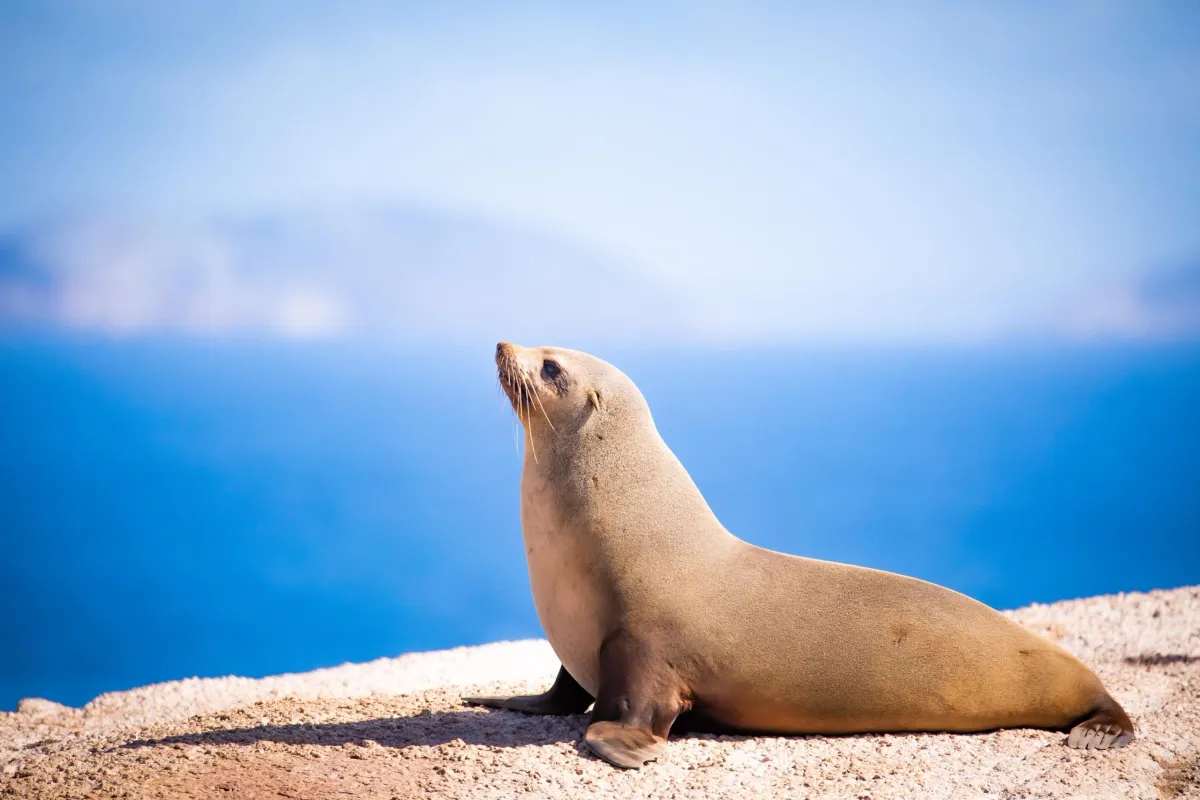
You'd think after a grueling deep-sea foraging trip, a fur seal would just want to chill on land, maybe catch some sun, and let its body quietly mend. Turns out, 'quietly mend' isn't quite right. According to new research, several hours after returning to shore, these marine athletes experience a sudden, dramatic spike in heart rate. Because apparently, even recovery has a delayed-action drama.
For years, scientists assumed seals did most of their post-dive recovery — like clearing lactic acid and nitrogen bubbles — while bobbing around at the ocean's surface. But a study in Frontiers in Physiology suggests the real party starts on land, long after they've hauled themselves out of the water. It's like they're saying, "Okay, now we can panic."
The Secret Life of a Seal's Heart
Dr. Melissa Walker from Deakin University led the team that essentially put Fitbits on fur seals. They tracked the heart rates of Cape fur seals off South Africa and Australian fur seals off, well, Australia. These two species have different dining habits: the Capes prefer open-water hunting, while the Aussies are more into seafloor foraging. And yes, they both look adorable.
We're a new kind of news feed.
Regular news is designed to drain you. We're a non-profit built to restore you. Every story we publish is scored for impact, progress, and hope.
Start Your News DetoxFrom 2003 to 2008, six female seals from each species were kitted out with waterproof heart rate transmitters, dive recorders, and radio transmitters. Data was collected every 10 seconds for up to 8.2 days. Let that satisfyingly specific number sink in.
What they found was, frankly, a bit wild. Six to eight hours after waddling ashore, the seals' heart rates suddenly shot up, sometimes hitting 84 beats per minute. For context, their usual resting rate on land is closer to 42-61 bpm, similar to what you'd see during REM sleep. Some seals even had multiple spikes before finally settling down.
This isn't just a random burst of excitement. The researchers suspect these delayed heart rate surges are a crucial part of paying back what's called an "oxygen debt." Think of it as the body's credit card bill after a massive shopping spree (of oxygen) during intense dives. While underwater, their hearts can drop to a mere 10 beats per minute during deep dives, conserving oxygen like it's going out of style. The trade-off? A build-up of metabolic byproducts.
So, these onshore heart rate fireworks are likely helping to clear all that lactic acid and rebuild oxygen reserves that couldn't be fully replenished at sea. It's a clever strategy: focus on not getting eaten and finding dinner while in the water, then deal with the physiological hangover once safely on solid ground. Because who needs to recover while being a predator, right?
It seems that for a fur seal, 'rest and recover' means 'rest, then frantically recover.' Scientists still have more questions about what exactly triggers these spikes, but one thing's clear: a seal's chill time is anything but simple.