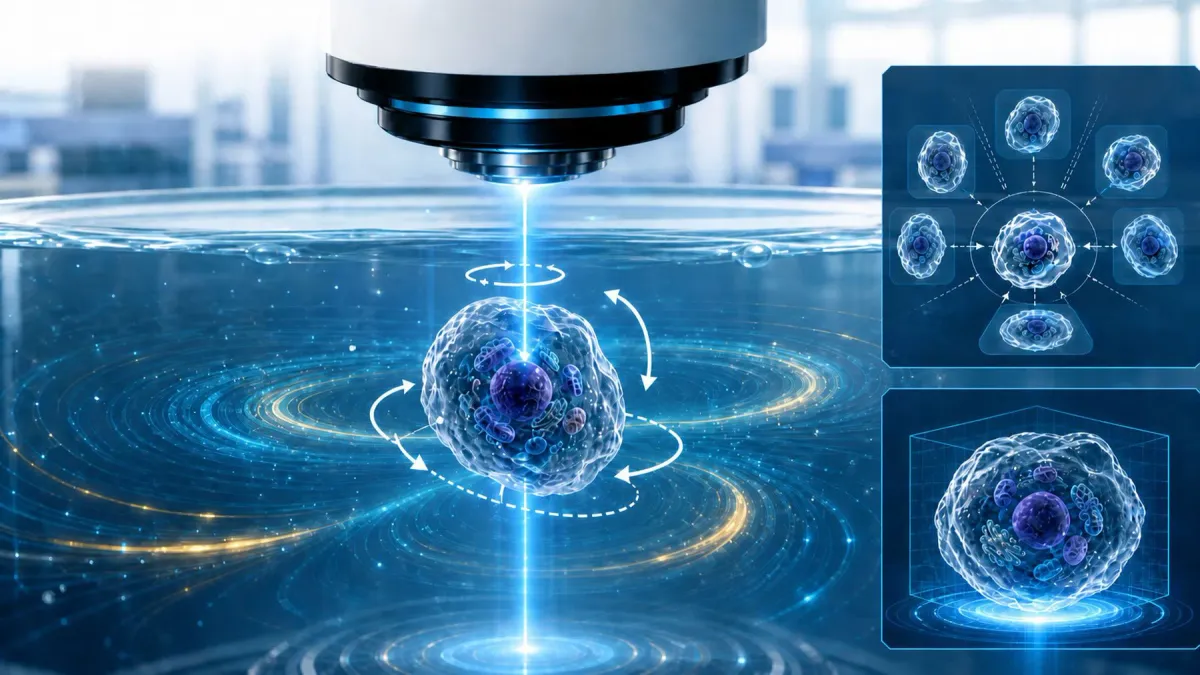
Researchers have found a new way to spin tiny cells and other microscopic items. They use lasers to create "whirlpools" in liquid, which gently rotate the samples without touching them.
This method, developed at the Karlsruhe Institute of Technology (KIT), helps scientists look at delicate samples from all sides. This is a big step for medical research and understanding tiny biological structures.
Spinning Samples Without Touch
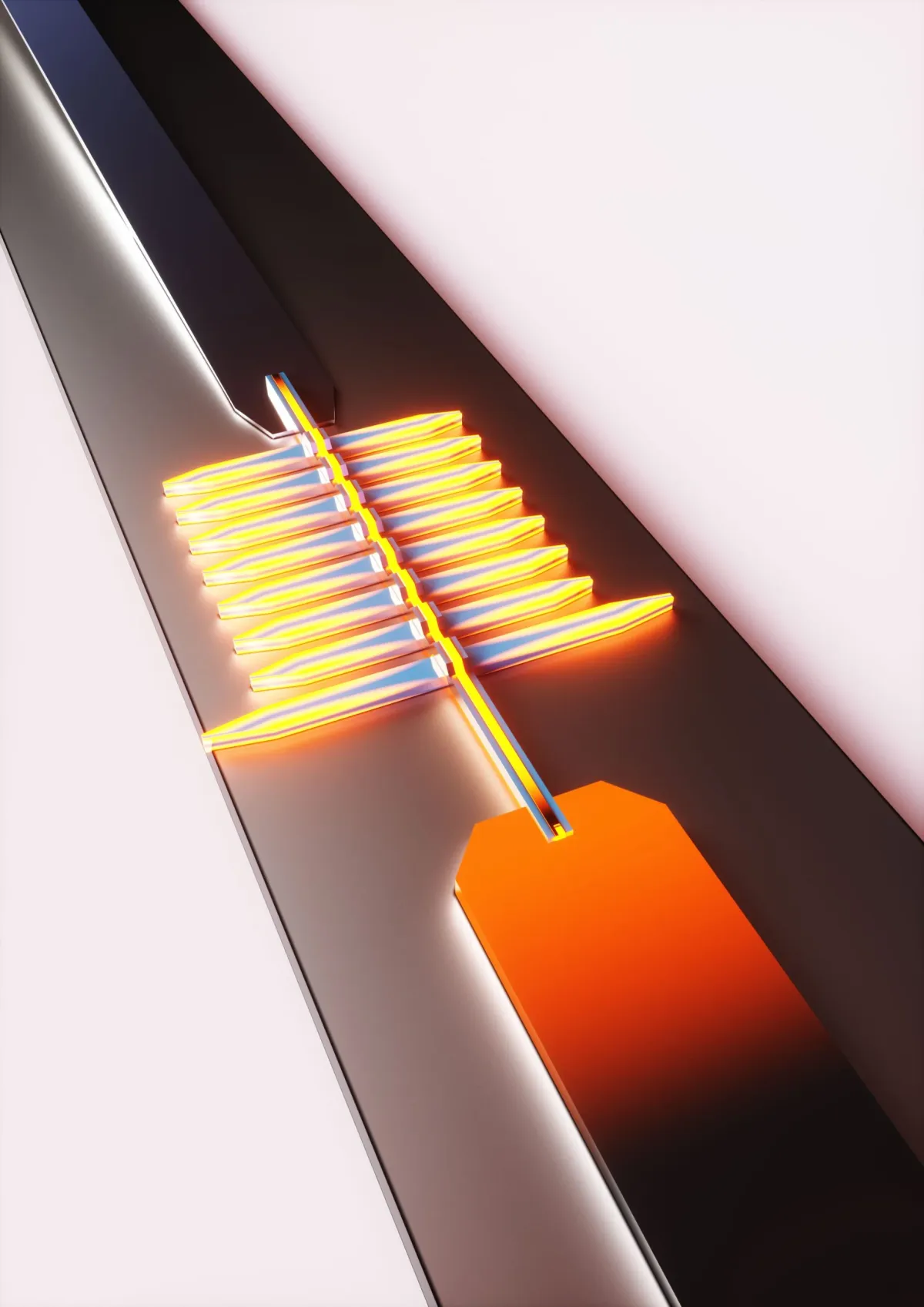
It's hard to rotate very fragile microscopic samples in every direction without touching them. The new laser method solves this problem. It creates small temperature changes in the liquid around the sample. These changes cause gentle currents that move and spin the sample.
We're a new kind of news feed.
Regular news is designed to drain you. We're a non-profit built to restore you. Every story we publish is scored for impact, progress, and hope.
Start Your News DetoxBecause nothing physically touches the sample, it stays safe. This also makes 3D imaging more accurate.
Modern microscopes are great at taking flat, detailed pictures. But getting accurate depth information is tricky. To build good 3D models, scientists need to take pictures from many angles. This means the sample must be rotated. The KIT method does this much more gently than older techniques.
Professor Moritz Kreysing and Dr. Fan Nan led the research team at KIT. They heat small spots in the liquid around the sample with a laser. This creates fluid movement that guides floating microscopic objects precisely. They don't need to use tiny needles or grippers.
Nan explained that they don't touch the sample directly. Instead, they control the liquid's movement, which then aligns the object.
Beyond Just Looking
Scientists have studied laser-driven fluid flows for years. However, previous methods only allowed movement in a flat plane. The new system can also rotate objects in three dimensions.
By quickly scanning the laser, the researchers create a spiral flow. This gently spins microscopic objects, like a small boat in a whirlpool. This 3D control gives a much clearer view of cell structures from different angles.
Kreysing noted that when samples can be aligned better, more details become visible. This is crucial for understanding biological structures and processes.
This technique could also be used for other things. It might help with contact-free manipulation of tiny objects, microscopic robots, and making extremely small things with high precision.
Deep Dive & References
Helical opto-thermoviscous flows drive out-of-plane rotation and particle spinning in a highly viscous micro-environment - Light: Science & Applications, 2026