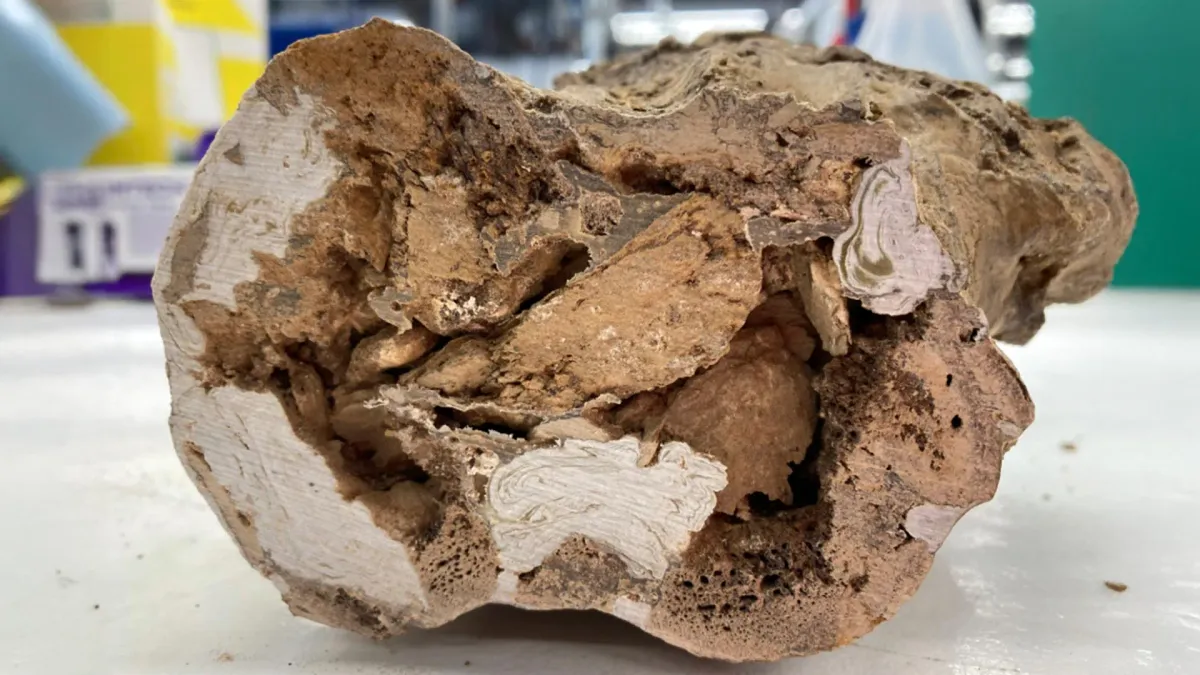
For decades, paleontologists operated under a pretty straightforward assumption: dinosaur bones were just, well, rocks. Mineralized rock, specifically. The original biological bits? Poof. Gone. Millions of years tend to do that.
Turns out, the universe, or at least a 66-million-year-old Edmontosaurus, had other plans. A new study just dropped a scientific bombshell, suggesting that original organic molecules—like collagen—are still hanging out inside some dinosaur bones. Which, if you think about it, is both impressive and slightly terrifying.
The Case of the Persistent Protein
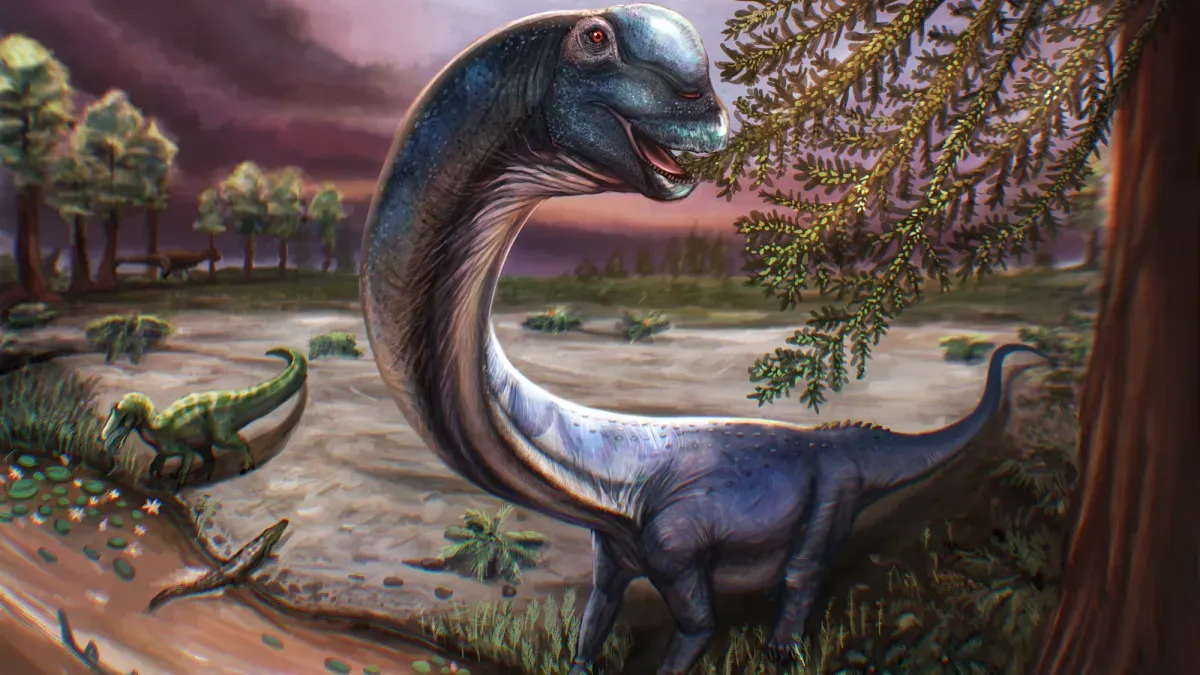
The star of this molecular whodunit is a perfectly preserved Edmontosaurus sacrum, part of the hip, weighing a hefty 22 kilograms. This particular duck-billed herbivore, a contemporary of T. rex from South Dakota's Hell Creek Formation, apparently had excellent bone-preserving conditions.
We're a new kind of news feed.
Regular news is designed to drain you. We're a non-profit built to restore you. Every story we publish is scored for impact, progress, and hope.
Start Your News DetoxScientists got to work with all the fancy lab toys: protein sequencing, mass spectrometry. And what did they find? Undeniable collagen remnants. Collagen, for the uninitiated, is the main structural protein in bone. It's also notoriously difficult to mistake for, say, a rogue bacterial snack. Researchers from UCLA even found hydroxyproline, an amino acid basically collagen's best friend in bone, confirming the degraded fragments were truly from the dinosaur.
Professor Steve Taylor from the University of Liverpool, clearly enjoying the moment, declared that this research "refutes the idea that any organic material found in fossils must be contamination." Take that, skeptics.
This isn't the first time someone's claimed to find soft tissues in dinosaur fossils. Paleontologist Mary Schweitzer stirred the pot back in 2005 with a T. rex discovery. But this Edmontosaurus study is different. They threw everything at it – microscopy, chemical analysis, protein sequencing – all on the same fossil. It's like a scientific full-court press designed to shut down any "contamination!" arguments.
So, Why Does This Even Matter?
If proteins can survive for millions of years, it's not just a cool party trick. It's a whole new way to play paleontologist. Suddenly, scientists aren't just looking at bone shapes; they're looking at molecular blueprints. Tiny traces could reveal how dinosaur species are related, how they grew, aged, or even what diseases they battled.
Professor Taylor is already suggesting a mass re-examination of old fossil samples. Those cross-polarized light microscopy images from decades ago? They might be hiding overlooked evidence of preserved collagen, just waiting for a second look. Imagine unlocking a whole new level of dinosaur lore just by re-scanning dusty old images.
This also brings up the million-dollar question: how? Proteins are supposed to break down. It's their job. Yet, some fossils are apparently molecular fortresses. Scientists are now hypothesizing that mineral interactions within the bone, combined with specific burial environments, create a kind of biological suspended animation, dramatically slowing down decay.
It helps that Edmontosaurus fossils are known for their exceptional preservation. Some specimens, affectionately dubbed "dinosaur mummies," have even retained detailed skin impressions. Which, frankly, sounds like something out of a very specific horror movie, but for science, it's pure gold.
These discoveries are fundamentally changing how we see fossils. They're not just fancy rocks anymore. They're molecular time capsules, still humming with the faint biological echoes of a world 66 million years gone. And that, my friends, is worth telling someone about.