Imagine a world where the biggest drama in the ocean was not a giant squid vs. a sperm whale, but a microscopic turf war between algae and bacteria. Because, apparently, that's what was happening 540 million years ago, according to a new study that just upended our understanding of early life on Earth.
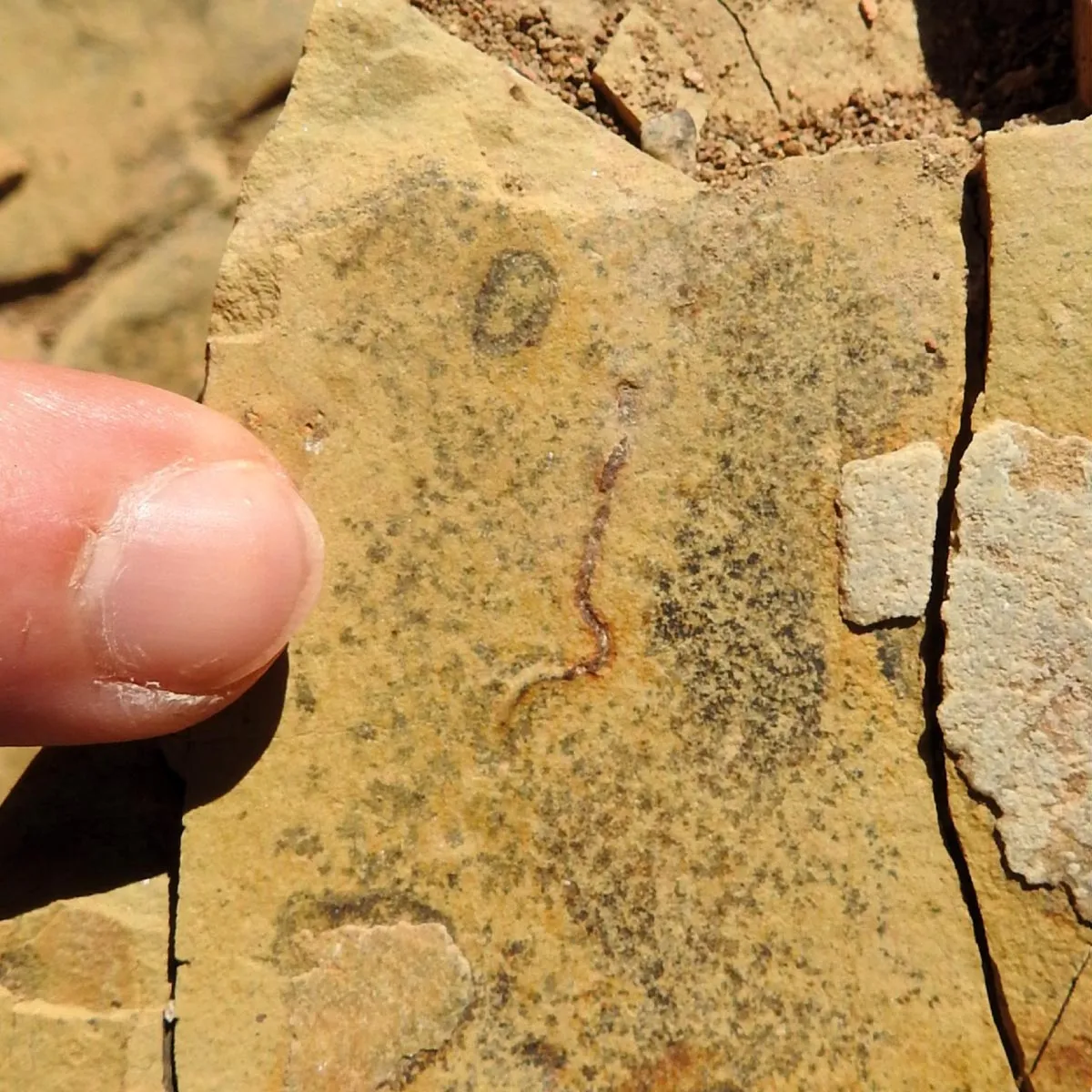
Those tiny, squiggly fossil marks in Brazilian rocks? The ones scientists thought were traces of the very first mini-worms? Turns out, they were just really, really old bacteria and algae. Consider our prehistoric assumptions officially debunked.
The Case of the Misunderstood Microfossils
For years, paleontologists looked at these microfossils, pulled from the Tamengo geological formation in Corumbá and Bonito, Brazil, and saw evidence of meiofauna — tiny, worm-like invertebrates less than a millimeter long. If true, these would have been some of the oldest animal ancestors we knew.
We're a new kind of news feed.
Regular news is designed to drain you. We're a non-profit built to restore you. Every story we publish is scored for impact, progress, and hope.
Start Your News DetoxBut lead author Bruno Becker-Kerber and his team had a hunch. Using some seriously advanced tech, they put these ancient specimens under the microscope, or rather, the particle accelerator. Specifically, the MOGNO beamline at Sirius, which sounds less like a research facility and more like a secret government project.
They employed microtomography and nanotomography (which is basically like giving a fossil a super-detailed MRI without, you know, destroying it) and Raman spectroscopy to check the chemical makeup. What they found were preserved cellular structures, complete with organic material and cell walls. Not the tracks left by a tiny, seafloor critter, but the actual remains of microbial communities.
This means that during the Ediacaran period, just before the Cambrian explosion, Earth's oceans likely didn't have enough oxygen to support complex animal life, even the itsy-bitsy kind. It was more of a primordial soup, thick with microbial mats and giant sulfur-oxidizing bacteria – some of which, delightfully, can be wider than a strand of human hair and visible to the naked eye. Because why be small when you can be a colossal microbe?
Revisiting Pre-Cambrian Party Plans
The previous idea was that these worm-like creatures were already wiggling around, setting the stage for the Cambrian explosion, when oxygen levels spiked and complex animals suddenly diversified. But if these aren't animal traces, then the Ediacaran ocean was a much simpler, though no less fascinating, place.
The fossils came in three distinct size groups, suggesting a diverse microbial ecosystem. Some of the larger forms looked like green or red algae, while the smaller ones could be cyanobacteria or, yes, more of those sulfur-oxidizing bacteria. Basically, a microscopic melting pot of single-celled organisms, thriving in an oxygen-deprived world.
This isn't just a fun fact for your next dinner party; it rewrites a crucial chapter in the story of life. It gives scientists a much clearer picture of the environmental conditions that existed before complex animal life truly kicked off. Turns out, before the animals arrived, the bacteria and algae were having a pretty good time all on their own. And if that's not a humbling thought, what is?