Physicists are creating new "active materials" that can move and change shape on their own. These materials are different from everyday objects because they use their own energy to react to forces. This research could lead to new types of soft robots and adaptive machines.
Building Materials That Move
Researchers from the universities of Amsterdam, New South Wales, and Cambridge are studying active matter. This type of material constantly uses energy to create motion or mechanical changes. Nature shows many examples, like schools of fish moving together or cells reorganizing themselves.
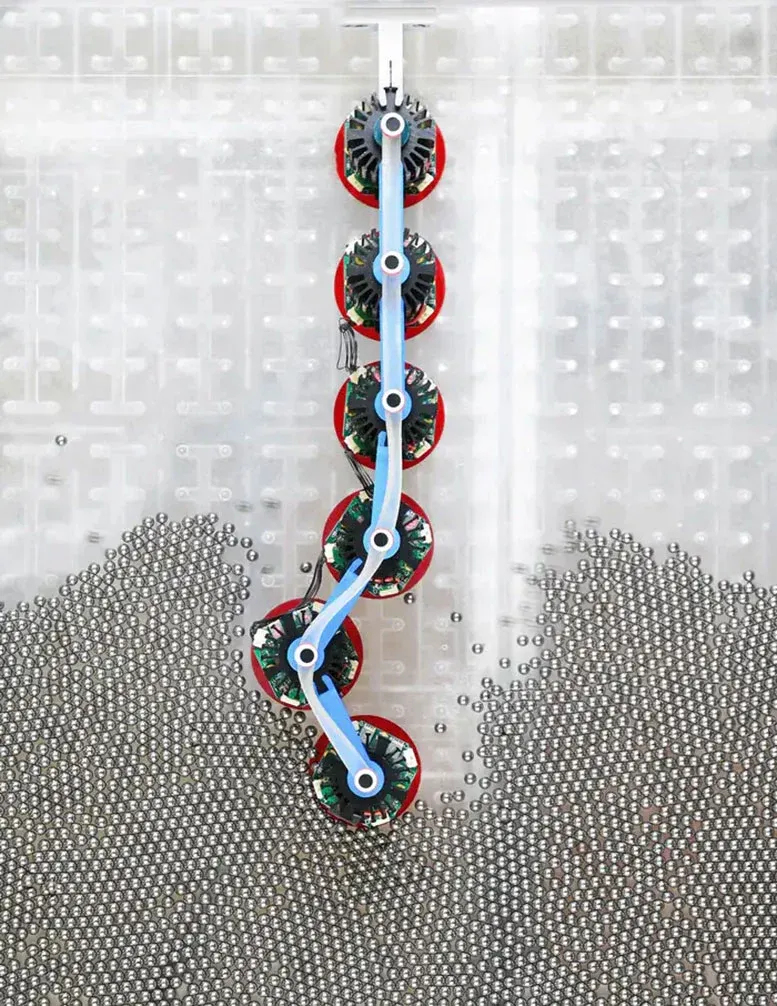
Scientists can also make active matter in the lab. They use simple parts like rods, rubber bands, and tiny motors. These systems show unusual and useful behaviors.
We're a new kind of news feed.
Regular news is designed to drain you. We're a non-profit built to restore you. Every story we publish is scored for impact, progress, and hope.
Start Your News DetoxOne experiment looked at how a paper ticket buckles and snaps when squeezed. A normal ticket only does this once. But when researchers made an active version using rods and motors, the chain of rods buckled and snapped repeatedly. This continuous motion allowed the chains to crawl, walk, or dig.
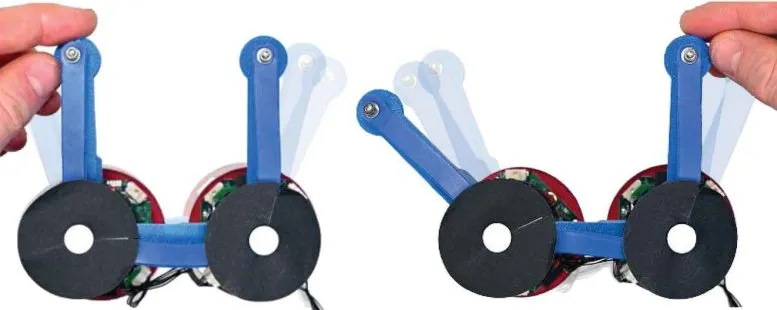
This work was published in the Proceedings of the National Academy of Sciences. Sami Al-Izzi and Yao Du were the lead authors. The findings could help create robots that can move and function without needing a central control system.
Challenging Basic Rules of Mechanics
Engineers often use Le Chatelier’s Principle, which suggests that what happens at a small scale will also happen at a larger scale. For example, making small parts of a structure stiffer usually makes the whole structure stiffer.
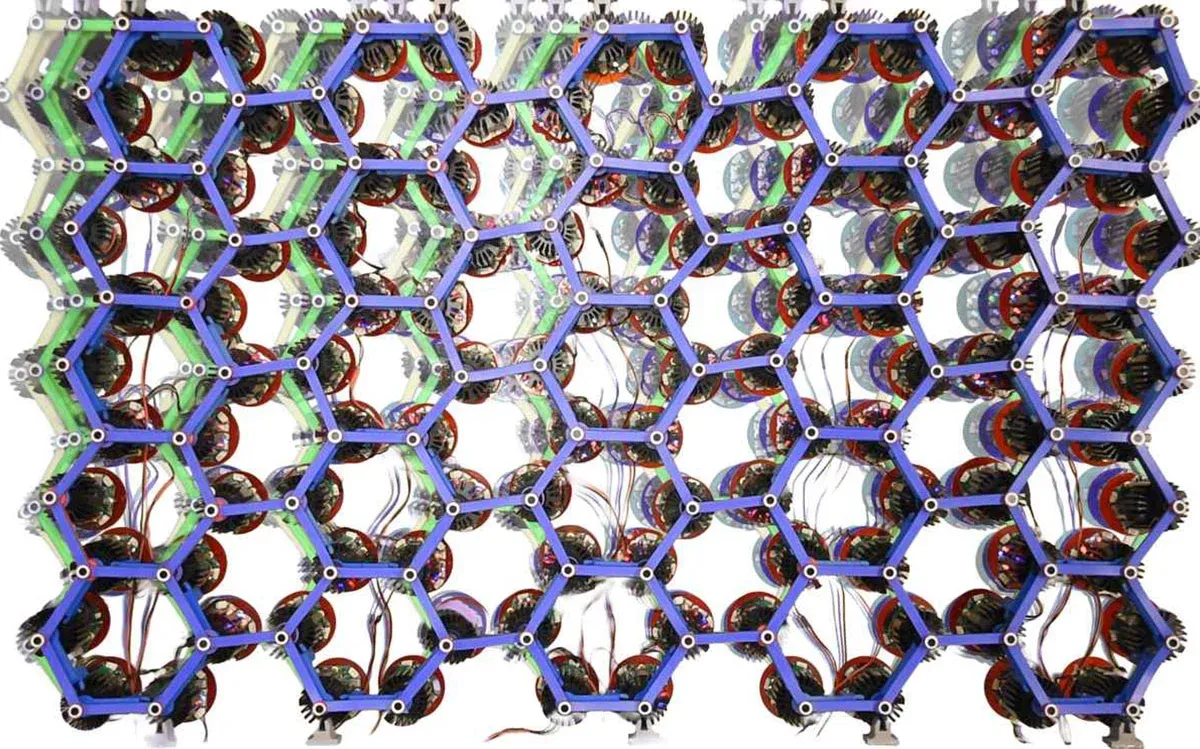
However, the team found that active matter doesn't always follow this rule. They built a two-dimensional grid of motors and rods. They discovered that making the individual parts more active could actually make the entire structure less active.
This unexpected behavior depends on how the active parts spread through the material, a process called percolation. It's like water flowing through coffee grounds: if the grounds are too dense, the water can't get through. Similarly, too many less active parts can stop elastic responses from spreading, even if other areas are very active.
This second study, led by Jack Binysh, was accepted for publication in Physical Review X. These findings could change how scientists understand systems like biological gels and robotic networks.
Deep Dive & References
- Nonreciprocal buckling makes active filaments polyfunctional - Proceedings of the National Academy of Sciences, 2026
- More is Less in Unpercolated Active Solids - Physical Review X, 2026