Turns out, the Sun threw quite a tantrum 800 years ago, bathing Earth in a "red sky" solar storm powerful enough to scramble modern space missions. And we only know about it thanks to some very old trees and a medieval poet's diary. Because apparently, that's how you do cutting-edge space weather research now.
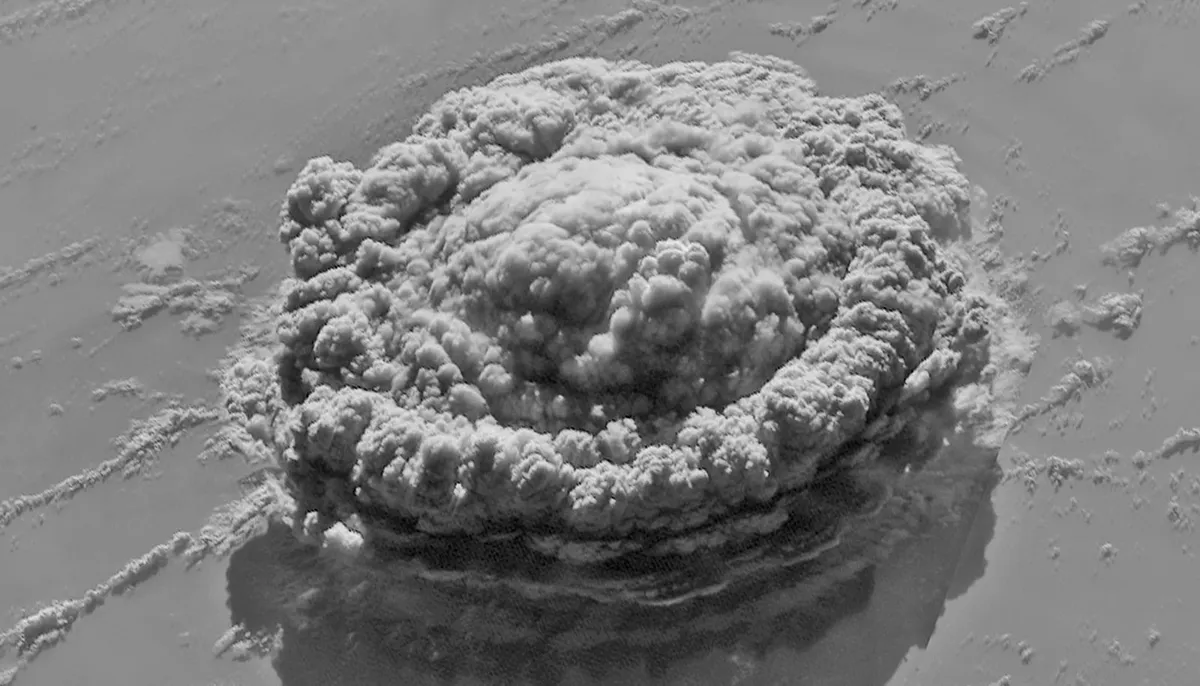
Solar activity is usually pretty. Think auroras, those dazzling light shows that make you feel like the universe is putting on a concert just for you. But beyond Earth's magnetic field, the Sun can get downright dangerous. Violent eruptions, like solar flares and coronal mass ejections, blast high-energy particles through space. These aren't just pretty lights; they're serious hazards for astronauts and spacecraft.
Sometimes these eruptions cause Solar Proton Events (SPEs), where charged particles rocket towards Earth at up to 90% the speed of light. Back in 1972, several SPEs happened between the Apollo 16 and Apollo 17 Moon missions. If astronauts had been out there, they would've faced lethal radiation. With future Moon missions on the horizon, understanding these unpredictable solar outbursts isn't just academic; it's a matter of life and death.
We're a new kind of news feed.
Regular news is designed to drain you. We're a non-profit built to restore you. Every story we publish is scored for impact, progress, and hope.
Start Your News DetoxThe Case of the Carbon-14 and the Kyoto Sky
Enter the Okinawa Institute of Science and Technology (OIST), where researchers got creative. They combined medieval historical records with precise carbon-14 measurements from ancient asunaro trees buried in northern Japan. The goal? To find evidence of past SPEs.
This method helped them pinpoint an SPE that likely occurred between the winter of 1200 CE and the spring of 1201 CE — a period of unusually intense solar activity. Their findings, published in the Proceedings of the Japan Academy, Series B, confirm what Professor Hiroko Miyahara from OIST calls "sub-extreme" SPEs. These events are 10-30% as strong as the most extreme ones, happen more often, and are still plenty hazardous. Imagine a smaller, but still very grumpy, sun.
Earth's magnetic field does a decent job blocking most high-energy particles from SPEs. But near the poles, those magnetic lines open up, letting some particles sneak into the atmosphere. When powerful events hit, these particles collide with atmospheric gases, creating carbon-14 compounds that spread globally and get trapped in living things. Like, say, really old trees.
By analyzing carbon-14 levels in preserved organic material, scientists can basically read the Sun's diary over thousands of years. The OIST team spent over a decade refining a super-precise measurement technique, allowing them to detect tiny carbon-14 changes that previous methods missed. This means even weaker "sub-extreme" SPEs, once invisible, are now on the radar.
But carbon-14 analysis is slow. So, they needed a hint. A clue. Something to tell them when to start digging.
When a Poet's Diary is a Scientific Instrument
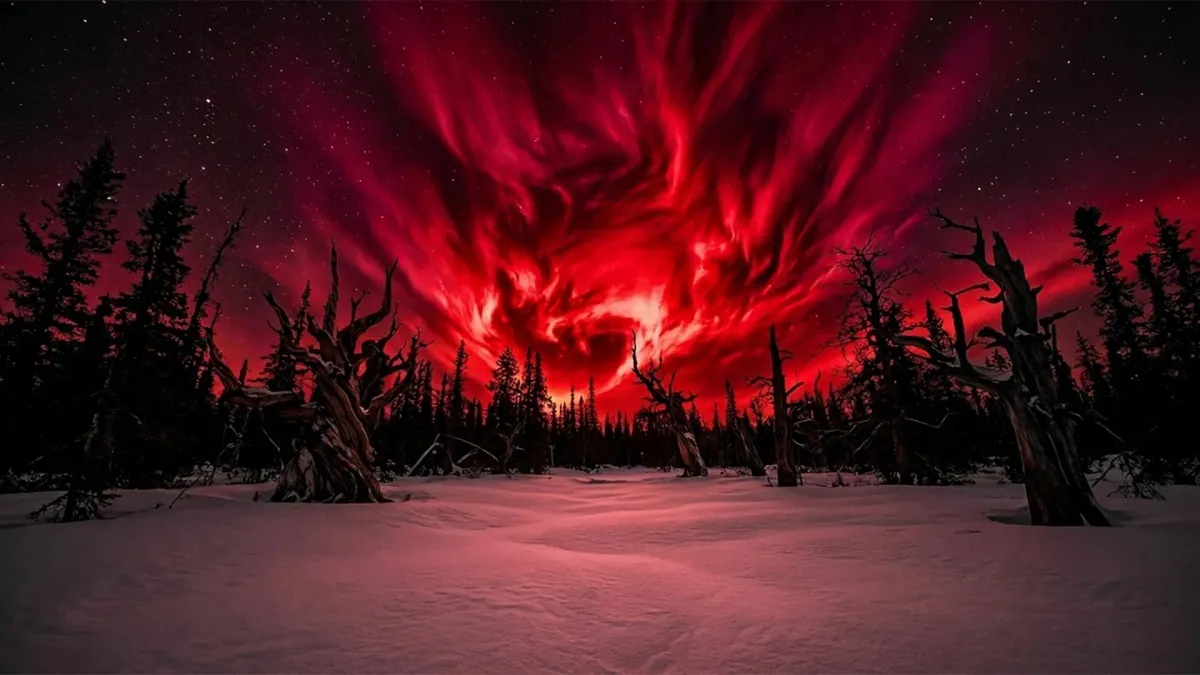
That's where Japanese poet Fujiwara no Teika comes in. In February 1204 CE, he wrote in his diary, Meigetsuki, about "red lights in the northern sky over Kyoto." While SPEs don't directly cause auroras, they're often linked to the same solar disturbances that do. This historical observation gave researchers a timeframe to investigate, a cosmic breadcrumb trail.
The scientists then measured carbon-14 levels in buried asunaro wood from Aomori Prefecture. They found spikes, confirming a sub-extreme SPE. Combining this with dendroclimatic studies (tree-ring dating, for the uninitiated), they nailed the timing: winter 1200 CE to spring 1201 CE. Further proof came from Chinese historical records, which also described a red aurora visible at unusually low latitudes during that same period. Miyahara noted that this high-precision data not only dated these sub-extreme SPEs but also helped reconstruct the solar cycles of that era. Today, the Sun's activity cycles last about eleven years. But back then, the team found the cycle was only seven to eight years long, indicating a very, very active Sun. The SPE they dated happened right at the peak of one of these hyperactive cycles.
This research fills crucial gaps in our understanding of solar activity and dangerous space weather. It turns out, to really understand the Sun's past tantrums, you need more than just fancy tech. Sometimes, you need a poet with a pen and a keen eye for a red sky. It just makes you wonder what other cosmic secrets are hiding in dusty old books and forgotten forests.