Turns out, scientists have been missing a trick. For ages, when cooking up new materials, they've been laser-focused on the starting ingredients and the final product, like a baker only caring about the flour and the finished cake. But what about all the gooey, unstable, and utterly fascinating stuff that happens in between?
A team of researchers just peered into that messy middle and pulled out some seriously promising finds. They've uncovered entirely new materials, including a fresh take on a compound that could revolutionize solar energy and, wait for it, a new way to supercharge batteries. Because apparently, the journey is just as important as the destination, especially when it's packed with hidden treasures.
The In-Between Bit
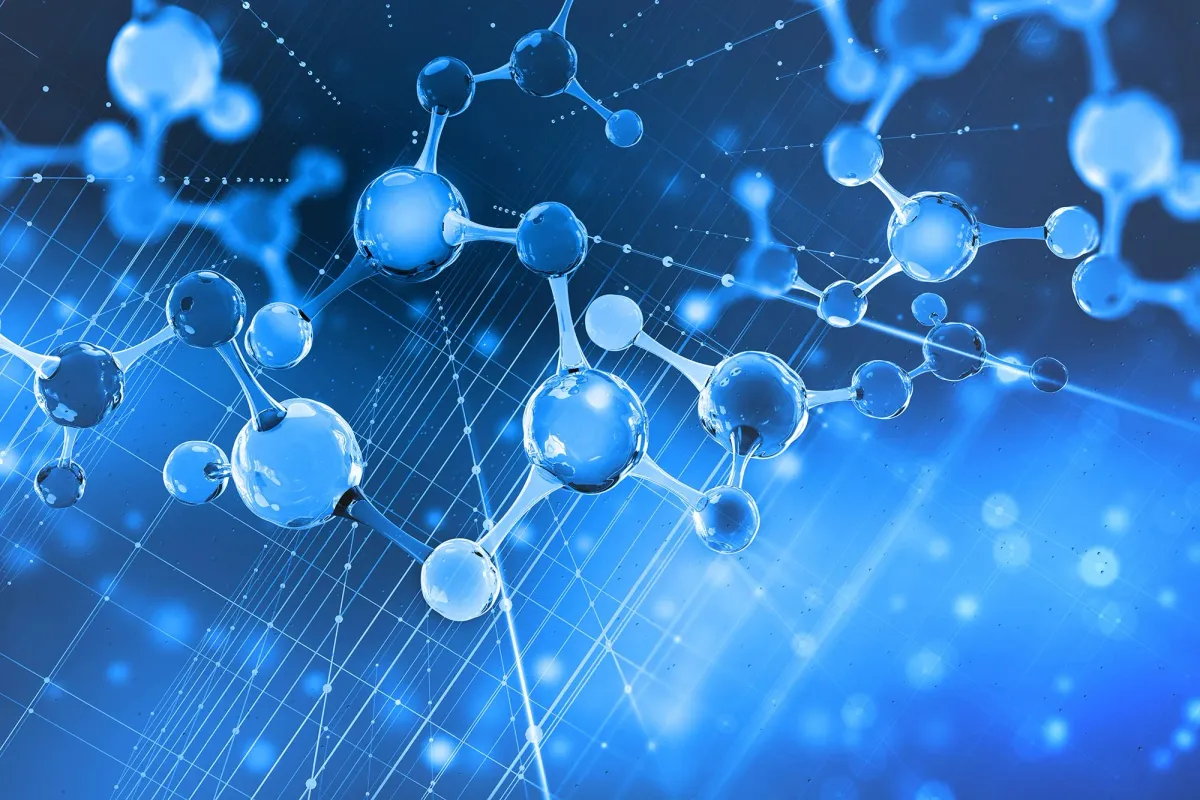
Imagine you're making a fancy scientific casserole. Most folks just look at what you put in and what comes out of the oven. But Dr. Sebastian Pike from the University of Warwick and his team decided to watch the pot boil, literally. They tracked what happens when specially designed molecules — called "single-source precursors" — get heated up. These precursors already contain all the elements needed, sort of like a pre-mixed baking kit.
We're a new kind of news feed.
Regular news is designed to drain you. We're a non-profit built to restore you. Every story we publish is scored for impact, progress, and hope.
Start Your News DetoxAnd what they found in these fleeting, unstable "in-between" stages was a whole smorgasbord of previously unknown materials. "There are many fascinating stages in between 'A' and 'B,' and these hidden steps could be just as important," Pike noted. Important indeed, as they quickly realized some of these new materials had immediate practical uses. Someone's clean energy spreadsheet just got a lot more exciting.
One of the star discoveries was a new, kinetically stabilized form of bismuth vanadate (BiVO4), now dubbed β-BiVO4. Why does that matter? Because the original BiVO4 is a rockstar in clean energy. It has a magical property called a "band gap" that lets it absorb sunlight and efficiently split water to create clean hydrogen fuel. Basically, free energy from the sun, bottled.
The newly discovered β-BiVO4 has a different atomic structure and, crucially, a much larger band gap. This means scientists can now fine-tune how materials interact with light, potentially unlocking even more efficient solar fuel production, better catalysts, and snazzier electronic devices. Think precision engineering for photons.
But the fun doesn't stop at solar. Another intermediate material the team stumbled upon proved to be an excellent lithium storage solution. Which, if you're keeping score at home, means your next phone or electric car battery might just be powered by something that was once considered a scientific afterthought. Dr. Dominik Kubicki from the University of Birmingham put it best: these "in-between" materials aren't just steps; they have useful properties all their own.
By carefully controlling temperature, precursor chemistry, and reaction paths, researchers believe this opens up a whole new frontier in materials science. Who knew chemistry had so many secret levels? Now, if you'll excuse us, we're off to check our own baking for any unexpected superpowers.