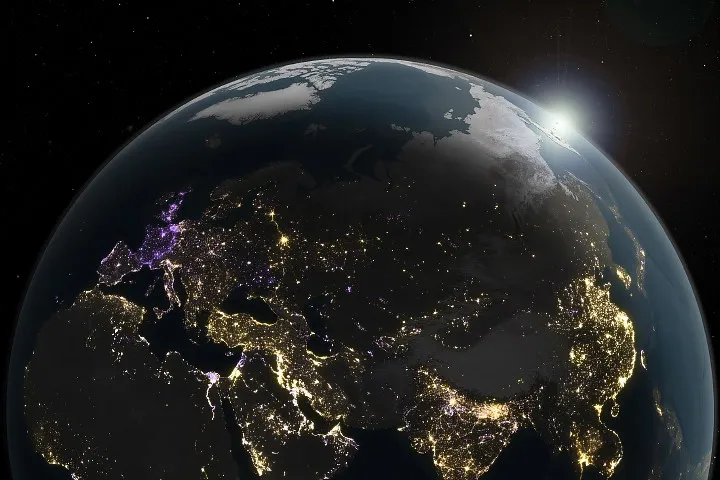
Turns out, the planet isn't just getting brighter at night. NASA's latest maps of artificial light show something far more interesting: a world that's constantly flickering, dimming, and then brightening again. Forget a gradual increase; we're talking about a global light show driven by everything from new construction to energy crises and the quiet march of LEDs.
These aren't just pretty pictures. They're a deep dive into nearly a decade of data from NASA's Black Marble project, which uses sensors on satellites like Suomi-NPP to track every glow, flicker, and blackout across the globe. We're talking daily, monthly, and yearly records of just how much humanity is lighting up (or dimming down) the night.
The Great Global Dim and Bright
Overall, the research found a 34% increase in global light between 2014 and 2022. But that number, like a magician's misdirection, hides the truly fascinating bit: huge swaths of the planet are actually getting darker. The map, which covers most of the inhabited world, shows yellow and gold where things got brighter, and purple where they dimmed. And often, these changes are happening right next to each other.
We're a new kind of news feed.
Regular news is designed to drain you. We're a non-profit built to restore you. Every story we publish is scored for impact, progress, and hope.
Start Your News DetoxTake the U.S. for example. Cities on the West Coast, riding a wave of population growth, got noticeably brighter. Meanwhile, much of the East Coast went purple, dimming down. The likely culprits? More energy-efficient LEDs and shifts in the economy. Because apparently, even our light bulbs have opinions on the market.
Internationally, China and northern India saw a surge in nighttime light, a clear sign of urban development chugging along. But across Europe, things went the other way. Paris, France (33% dimming), the UK (22% dimming), and the Netherlands (21% dimming) all saw less light pollution thanks to LED adoption and energy-saving efforts. And then 2022 hit, and European nights dimmed sharply, a direct response to an energy crisis spurred by the Russia-Ukraine conflict.
It's a stark reminder that our planet's glow isn't just a static measure of progress. It's a dynamic, volatile fingerprint of human activity, policy shifts, and global events — all seen from space. Which, if you think about it, is both impressive and slightly terrifying.