NASA is developing a powerful new computer chip that could change how future spacecraft work in deep space. This advanced processor is designed to help spacecraft process information much faster. It can even make some decisions on its own during missions far from Earth.
Smarter Spacecraft for Deep Space
NASA's High Performance Spaceflight Computing project aims to boost the computing power of spacecraft. Current spacecraft use older processors. These are reliable and tough enough for space, but they aren't fast enough for future missions.
More advanced processors are key for creating autonomous spacecraft. They will speed up scientific discoveries by analyzing data onboard. They will also support astronauts on future trips to the Moon and Mars.
We're a new kind of news feed.
Regular news is designed to drain you. We're a non-profit built to restore you. Every story we publish is scored for impact, progress, and hope.
Start Your News DetoxEugene Schwanbeck, a program manager at NASA's Langley Research Center, said this new system is "fault-tolerant, flexible, and extremely high-performing." He noted that NASA's work in spaceflight computing is a "triumph of technical achievement and collaboration."
Testing a Radiation-Hardened Processor
The core of this project is a radiation-hardened processor. It's built to be up to 100 times more powerful than current space computers. It can also survive the harsh conditions of space. Engineers at NASA's Jet Propulsion Laboratory (JPL) are testing it thoroughly.
Jim Butler, the project manager at JPL, explained they are putting the chips "through the wringer." They are doing radiation, thermal, and shock tests. They are also checking its performance with many functional tests.
To be used in space, the processor must handle intense radiation, strong shocks, and big temperature changes. These can damage electronics. High-energy particles from the Sun and deep space can also cause errors. These errors can force spacecraft into "safe mode," shutting down systems until engineers fix the problem.
NASA is also testing how the chip handles tough landing conditions on other planets. Butler said they are using "high-fidelity landing scenarios from real NASA missions." These usually need a lot of power to process huge amounts of sensor data.
Testing at JPL started in February and will continue for several months. Early results are promising. NASA says the processor works as expected. It seems to be about 500 times faster than the radiation-hardened processors used in spacecraft today.
When testing began, the team sent an email with the subject "Hello Universe." This was a nod to the first messages used in early computing.
AI for Deep Space Exploration
JPL and Microchip Technology Inc. are developing this processor together. Early versions of the chip have already been shared with defense and aerospace companies.
NASA believes this technology will let autonomous spacecraft use artificial intelligence. They could react in real time to unexpected events. This is important when communication delays make it impossible for humans to help. The processor could also help future deep space missions quickly analyze, store, and send large amounts of scientific data back to Earth. It may also support crewed missions to the Moon and Mars.
Tiny Chip, Massive Power
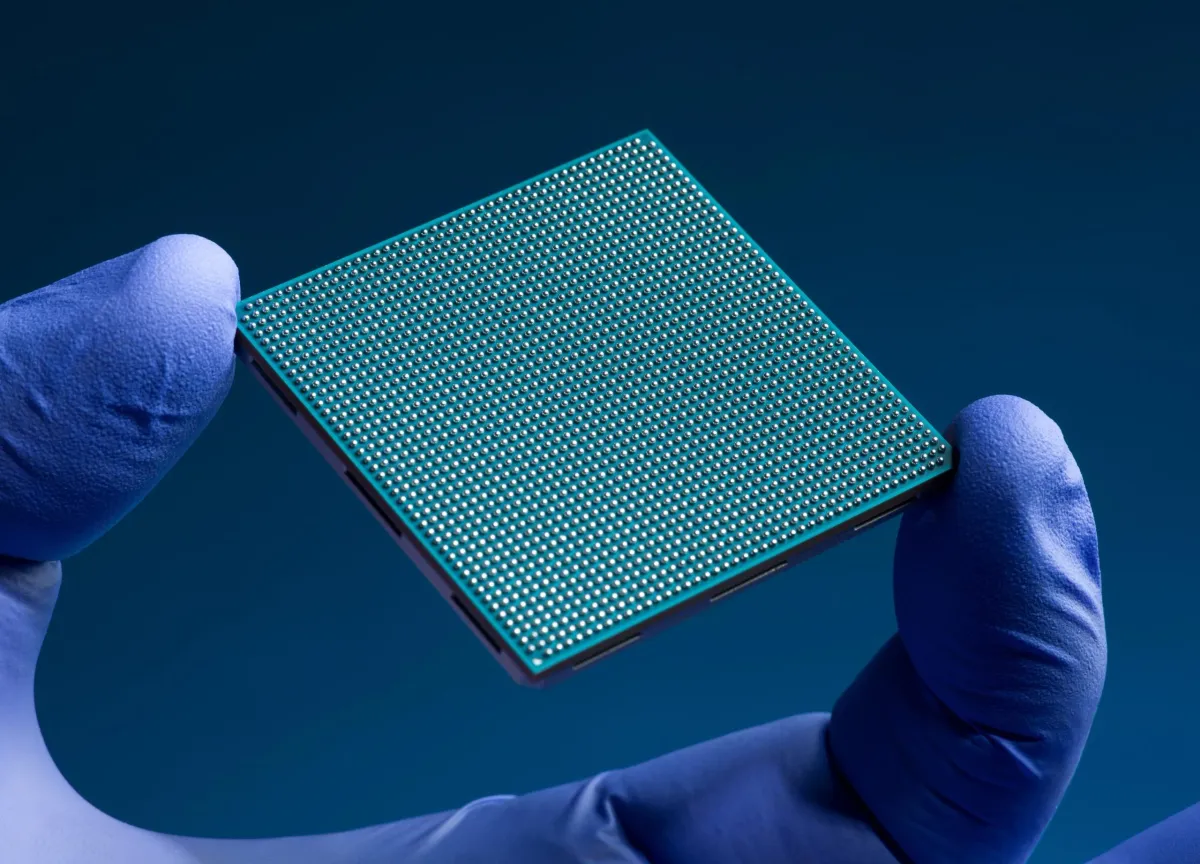
This processor is a "system-on-a-chip" (SoC). This means it combines all the main parts of a computer into one small device. It fits in the palm of a hand. It includes central processing units, networking systems, memory, and input/output interfaces.
SoCs are common in smartphones and tablets because they are small and use little energy. However, the versions JPL is testing are built to last for years in deep space. They could operate millions of miles from Earth, in conditions far tougher than any consumer electronics would face.
Once certified for spaceflight, NASA plans to use this processor in many missions. These include Earth orbiters, planetary rovers, crewed habitats, and deep space spacecraft. Microchip also plans to adapt the technology for industries on Earth, like aviation and car manufacturing.
Deep Dive & References
NASA’s High Performance Spaceflight Computing Processor - Image: NASA/JPL-Caltech