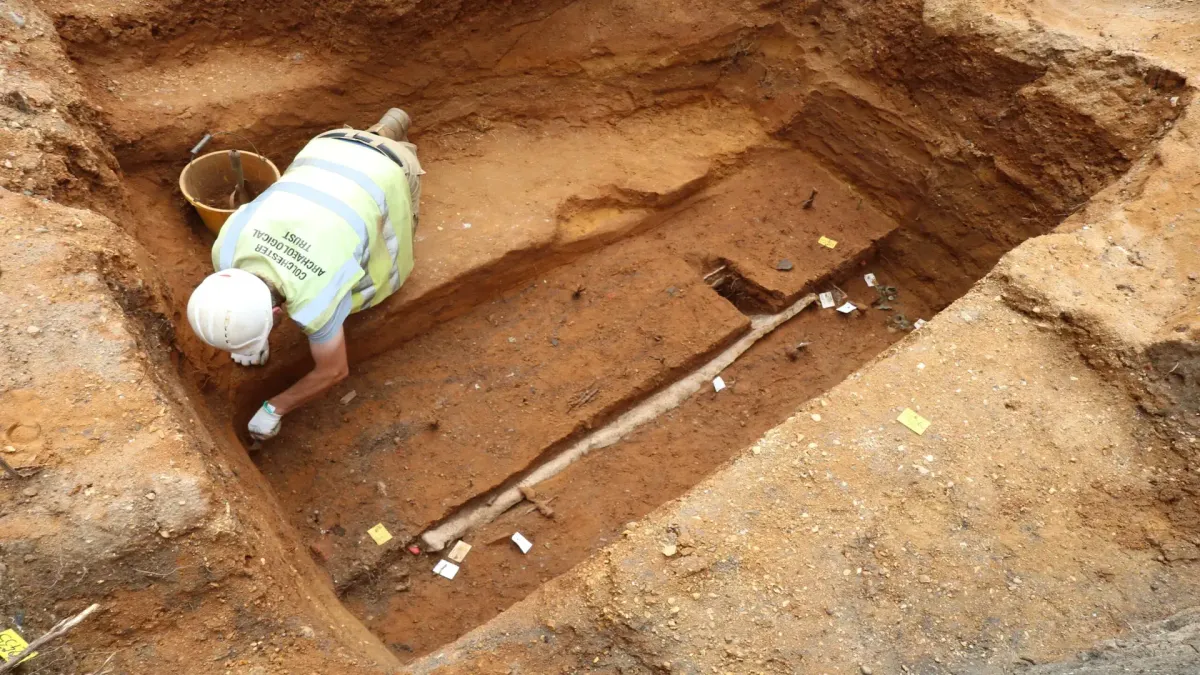
Archaeologists in Colchester have uncovered a remarkable Roman burial. It holds the remains of a woman, buried with rare items and substances like frankincense and gypsum.
This discovery offers a unique look into the life and death of the Roman elite in Britain.

A Glimpse into Elite Roman Life
The woman was laid to rest in a decorated lead coffin. Inside were grave goods that showed her high status in Roman-ruled England.
We're a new kind of news feed.
Regular news is designed to drain you. We're a non-profit built to restore you. Every story we publish is scored for impact, progress, and hope.
Start Your News DetoxRobert Masefield, Archaeology Director at Tetra Tech Consulting Limited, called it the "most spectacular" Roman burial he has seen. He noted it clearly shows the wealth and symbolism of a fully Romanized citizen.
Adam Wightman, Director of Archaeology at Colchester Archaeological Trust, highlighted the coffin's carvings and the scientific evidence. He said these elements make the burial so compelling.

He added that they "allow us to glimpse not just a person, but the care, ritual, and belief that surrounded her burial."
The woman likely died in her late 20s or 30s, sometime between the third and fifth centuries AD. She was buried with jet hairpins and rare glass flasks, among other items. This suggests a carefully planned and richly furnished burial.
Precious Substances and Rituals
The most striking discovery was the substances found with her.
Residue analysis showed frankincense and gypsum in the coffin. An exotic resin was also found in a glass vessel. The frankincense, from dried tree sap, probably came from Africa, the Middle East, or India.

The presence of gypsum suggests her body might have been covered in a plaster-like paste before burial. This was a common practice among the British Roman elite.
The Colchester Archaeological Trust excavated the burial at the former Essex County Hospital site. This work was part of a redevelopment project by Essex Housing.
Starting in May 2026, a temporary exhibit will open to the public for one year. Visitors can see the coffin and remains, learning about what this woman's life and death reveal about the British Roman elite.