A plant thought to be extinct for nearly 60 years has reappeared in remote northern Australia. This rediscovery happened because of a photo uploaded to the citizen science platform iNaturalist. Scientists say this shows how important everyday people are becoming in finding and protecting biodiversity.
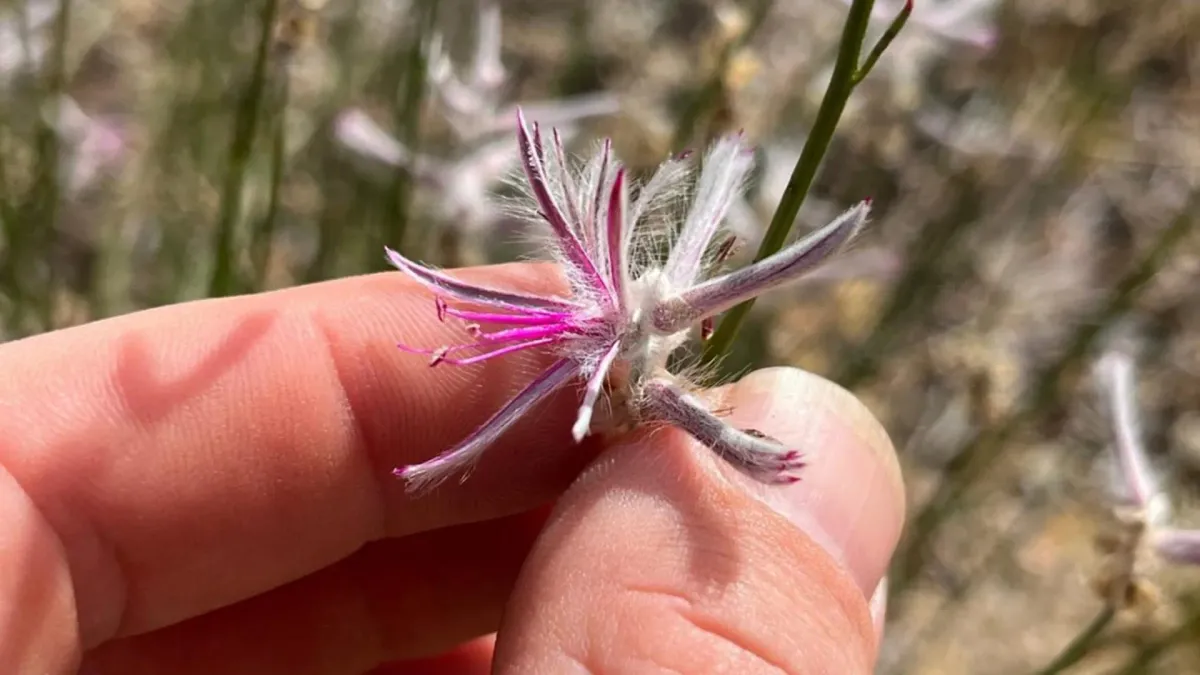
The story began when Aaron Bean, a horticulturalist, was helping band birds in Queensland's outback. He saw an unusual plant, took pictures, and uploaded them to iNaturalist when he got phone service.
A Rare Plant Returns
These photos caught the eye of botanist Anthony Bean from the Queensland Herbarium. He quickly recognized the plant as Ptilotus senarius. This rare species had not been seen since 1967 and was believed to be extinct. Anthony Bean had actually described the species himself a decade earlier.
We're a new kind of news feed.
Regular news is designed to drain you. We're a non-profit built to restore you. Every story we publish is scored for impact, progress, and hope.
Start Your News DetoxThomas Mesaglio from UNSW documented this rediscovery. He noted that Aaron Bean is an active iNaturalist user who took photos of interesting plants on the property.
Ptilotus senarius is a delicate shrub with purple-pink flowers. It grows in rugged areas near the Gulf of Carpentaria. Before this find, there had been no confirmed sightings for almost 60 years. The plant was thought to be among the 900 species lost globally since the 1750s.
Thanks to Aaron Bean's photos, Anthony Bean's knowledge, and help from the property owner, the plant's survival was confirmed. It is no longer considered extinct. Instead, it is now on the critically endangered list, allowing for conservation efforts.
Mesaglio called the rediscovery a fortunate situation where everything aligned perfectly.
Citizen Science Drives Discovery
This rediscovery highlights a growing trend in science. More people are photographing plants and animals and sharing them on platforms like iNaturalist. These observations sometimes reveal species thought to be lost or even new species.
For researchers like Mesaglio, citizen science tools are vital. Australia is vast and diverse, making it impossible for scientists to survey every area. Access is even harder because about one-third of the continent is private land.
Mesaglio explained that property owners or those with permission can open up a "whole new world" for scientific discovery.
Improving Biodiversity Data
Researchers are encouraging more people, especially landowners, to join citizen science projects. They want high-quality observations.
In New South Wales, the Land Libraries project helps landowners document wildlife and plants on their properties. It provides training and equipment for uploading information to citizen science platforms.
Mesaglio supports expanding these programs. They improve scientific access to remote areas and boost public interest in conservation. He believes engaging landowners makes them more invested in protecting biodiversity.
Tips for iNaturalist Users
Mesaglio advises users to provide detailed observations. A single close-up of a flower might not be enough to identify a species. Taking extra photos of leaves, bark, stems, or the whole plant can offer crucial clues.
He also suggests including information not visible in photos, such as soil conditions, nearby plants, or pollinators. Even a plant's smell can help researchers.
Mesaglio noted that more information and context make a record more useful for future research. His own research found that iNaturalist has been cited in scientific papers from 128 countries, covering thousands of species. With millions of observations still coming in, scientists expect many more discoveries.
Deep Dive & References
- Rediscovery of a presumed extinct plant species, Ptilotus senarius (Amaranthaceae), through iNaturalist - Australian Journal of Botany, 2026