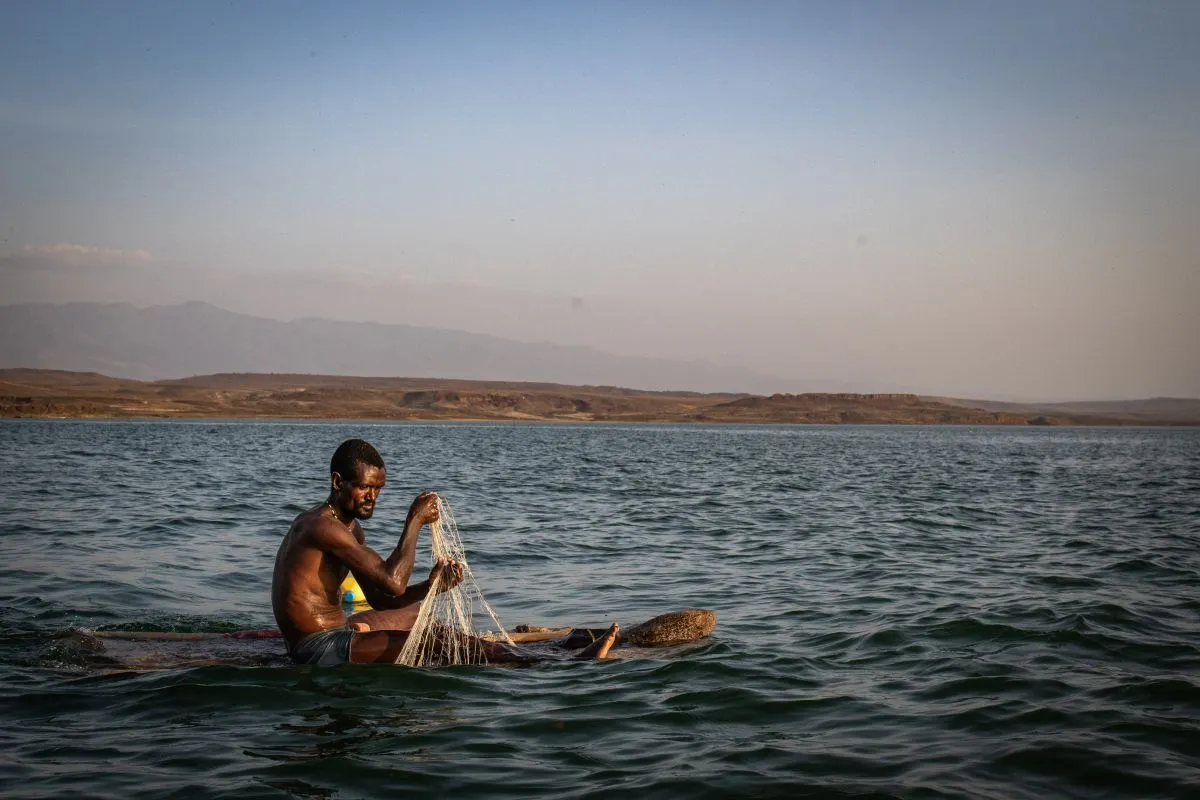
Most people look at Lake Turkana in northern Kenya and see a region constantly battling climate change. Environmentalist Ikal Angelei, however, sees something deeper: a testament to human resilience. The Indigenous communities around Turkana, she argues, have been perfecting the art of adaptation for centuries, shifting between herding, fishing, farming, and trading as the landscape dictated.
Which, if you think about it, is both impressive and a little humbling for those of us who panic when our Wi-Fi goes out. The Turkana people have always rolled with the punches, making their living whatever way the lake allowed. The real difference today isn't change itself, but the sheer volume and speed of the new challenges.
We're talking unpredictable weather, fish populations under stress, the looming shadow of oil development, resource conflicts, and political decisions that often overlook the lake's delicate balance. It's a lot to contend with, even for the most seasoned adaptors.
We're a new kind of news feed.
Regular news is designed to drain you. We're a non-profit built to restore you. Every story we publish is scored for impact, progress, and hope.
Start Your News DetoxGiving a Voice to the Lake
Angelei's own journey began in 2008 while working at the Turkana Basin Institute. She stumbled upon plans for the Gibe III Dam, a massive hydroelectric project brewing in Ethiopia, and immediately saw the potential disaster for Lake Turkana and its dependent communities.
So, she did what any determined environmentalist would do: she started Friends of Lake Turkana. The goal? To ensure the people whose lives were directly tied to the lake actually had a seat at the table, or at least a megaphone pointed at it. Her organization fought the dam, and in 2012, Angelei's tireless advocacy earned her the prestigious Goldman Environmental Prize. Friends of Lake Turkana continues its vital work, striving for justice — social, economic, cultural, environmental, and territorial — for the communities of the Turkana Basin.
Angelei's perspective offers a much-needed counter-narrative to the usual doom-and-gloom. It suggests that while the challenges are immense, the Turkana people's history of ingenious adaptation might just be their greatest asset in navigating what comes next. Because if anyone knows how to survive a shifting landscape, it's them.