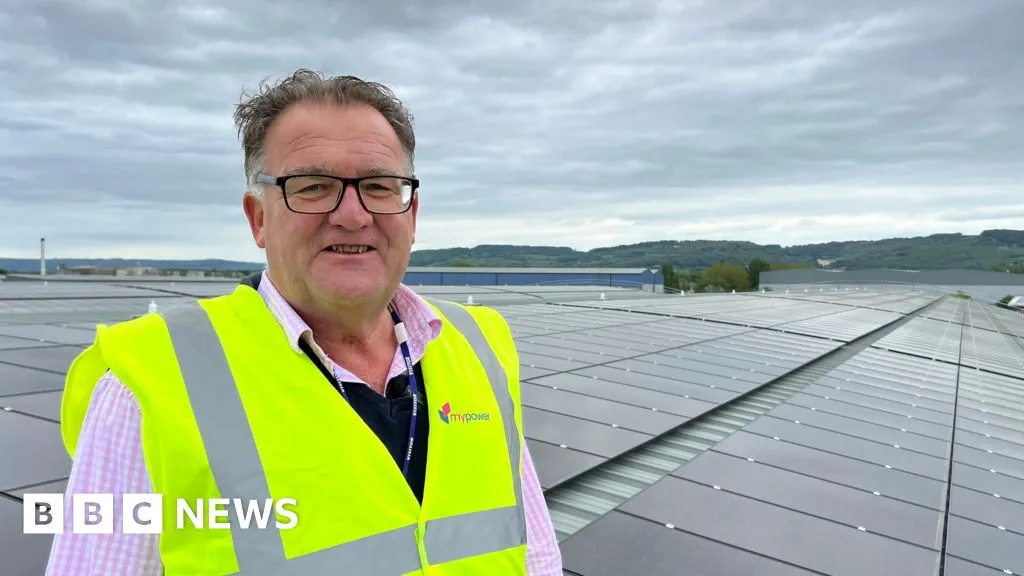
"Solar panels are all about saving money now, not just sustainability," said Ben Harrison. He founded a solar power firm in Gloucestershire. His company has installed 65% more solar panels for businesses since the Iran conflict began. Energy bills have also soared during this time.
Across the UK, the total amount of solar power installed has risen 11% compared to last year. These numbers come from government figures. For companies, the financial benefits are clear.
Businesses Invest in Solar
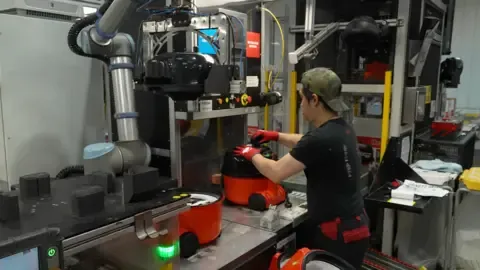
In Somerset, the company that makes 'Henry' vacuum cleaners recently spent £1.5 million on new solar panels. These panels are at their factory in Chard. The financial director expects to get the money back in less than four years.
We're a new kind of news feed.
Regular news is designed to drain you. We're a non-profit built to restore you. Every story we publish is scored for impact, progress, and hope.
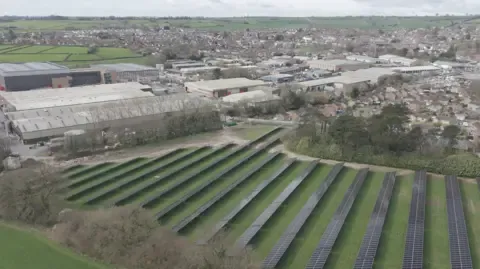
Start Your News DetoxMany industrial estates now have solar panels on factory rooftops. However, the Numatic plant in Chard has taken this further. They have filled an entire field behind their factory with panels.
The plant employs 1,200 people. They make the famous Henry vacuum cleaner and its pink friend, Henrietta. They produce almost everything on-site, from molding plastic to robotic assembly. This process uses a lot of electricity.
Steve Whitlock, the firm's financial director, showed off the new solar field. It has 2,672 panels. He noted that electricity is "hugely expensive."
Until recently, sustainability managers usually promoted this type of work. Now, a £1.5 million solar installation is seen as "a major investment, like any other," according to Whitlock.
He explained that the solar field helps them generate their own electricity. This reduces their reliance on the market, especially with rising prices. On sunny days, the new system will power the entire plant. Over a year, it is expected to cover about a quarter of their energy needs. With more investments in inverters and batteries, they aim to meet about half their total energy needs.
Whitlock calculates the solar system will pay for itself within four years. This investment will also protect the factory from future electricity price hikes caused by global conflicts.
A Growing Trend
The Somerset solar field is large, but it's part of a bigger trend. Since Russia's invasion of Ukraine first caused energy prices to jump, many companies have viewed solar power as an investment. It's no longer just a green initiative. The conflict in Iran has pushed energy bills up again, making companies worry about future prices.
Government figures show a significant increase in March 2026. There were 27,000 new solar installations, the highest since 2012. This pushed the total number of solar systems to over two million.
Official statistics do not separate commercial and residential solar installations. However, companies use power during the day when the sun is out. This means they can save more than homeowners, who use most electricity in the morning and evening.
Chris Hewett, CEO of Solar Energy UK, said the south-west has seen the biggest increase in company solar panel installations. He believes solar power is the "quickest and most effective" way for businesses to cut energy bills.
Saving Money is Key
On a warehouse rooftop in Gloucester, Ben Harrison of Mypower explained the shift. He started his solar installation firm 15 years ago. "In the early days it was mainly about sustainability," he said. "Now it's all about money." Customers want to control their long-term electricity costs as energy prices have risen.
Over the last three months, his firm has installed 1,783 solar panels per month. This is 65% more than the average for the rest of the year.
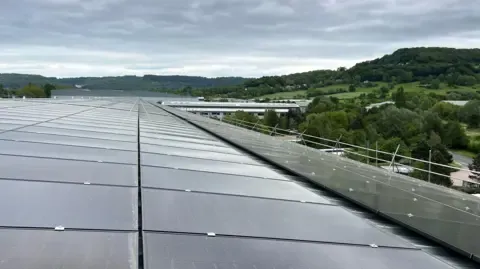
Beneath the panels, a wine warehouse hums with activity. Forklifts, conveyor belts, and a large pallet wrapper all use a lot of electricity. Even on a cloudy day, the 1,710 panels were powering the entire site. They were also selling some electricity back to the national grid.
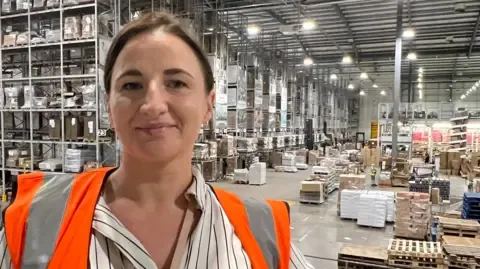
Loreta Landray, health and safety manager at Laithwaite's Wine, which runs the warehouse, called the day the panels were switched on "fabulous." She noted that energy cost increases have been "phenomenal" for the past five years. The solar panels will help the business significantly with future electricity costs.
While many families struggle with rising energy bills due to global conflicts, companies are investing heavily to control their future expenses.