Turns out, even a former U.S. President can't always stop a really big ship from turning. For months, a plan to decarbonize the colossal global shipping industry seemed dead in the water, largely thanks to the Trump administration. But recent developments suggest this ambitious climate effort might just make it to port.
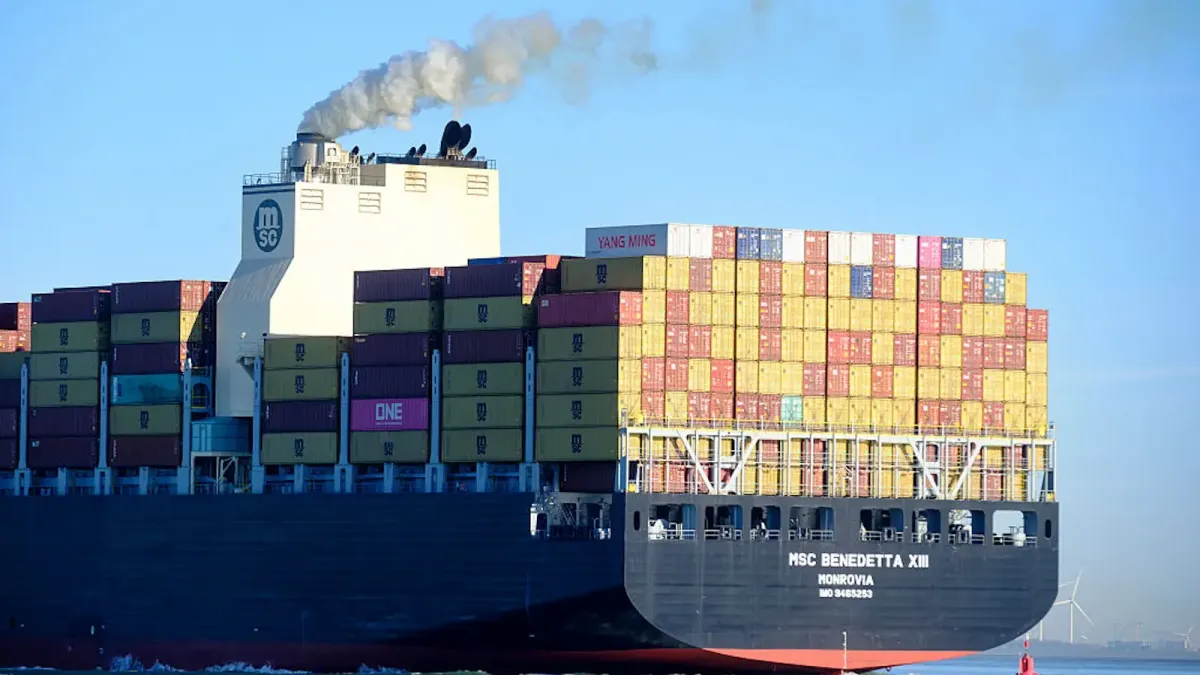
Here’s the deal: those massive cargo ships, the ones that bring you everything from your favorite coffee beans to that new gadget, are responsible for about 3% of global carbon emissions. That's because they run on some seriously dirty fuel — the leftover gunk from refining crude oil. The UN's International Maritime Organization (IMO) cooked up a plan, the Net-Zero Framework (NZF), to put a fee on these emissions and get shipping to net-zero.
Then came the reported threats. The Trump administration, according to sources, started leaning on countries, warning of visa restrictions, tariffs, and port fees if they dared support the NZF. Suddenly, the plan stalled, and weaker alternatives started floating around.
We're a new kind of news feed.
Regular news is designed to drain you. We're a non-profit built to restore you. Every story we publish is scored for impact, progress, and hope.
Start Your News DetoxA Stubborn Plan Refuses to Sink
But at a recent IMO meeting, the tide began to turn. Despite the heavy-handed opposition, a "genuine spirit of collaboration and optimism" filled the room, according to Em Fenton of climate group Opportunity Green. Countries, it seems, weren't quite ready to abandon the idea of cleaner oceans.
The Trump administration, meanwhile, continued to argue that an emissions tax would hurt American wallets and businesses, even suggesting the entire discussion be scrapped. Because apparently, that's where we are now.

While a few nations like Japan and Panama supported watered-down options, the majority kept pushing for the original NZF. The path isn't smooth, mind you. A third of member countries, or a smaller group controlling half the world's shipping tonnage, could still block it. And with countries like Liberia, Panama, Bahamas, and the Marshall Islands registering roughly half the world's ships, their influence is, shall we say, significant.
Evelyne Williams, a research associate at Columbia University, noted the plan is "already in that neighborhood of the 50 percent blocking threshold." Yet, she believes "cautious optimism is reasonable." Because sometimes, simply not being abandoned is a win.
What's truly interesting? The shipping industry itself largely wants this global tax. They're hoping a single, worldwide standard will create a level playing field, sparing them a patchwork of different carbon rules in every port. David Loosley, CEO of BIMCO, a trade organization for shippers, put it plainly: global problems need global solutions.
Meanwhile, U.S. delegates at the meeting handed out leaflets predicting dire economic impacts on various countries, like Peru facing an $800 million bill. Experts, however, quickly called the analysis "misleading" and "outdated." Fenton described it as "a clear effort being made by a country acting in strong self-interest and using misinformation and exaggeration." Because when you can't win the argument, you can always try to win the spreadsheet.
More talks are on the horizon, with a potential vote as early as November. After a year's delay, the world might just get its chance to clean up shipping, one carbon tax at a time.