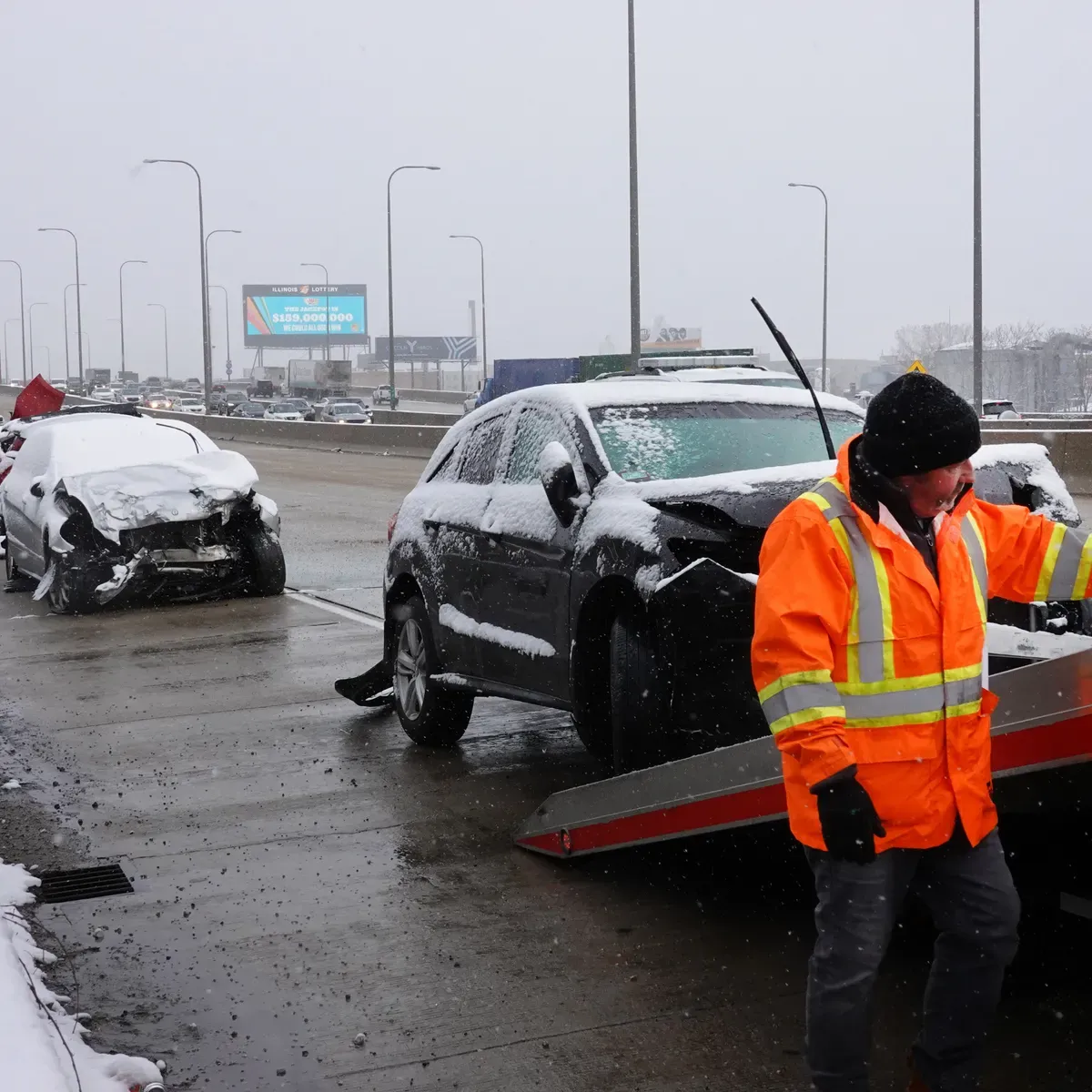
The U.S. recorded 37,810 motor vehicle deaths in 2025—a sharp decline from 42,789 the year before. That 12% drop marks real progress. Safety technologies are working. Infrastructure investments are paying off. Communities that committed to the Safe System Approach are seeing results.
But here's what's unsettling: researchers now estimate that drowsy driving kills roughly 10 times more people than official records show.
The visible progress
The National Safety Council credits the decline to a convergence of factors working in tandem. Advanced safety features—lane-keeping assist, automatic emergency braking, blind-spot monitoring—are now standard on many vehicles and are actively preventing crashes. Federal and state funding for road safety improvements has expanded. The Road to Zero Coalition, a collaboration between the NSC, the Department of Transportation, and dozens of stakeholders, has coordinated enforcement strategies and shared what works across jurisdictions.
We're a new kind of news feed.
Regular news is designed to drain you. We're a non-profit built to restore you. Every story we publish is scored for impact, progress, and hope.
Start Your News DetoxThe gains aren't uniform. Nine states and Washington, D.C. saw deaths fall by 15% or more. Eight states moved in the opposite direction, with increases of 3% to 25%. This variation tells an important story: some communities have cracked the code on road safety. Others haven't yet.
The invisible killer
Meanwhile, drowsy driving operates almost entirely in the shadows. Researchers from the Governors Highway Safety Association applied a statistical model to federal crash data and found that 17.6% of fatal vehicle crashes involve a drowsy driver. When they extrapolated to 2023 data, the number was staggering: 6,326 deaths attributed to driving while tired.
The official count from the Fatality Analysis Reporting System reports roughly 600 deaths from drowsy driving annually. The gap exists because fatigue leaves almost no physical evidence. A drowsy driver wakes up on impact. Investigators have no way to confirm what happened in those final seconds before the crash.
The burden falls unevenly. Three of five American adults admit to having driven while drowsy. Drivers aged 16 to 24 report it more often than older drivers. Parents of young children, long-haul truckers, and night-shift nurses face particularly high risk. Black and Hispanic drivers, and those with a high school education or less, report drowsy driving significantly more often than other groups—a pattern that likely reflects both longer commutes and fewer flexible work arrangements.
What actually works
The encouraging part: drowsy driving is preventable. The Governors Highway Safety Association points to straightforward sleep hygiene—natural light exposure, avoiding alcohol and caffeine before bed, sleeping in a cool, dark room. For long drives, regular breaks matter. A 15-minute nap at a rest stop can reset alertness.
Technology is catching up too. Newer vehicles now include driver-monitoring systems that detect the early signs of fatigue: excessive yawning, irregular blinking, drifting across lane markings. When the system detects these patterns, it alerts the driver through sound or vibration.
Beyond individual habits, systemic changes could shift the dial. Workplace policies that allow adequate sleep, public awareness campaigns that treat drowsy driving with the same gravity as drunk driving, and road design improvements like rumble strips that wake drifting drivers—these interventions compound.
The 12% decline in traffic deaths shows that progress at scale is possible. The hidden toll of drowsy driving shows where the next breakthrough lies.