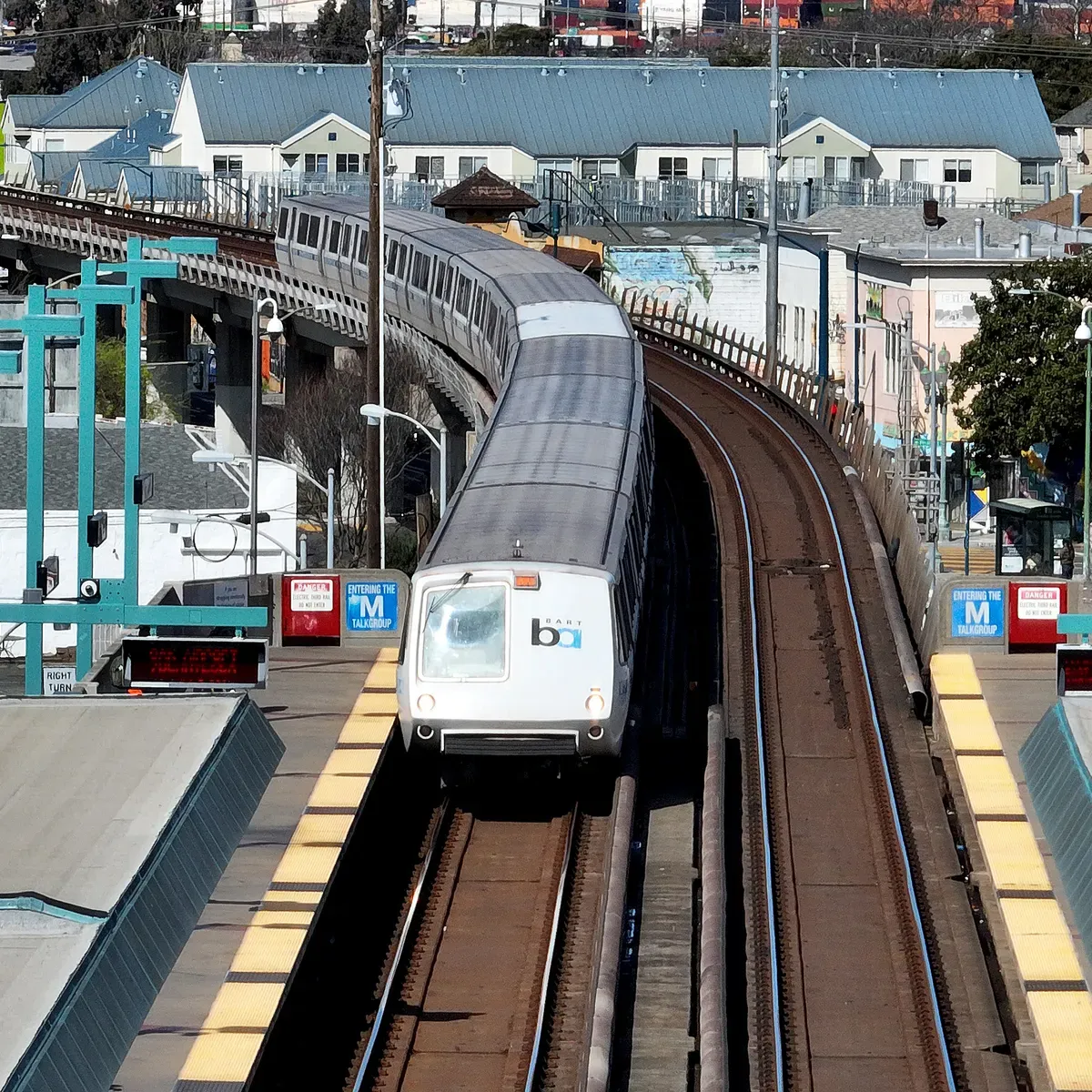
California just bought time for four of the Bay Area's largest transit systems. Gov. Gavin Newsom signed legislation providing a $590 million loan to keep BART, Caltrain, AC Transit, and San Francisco's municipal buses running through the worst of their funding crisis — preventing what could have been catastrophic service cuts.
Without this money, BART alone would have slashed service by up to 85% and closed 10 to 15 stations. The four agencies combined face deficits exceeding $800 million in the coming fiscal year, a problem that didn't exist five years ago.
The root cause is structural, not temporary. When the pandemic sent office workers home, it didn't just dent transit ridership — it fundamentally broke the funding model. Caltrain's fare box now covers just 23% of operating costs, down from 72% in 2019. More than a quarter of San Franciscans work from home, as do 31% of Berkeley workers. That's millions of daily commuters who simply aren't there anymore, and transit agencies built their budgets assuming they would be.
We're a new kind of news feed.
Regular news is designed to drain you. We're a non-profit built to restore you. Every story we publish is scored for impact, progress, and hope.
Start Your News DetoxThe loan protects service for over three million monthly riders and keeps roughly 900,000 daily trips moving. For the people who do depend on transit — students, seniors, service workers, families without cars — the difference between a functioning system and an 85% cut isn't abstract. It's whether they can get to work, school, or the doctor.
But this is a bridge, not a solution. California is buying roughly two years of stability while the Bay Area works on something permanent.
The Real Test Comes in 2026
In November 2026, five Bay Area counties will vote on a half-cent sales tax increase, with San Francisco voting on a one-cent increase, to fund transit long-term. An October 2025 poll showed 56% support in the five counties — close, but short of the two-thirds needed if the regional transit authority puts it on the ballot. However, a citizen-led measure needs only 50% to pass, and the Connect Bay Area Campaign is already organizing, with $3 million raised to gather signatures.
Funding is coming from serious players: Meta, Genentech, the service workers' union, and prominent Silicon Valley investors. They're betting that the Bay Area's economy depends on functioning transit, and they're probably right.
The state loan requires repayment over 12 years, with interest-only payments for the first two years. That clock is ticking. If the ballot measure fails, the real cuts come after 2026. If it passes, the Bay Area has a chance to rebuild the funding model that remote work broke.