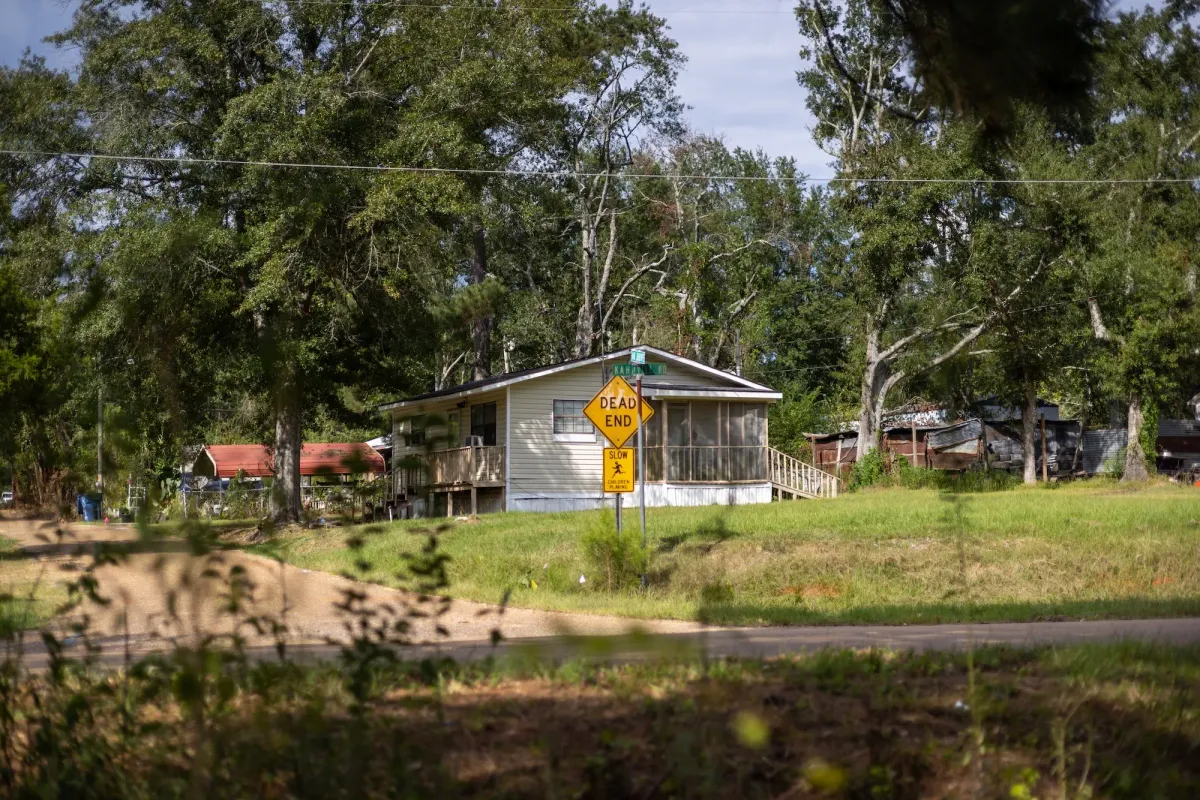
Mayor Jay Ivy drives past the weedy lots of Urania, Louisiana, past the shuttered storefronts and the skeleton of the old mill smokestack. The town died once already—in 2002, when the timber mill closed and took 350 jobs with it. The population has been bleeding away ever since.
Then came Drax, a British energy company, with a different kind of promise. In the mid-2010s, Drax began opening wood pellet mills across Louisiana and Mississippi, betting on cheap timber and cheaper labor. The company would burn the pellets in England as "renewable" energy. The towns would get jobs, tax revenue, a future. In 2017, Drax built its flagship mill just outside Urania. Louisiana's governor called it a vote of confidence in the state.
More than a decade later, Urania has lost nearly half its population since 2010. The poverty rate sits at 40%. The average household income is $12,400 a year.
We're a new kind of news feed.
Regular news is designed to drain you. We're a non-profit built to restore you. Every story we publish is scored for impact, progress, and hope.
Start Your News DetoxGloster, Mississippi—a majority-Black town of about 850 people—tells a similar story. Drax opened a mill there in 2014. The population has shrunk. More than 10% of working-age residents are unemployed. Household income is less than half the state median.
What Went Wrong
The math looked simple on paper: industrial facility plus desperate town equals revival. But Drax's mills employ a fraction of what the old timber operations did. Many workers commute from neighboring towns, so wages don't circulate locally. The company received massive tax breaks that hollowed out the municipal budget. Pollution fines—and there have been many, for noise, dust, and air quality violations—haven't moved the needle on enforcement.
Mabel Williams, 87, has lived in Gloster her whole life. She watched the old mills close. She watched Drax arrive with hope. "They've got to spend that money some kind of way," she says of the company's profits, "but they're not spending it here." Drax's charitable giving, residents note, is modest compared to the wealth the company extracts.
The pattern repeats across the region: a company arrives with promises, locals believe because they have to believe, and the economic multiplier effect that was supposed to happen—workers spending wages at local businesses, tax revenue funding schools and infrastructure—never materializes.
Mayor Jerry Norwood of Gloster is blunt: small towns like his need a large industrial facility to survive. The problem isn't the concept. It's that Drax became what it was supposed to fix—another extractive operation that takes resources and leaves behind the consequences.
What happens next depends on whether these towns can build something Drax never promised: genuine economic diversification that doesn't hang on a single company's willingness to stay.