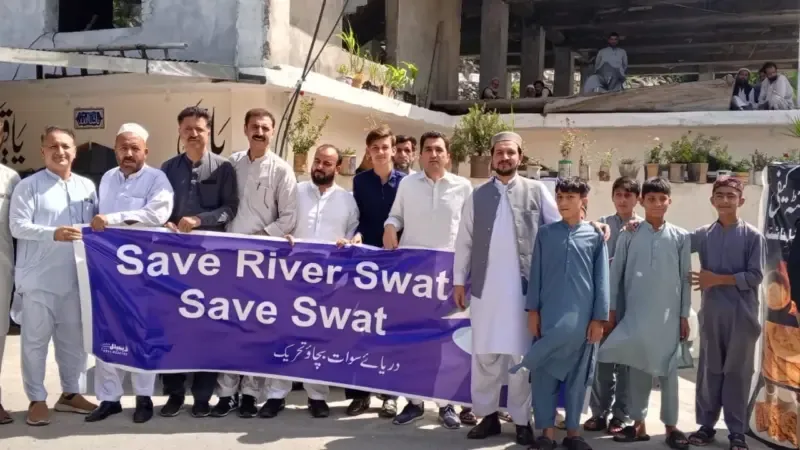
In northern Pakistan's Swat valley, the Indigenous Torwali people have a rather profound relationship with their rivers. They're not just water; they're the beating heart of their culture, a sacred thread connecting them to generations past. So, when the Pakistani government started pushing new hydroelectric projects, you can imagine how well that went down. For the Torwalis, losing a river isn't just an environmental issue — it's losing their history, their livelihood, their identity, and, perhaps most tragically, their imagination.
Since 2023, the Torwali have been leading a rather determined charge to save the Swat River. Their immediate target: the 207 MW Madyan hydroelectric project, one of at least 18 planned for the stretch between Madyan and Kalam. This whole endeavor is part of a larger, World Bank-funded project, approved in 2021 for a cool USD 450 million. Because, apparently, that's where we are now.
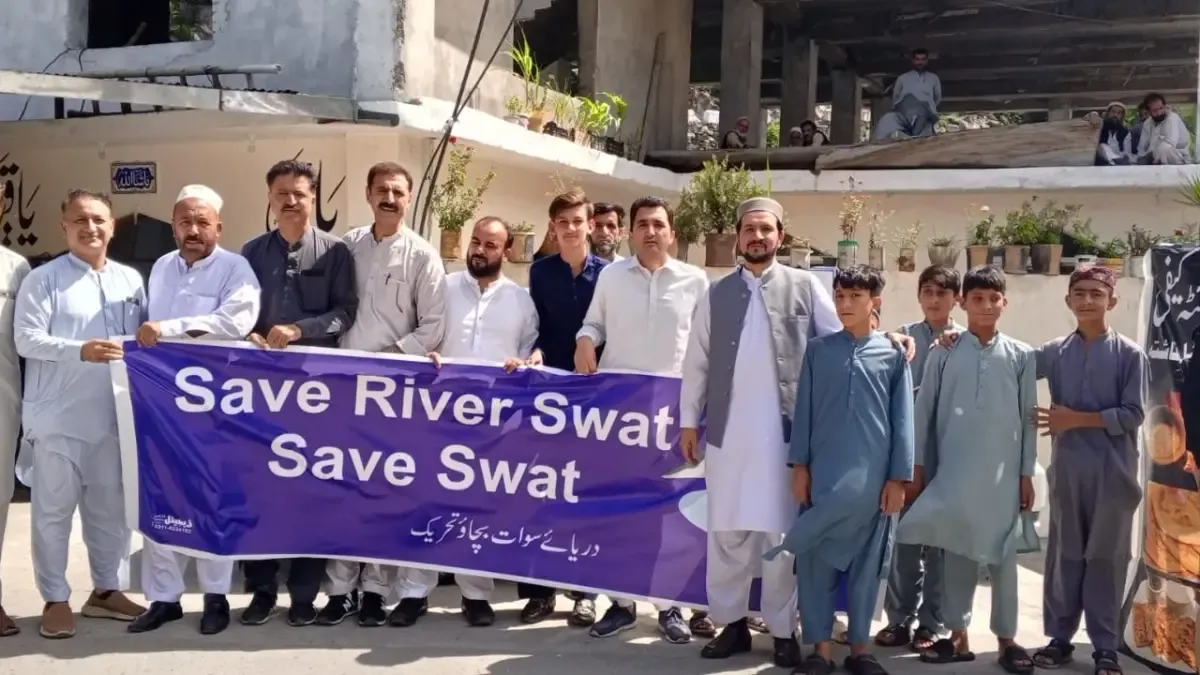
On April 4, 2026, the movement had a moment of triumph when the provincial cabinet actually approved its withdrawal from the Madyan project. A win! Though, in classic bureaucratic fashion, it's still unclear if project supporters will try to overturn the decision. The World Bank, for its part, has remained conspicuously silent. For the Torwalis, the fight, predictably, continues.
We're a new kind of news feed.
Regular news is designed to drain you. We're a non-profit built to restore you. Every story we publish is scored for impact, progress, and hope.
Start Your News DetoxWhen a River Becomes a Machine
The Torwalis aren't new to this particular rodeo. They've seen what large dams do, with the Daral Khwar Hydropower project serving as a cautionary tale. The Asian Development Bank initially funded it but pulled out after public pressure. Did that stop the project? Of course not. Authorities simply found other funding, made a few false promises, and managed to sow division within communities to push it through.
In Bahrain, where the Daral meets the Swat River, locals once described their land as paradise. Kids splashed in icy pools, women drew fresh water, orchards thrived. Today? A powerhouse dictates the river's flow, leaving long stretches dry and stagnant. Mosquitoes now breed where children once played, and sudden water releases create drowning hazards. The painful lesson learned: when a river becomes a machine, everything connected to it unravels.

With that memory fresh in their minds, the Torwalis formed the Save River Swat Movement (Darya-e Swat Bachau Tehreek). They filed a formal complaint with the World Bank in August 2024, demanding a review under its environmental and social safeguard policies. They've sent hundreds of letters, held meetings across cities, informed UN institutions, and engaged local authorities. Jirgas (gatherings of elders) convened from Madyan to Kalam. Massive demonstrations took place, followed by youth marches and press conferences that brought national attention. Even children have penned petitions to the prime minister. Let that satisfying image sink in.
International law, specifically the UN Declaration on the Rights of Indigenous Peoples, requires Free, Prior, and Informed Consent (FPIC) for such projects. The Torwalis, however, report rushed hearings, inaccessible documents, and bureaucratic strong-arming — which, it turns out, does not constitute actual consent. Their opposition was clear from day one, with protests erupting at the very first “public hearing” in July 2023. Despite this, a “No Objection Certificate” was issued. Because, again, that's where we are now.
Activists and local officials who dared to oppose the project have faced threats and intimidation, some even accused of working against national interests. This has created a climate of fear, silencing voices in affected villages. To add insult to injury, the World Bank initially failed to even recognize the Torwali people's indigeneity, leading to flawed impact assessments and a complete lack of information in their local language. However, due to the movement's persistence, the World Bank commissioned a new screening in June 2025 to determine if the Torwali actually qualify as Indigenous. An unprecedented step for the region, though almost a year later, the findings remain a mystery to the community.
For the Torwalis, their indigeneity isn't up for debate. Their identity is woven into their mountains, rivers, pastures, and ancestral practices. Their language, an ancient Indo-Aryan tongue, has a word for every cliff, rock, ravine, stream, meadow, and pass. Even Torwalis living in cities still call their ancestral region watan, a word far deeper than "homeland." As a proverb wisely states: "tu watan ge ke bedu, watan ma wad" — "your body may reside elsewhere, but your heart belongs to the homeland."
This movement to save the Swat River has already achieved something significant. It has powerfully connected Indigenous rights with environmental justice, showing that rivers have rights because communities have relationships with them. It’s a stark reminder that development must, eventually, answer to those who bear its consequences. As the Pakistani poet Allama Iqbal once noted, "A drop of dew is enough to make this soil fertile again." The Torwali people's resistance? That's the dew drop. It's an act of dignity, unity, and courage against development imposed from on high. And as long as the Swat River flows, they will continue to defend it. Because for them, it's not just water; it's everything.